Pure Copper High Conductivity Casting — Precision Electrical & Industrial Components
Brass Parts India manufactures Pure Copper High Conductivity Castings for demanding electrical, electronic, and industrial applications where maximum electrical conductivity, thermal conductivity, and corrosion resistance are critical. Our copper castings use carefully controlled melting and casting processes to preserve the inherent conductivity and properties of pure copper.
What is High Conductivity Copper?
High Conductivity (HC) Copper, also known as Electrolytic Tough Pitch (ETP) Copper, is a commercially pure copper grade with a minimum copper content of 99.9% and electrical conductivity of at least 100% IACS (International Annealed Copper Standard) — the benchmark for electrical conductivity in metals.
Copper Grades We Cast
- ETP Copper (C11000 / CW004A): Most widely used commercial copper. Conductivity ≥ 100% IACS. Standard choice for electrical applications.
- Oxygen-Free Copper (OFHC — C10200 / CW008A): Ultra-high purity, no residual oxygen. Conductivity ≥ 101% IACS. Essential for vacuum and high-temperature applications.
- OFE Copper (C10100): Highest purity (99.99%+) for electronic and semiconductor applications.
- DHP Copper (C12200 / CW024A): Phosphorus deoxidised — excellent for welding and brazing; ~85% IACS conductivity.
- Silver-Bearing Copper: Silver additions raise softening temperature while maintaining high conductivity — for commutators and overhead contact wires.
Casting Processes for Pure Copper
Sand Casting of Copper
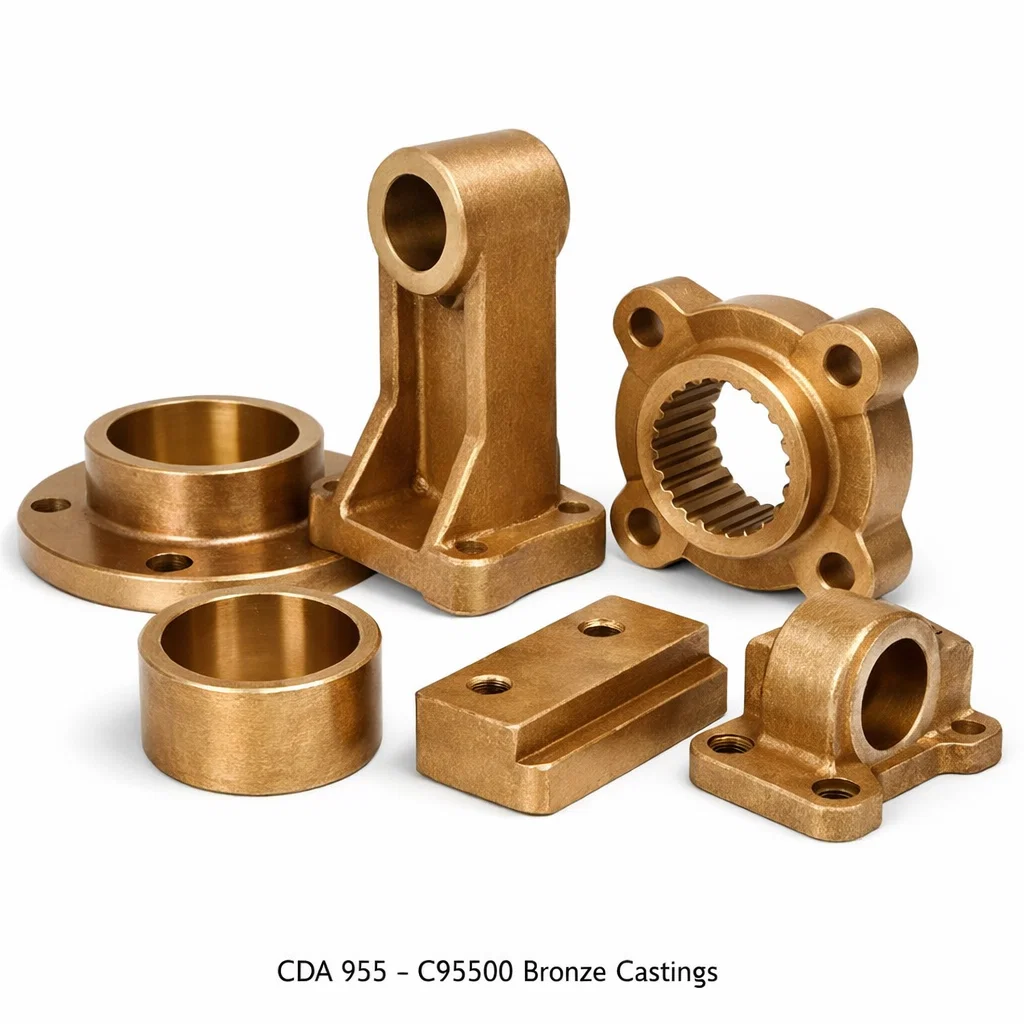
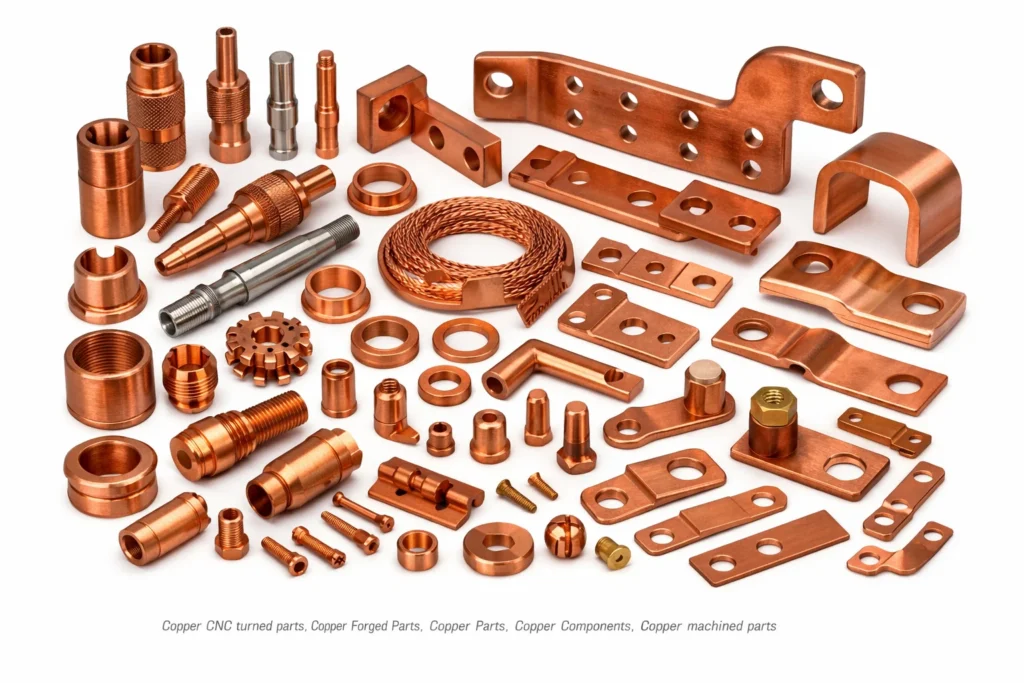
Used for medium to large copper castings — busbar connectors, contact blocks, electrode holders, transformer connections, and custom electrical components using chemically bonded sand moulds with careful venting to minimise gas porosity.
Investment Casting of Copper
Produces highly accurate complex-shaped components — precision electrical connectors, switch contacts, bus clamps, and instrumentation components where tight tolerances and complex geometry are required.
Centrifugal Casting of Copper
Used for short tubes, rings, and cylindrical components in induction motors, transformers, and conductive sleeves with consistently high density and electrical conductivity.
Properties of High Conductivity Copper Castings
| Property | Value (ETP Copper — C11000) |
|---|---|
| Electrical Conductivity | ≥ 100% IACS (58.0 MS/m) |
| Thermal Conductivity | 385–400 W/m·K |
| Melting Point | 1083°C |
| Density | 8.94 g/cm³ |
| Tensile Strength (cast) | 200–250 MPa |
| Hardness | 45–75 HB |
| Minimum Copper Content | ≥ 99.90% Cu + Ag |
| Applicable Standards | BS EN 1977 | ASTM B152 | DIN 1787 | IS 191 |
Applications
- Electrical Switchgear: Contact blocks, arc chutes, bus clamps, earthing lugs
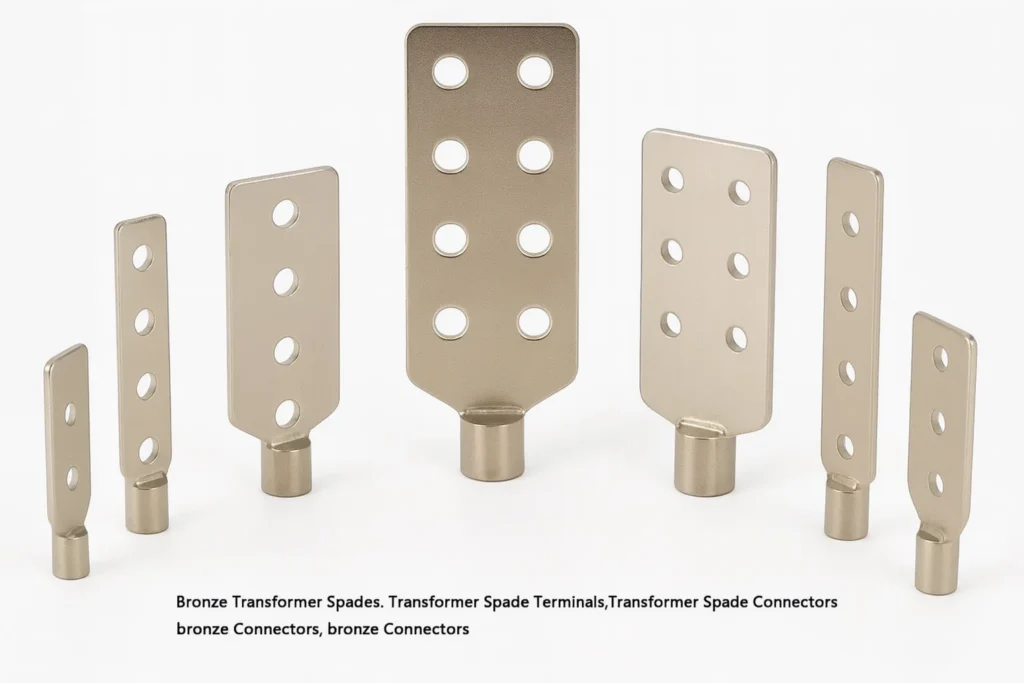
- Transformers: Winding connectors, tap changer contacts, terminal lugs
- Busbars & Distribution: Tee-off clamps, expansion joints, flexible connectors, cable lugs
- Welding Equipment: Electrode holders, contact tips, welding nozzles, torch bodies
- Electric Motors: Commutator segments, slip ring components, rotor end rings
- Chemical & Process: Electrolytic cell components, plating anodes
- Railways & Traction: Overhead line connectors, pantograph contacts, third-rail clamps
Frequently Asked Questions
Q1. What is IACS and why is it important for copper castings?
IACS (International Annealed Copper Standard) defines 100% conductivity as 58.0 MS/m for annealed pure copper. Alloying reduces conductivity, so highest-purity grades (ETP, OFHC, OFE) are specified for maximum electrical performance. We test every batch with a calibrated eddy current conductivity meter and report on the MTC.
Q2. What is the difference between ETP copper and OFHC copper?
ETP (C11000) contains a small amount of residual oxygen (~200–400 ppm) retained to maintain conductivity. OFHC (C10200) is produced in a controlled atmosphere with no residual oxygen, giving slightly higher conductivity (≥101% IACS) and resistance to hydrogen embrittlement — specified for vacuum tubes, waveguides, and high-temperature applications.
Q3. Can copper castings be plated or surface treated?
Yes. Copper castings can be electroplated with tin, silver, nickel, or gold to improve oxidation resistance, solderability, or contact resistance. Silver plating is widely used on switchgear contacts; tin plating for general corrosion protection. All plating available in-house or through approved subcontractors.
Q4. How do you prevent porosity in pure copper castings?
We control porosity through careful charge preparation, deoxidation practice, controlled-atmosphere melting (for OFHC grades), proper mould venting, and controlled pouring temperature. Castings are inspected by dye penetrant testing (DPT) and pressure testing where required.
Q5. Do your copper castings comply with RoHS and REACH?
Yes. All pure copper castings comply with RoHS 2 (Directive 2011/65/EU) and REACH (Regulation EC 1907/2006). Declarations of compliance are provided on request.
Related Terms
Copper casting manufacturer India | High conductivity copper casting | ETP copper casting | OFHC copper casting | Oxygen-free copper casting | C11000 copper casting | C10200 copper casting | Copper busbar casting | Copper contact casting | Electrolytic copper casting | Copper investment casting | Pure copper components India
Contact Brass Parts India to discuss your pure copper high conductivity casting requirements. Our technical team will help you select the appropriate copper grade and casting process.