
Brass stamping is one of the most widely used manufacturing processes in the metalworking industry. It involves the use of precision dies and presses to shape flat brass sheets or coils into specific forms, profiles, and components. The process is known for its high speed, repeatability, and ability to produce complex geometries with tight tolerances — making it indispensable across a wide range of industries.
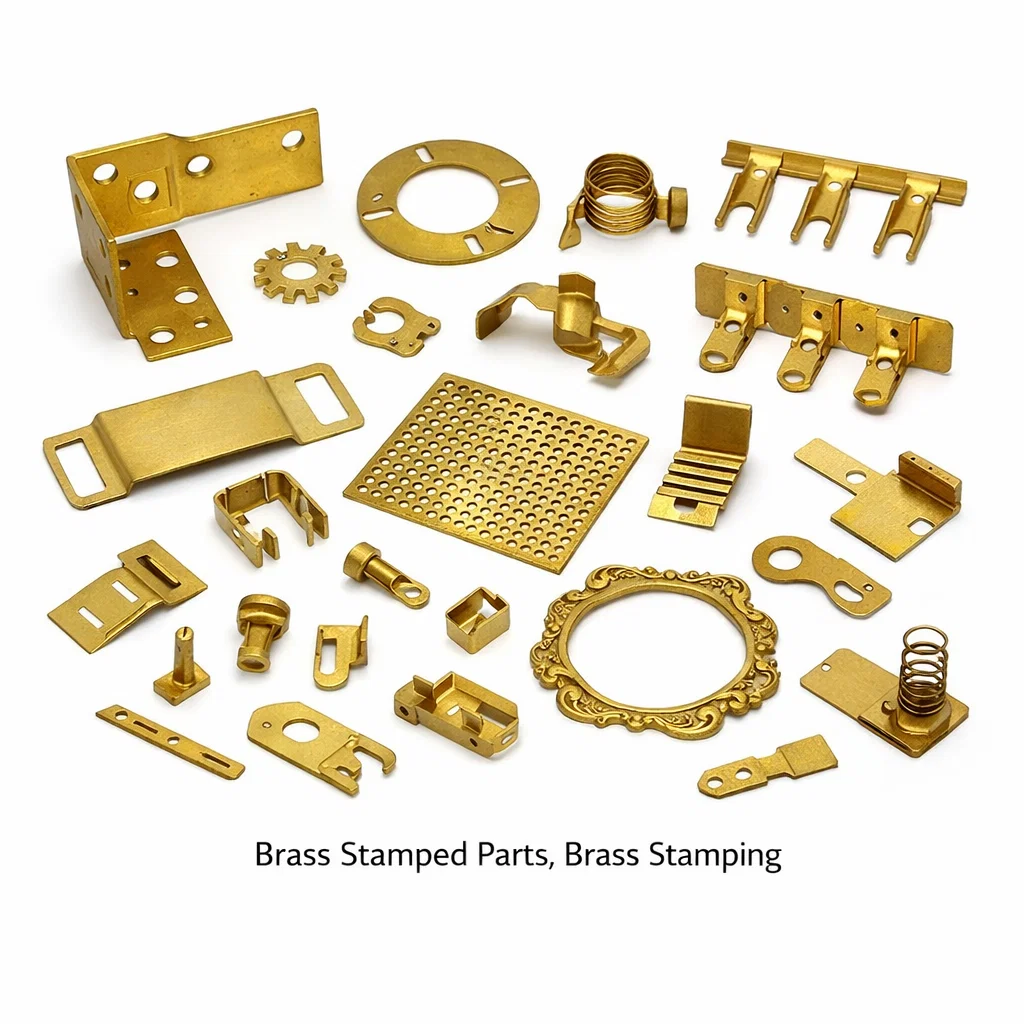
What is Brass Stamping?
Brass stamping is a cold-forming manufacturing process in which brass — an alloy of copper and zinc — is fed into a stamping press where it is shaped, cut, bent, or embossed using a custom-designed die or set of dies. The process can be performed as a single operation or in multiple progressive stages depending on the complexity of the part.
Brass is one of the most preferred materials for stamping due to its excellent properties: it is highly malleable, corrosion-resistant, electrically conductive, and aesthetically attractive. These characteristics make brass stamped components ideal for both functional and decorative applications.
Types of Brass Stamping Processes
There are several stamping techniques used to manufacture brass components, each suited to different part geometries and production volumes:
Progressive Die Stamping: A strip of brass is fed through a series of progressive stations inside a single die set. At each station, a different operation is performed — punching, bending, coining, or forming — until the final part is produced. This is ideal for high-volume, small-to-medium sized parts.
Blanking and Piercing: Flat brass blanks are cut from sheet material. Piercing creates holes or slots in the brass blank. These are often the first steps in a more complex stamping sequence.
Deep Drawing: A flat brass blank is drawn into a die cavity to create cup-shaped, cylindrical, or box-shaped components. This technique is used for making shells, casings, and housings.
Bending and Forming: Brass strips or blanks are bent into L-shapes, U-shapes, Z-shapes, or custom profiles. This technique is widely used for clips, brackets, terminals, and contacts.
Coining: A high-pressure operation that produces parts with very precise dimensions and smooth surface finishes. Coining is used when tight tolerances and fine detail are required.
Common Brass Stamped Components
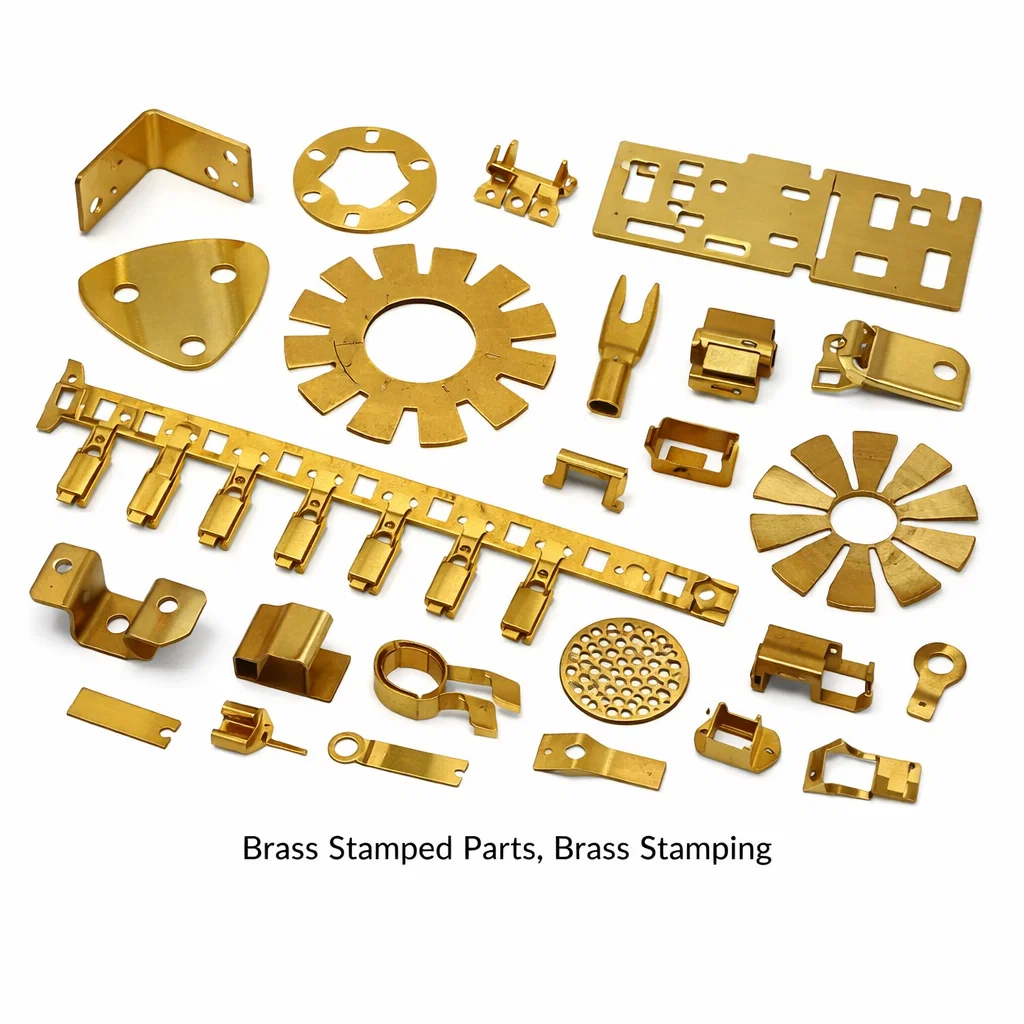
Brass stamped components are found in virtually every industry. Some of the most commonly manufactured brass stamped parts include:
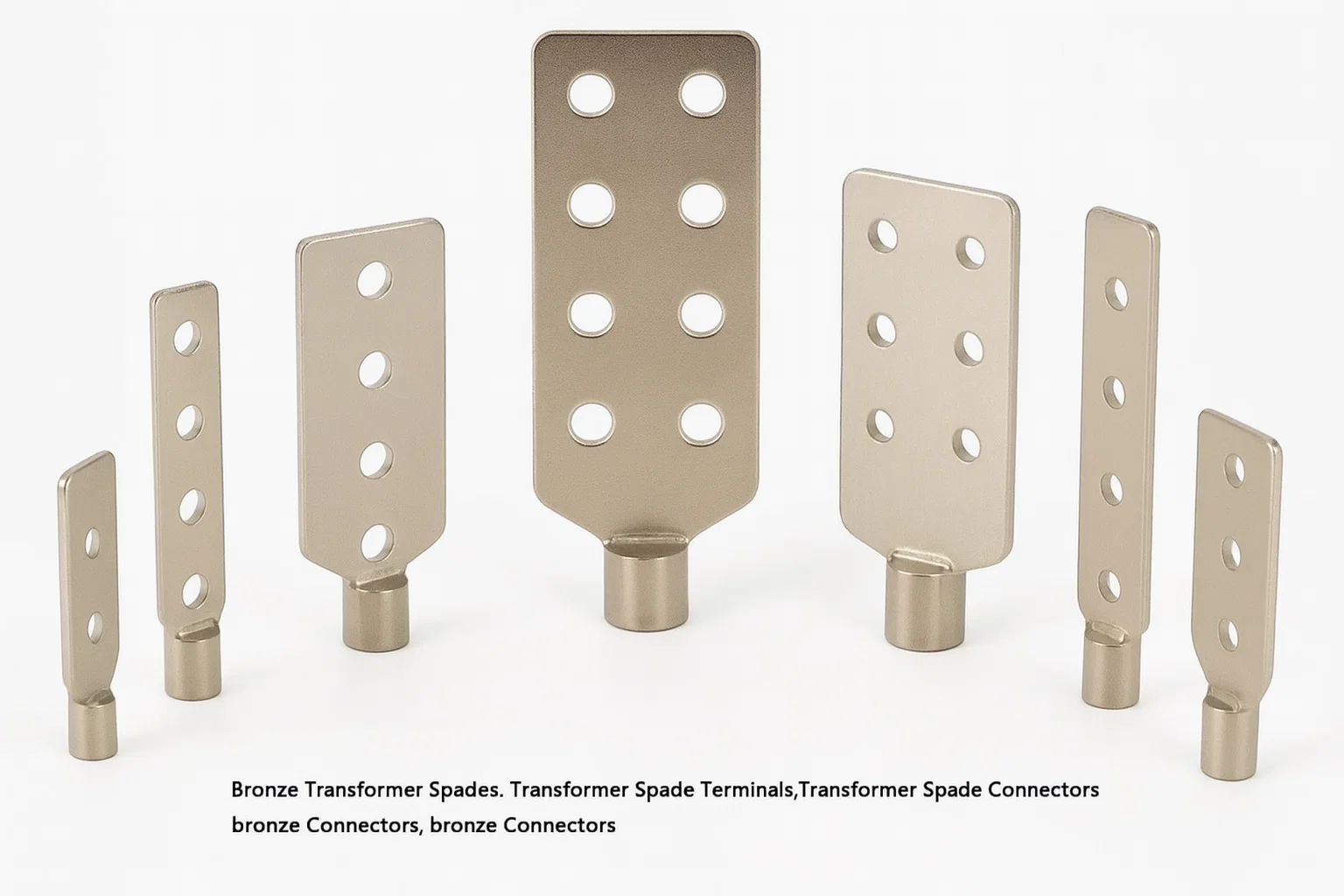
Electrical Contacts and Terminals: Brass offers excellent electrical conductivity and corrosion resistance, making it the material of choice for electrical contacts, terminals, connector pins, and bus bars. These are used in switches, relays, connectors, and circuit breakers.
Automotive Components: Stamped brass parts are used in fuel systems, transmission systems, sensors, and connectors. Their resistance to heat and corrosion makes them suitable for demanding automotive environments.
Plumbing and Valve Parts: Brass stamped discs, washers, end caps, and valve seats are essential components in plumbing fittings, valves, and flow control devices.
Decorative Hardware: The golden appearance of brass makes it ideal for decorative stampings such as name plates, badges, buckles, buttons, trim pieces, and architectural hardware.
Electronic and Telecom Parts: Precision brass stampings are used in PCB connectors, EMI shielding clips, grounding contacts, and RF components across electronics and telecommunications.
Medical Devices: Brass stampings are used in surgical instruments, medical connectors, and device housings where precision and reliability are critical.
Locks and Security Hardware: Brass lock bodies, escutcheons, key blanks, and locking components are commonly produced through stamping due to the material’s durability and machinability.
Key Advantages of Brass Stamped Components
Choosing brass stamped components offers numerous advantages over other manufacturing methods and materials:
High Precision and Consistency: Once the die is set up, stamping delivers uniform, repeatable parts at very tight tolerances. This is critical for components used in assemblies where fit and function are essential.
Cost-Effective for High Volumes: While the initial tooling cost may be significant, the per-piece cost drops dramatically at high production volumes, making brass stamping highly economical for large runs.
Excellent Material Properties: Brass alloys such as C26000 (Cartridge Brass), C36000 (Free-Cutting Brass), and C27000 (Yellow Brass) combine strength, ductility, conductivity, and corrosion resistance, offering a well-rounded performance profile.
Minimal Material Waste: Progressive die stamping and careful nesting of parts on the strip minimize scrap, reducing material costs and environmental impact.
Versatile Design Capability: Complex geometries, embossing, threading holes, and multiple bends can all be incorporated into a stamped component, reducing the need for secondary operations.
Fast Production Rates: Modern stamping presses can operate at hundreds of strokes per minute, enabling rapid output to meet demanding production schedules.
Industries Served
Brass stamped components are used across a broad spectrum of industries including electrical and electronics, automotive, plumbing and HVAC, telecommunications, industrial machinery, aerospace, medical devices, consumer goods, and construction hardware. The versatility of brass stamping makes it a go-to process for component manufacturers worldwide.
Quality Standards and Finishing
High-quality brass stamped components are manufactured in compliance with international quality standards such as ISO 9001. Parts are inspected using precision measuring instruments including CMMs (Coordinate Measuring Machines), optical comparators, and gauging systems to ensure dimensional accuracy.
Post-stamping finishing processes such as nickel plating, tin plating, silver plating, chromate conversion coating, and lacquering are commonly applied to enhance corrosion resistance, appearance, and solderability of brass stamped parts.
Why Choose Brass Parts India for Brass Stamped Components?
At Brass Parts India, we specialize in the design and manufacture of precision brass stamped components for customers across the globe. Our state-of-the-art stamping facility is equipped with a range of progressive die presses capable of handling complex multi-stage stamping operations. We work closely with our clients from the design stage to ensure the tooling and process are optimized for quality, efficiency, and cost.
With decades of experience and a commitment to excellence, we deliver brass stamped components that meet the most stringent specifications — on time and within budget. Whether you need small precision contacts or large structural stampings, we have the capability and expertise to deliver.
Contact us today to discuss your brass stamping requirements and request a quote.