
BRONZE CASTING TYPES, BRONZE CASTING ALLOYS
Bronze casting is one of humanity’s oldest and most enduring metallurgical processes — and yet it remains one of the most technologically advanced manufacturing methods in use today. From ancient bells and cannons to modern marine propellers, electrical connectors, and precision industrial components, bronze continues to outperform many modern alloys where corrosion resistance, strength, and conductivity matter most.
This comprehensive guide covers everything you need to know about bronze casting — the alloys, the processes, the international standards, the typical parts produced, and why Brass Parts India is your ideal manufacturing partner for high-quality bronze castings.
What is Bronze? Understanding the Alloy Family
Bronze is primarily an alloy of copper (Cu) and tin (Sn), though modern engineering bronzes often include additional elements such as aluminium, lead, phosphorus, silicon, manganese, and nickel to enhance specific properties. The result is a large family of copper-based alloys, each engineered for particular industrial demands.
Key properties that make bronze alloys indispensable in industry include excellent corrosion resistance (especially in seawater and marine environments), superior wear and friction characteristics, high electrical and thermal conductivity (particularly in phosphor and beryllium bronzes), good strength-to-weight ratio, outstanding machinability and castability, non-sparking and non-magnetic characteristics, and long service life with low maintenance.
International Bronze Alloy Standards — Comparative Table
Bronze alloys are classified under various international standards. Below is a comprehensive comparison table across the most commonly referenced systems: USA (ASTM/UNS), UK (BS EN), European (EN), Indian (IS/BIS), and ISO standards.
Tin Bronze Alloys — Industrial and Electrical Grade
| Alloy Name | USA (UNS/ASTM) | UK/Europe (BS EN) | Indian Std (IS/BIS) | ISO | Composition (approx.) | Key Properties |
|---|---|---|---|---|---|---|
| Tin Bronze (Gun Metal) | C90300 / ASTM B505 | CC480K / BS EN 1982 | IS 318 Gr.1 | CuSn10Pb1 | Cu 88%, Sn 10%, Pb 2% | Bearing, pressure-tight, corrosion resistant |
| Admiralty Gun Metal (LG2) | C83600 / ASTM B584 | CC491K / BS EN 1982 | IS 318 Gr.2 (LG2) | CuSn5Pb5Zn5 | Cu 85%, Sn 5%, Pb 5%, Zn 5% | General engineering, valves, pumps, fittings |
| Phosphor Bronze (PB1) | C90700 / ASTM B505 | CC483K / BS EN 1982 | IS 7811 Gr.PB-1 | CuSn10P | Cu 89.75%, Sn 10%, P 0.25% | High wear resistance, springs, electrical contacts |
| Phosphor Bronze (PB2) | C91100 / ASTM B505 | CC484K / BS EN 1982 | IS 7811 Gr.PB-2 | CuSn12P | Cu 87.75%, Sn 12%, P 0.25% | Heavy-duty bearings, gears, worm wheels |
| Naval Brass Bronze | C46400 / ASTM B283 | CW712R / BS EN 12163 | IS 6912 | CuZn38Sn1 | Cu 60%, Zn 39%, Sn 1% | Marine hardware, propeller shafts |
| Aluminium Bronze (AB1) | C95400 / ASTM B148 | CC331G / BS EN 1982 | IS 5743 Gr.AB1 | CuAl10Fe3 | Cu 87%, Al 10%, Fe 3% | High strength, erosion & corrosion resistant |
| Aluminium Bronze (AB2) | C95800 / ASTM B148 | CC333G / BS EN 1982 | IS 5743 Gr.AB2 | CuAl10Fe5Ni5 | Cu 81%, Al 9%, Fe 5%, Ni 5% | Marine propellers, heavy-duty industrial parts |
| Silicon Bronze | C87300 / ASTM B584 | CC755S / BS EN 1982 | IS 291 | CuSi3Mn1 | Cu 95%, Si 3%, Mn 1%, Zn 1% | Electrical fittings, pump housings, architectural |
| Manganese Bronze | C86300 / ASTM B584 | CC765S / BS EN 1982 | IS 7811 | CuZn35Mn2Al1 | Cu 60%, Zn 35%, Mn 3%, Al 1% | Propellers, stern tubes, heavy bearings |
| Leaded Tin Bronze | C83800 / ASTM B584 | CC492K / BS EN 1982 | IS 318 Gr.3 (LG4) | CuSn3Zn8Pb5 | Cu 83%, Sn 4%, Zn 8%, Pb 5% | Bushes, bearings, general castings |
Phosphor Bronze — Electrical Grade Comparison
| Grade | USA (UNS) | BS EN | Indian (IS) | Sn% | P% | Conductivity (%IACS) | Electrical Application |
|---|---|---|---|---|---|---|---|
| C51000 (PB-5%) | C51000 | CW451K | IS 7811 Pb-5 | 4.2–5.8 | 0.03–0.35 | 15% | Connector springs, relay contacts |
| C52100 (PB-8%) | C52100 | CW452K | IS 7811 Pb-8 | 7.0–9.0 | 0.03–0.35 | 12% | Switch contacts, brush holders |
| C54400 (Free Cutting PB) | C54400 | CW454K | IS 7811 | 3.5–4.5 | 0.01–0.50 | 19% | Precision electrical components, terminals |
Bronze Casting Methods — An In-Depth Overview
The choice of casting method depends on the alloy type, component geometry, dimensional tolerance, required surface finish, production volume, and application environment. Below is a detailed overview of the principal casting methods used for bronze and copper alloys in industrial manufacturing.
1. Sand Casting
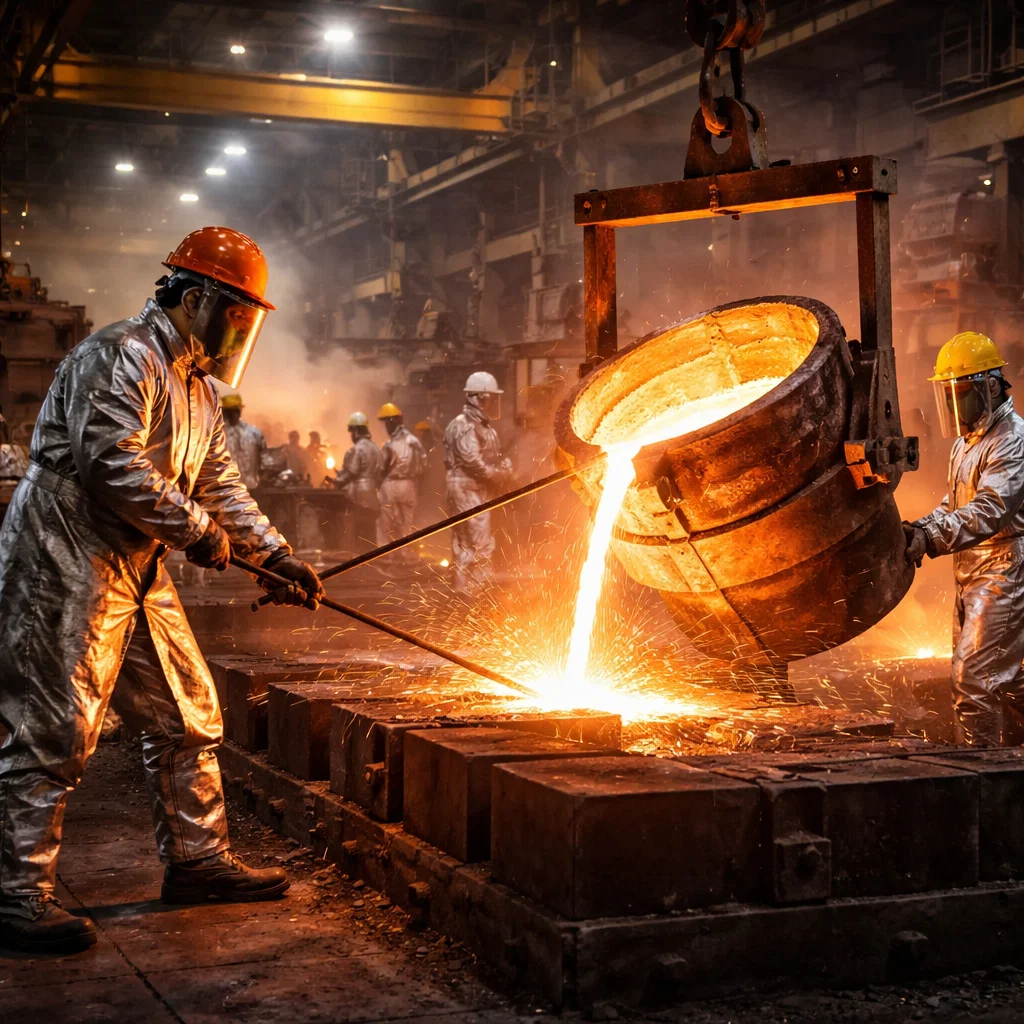
Sand casting is the most widely used and cost-effective method for bronze components, particularly for low-to-medium production volumes and larger parts. A pattern is used to create a mould cavity in bonded sand (green sand, resin sand, or no-bake sand). Molten bronze is poured into the cavity, allowed to cool, and the sand is broken away to reveal the casting.
Advantages: Suitable for complex geometries and large components, low tooling cost, wide alloy flexibility, handles all major bronze grades. Typical tolerances: ±0.5 mm to ±1.5 mm depending on size. Weight range: 100 grams to several tonnes.
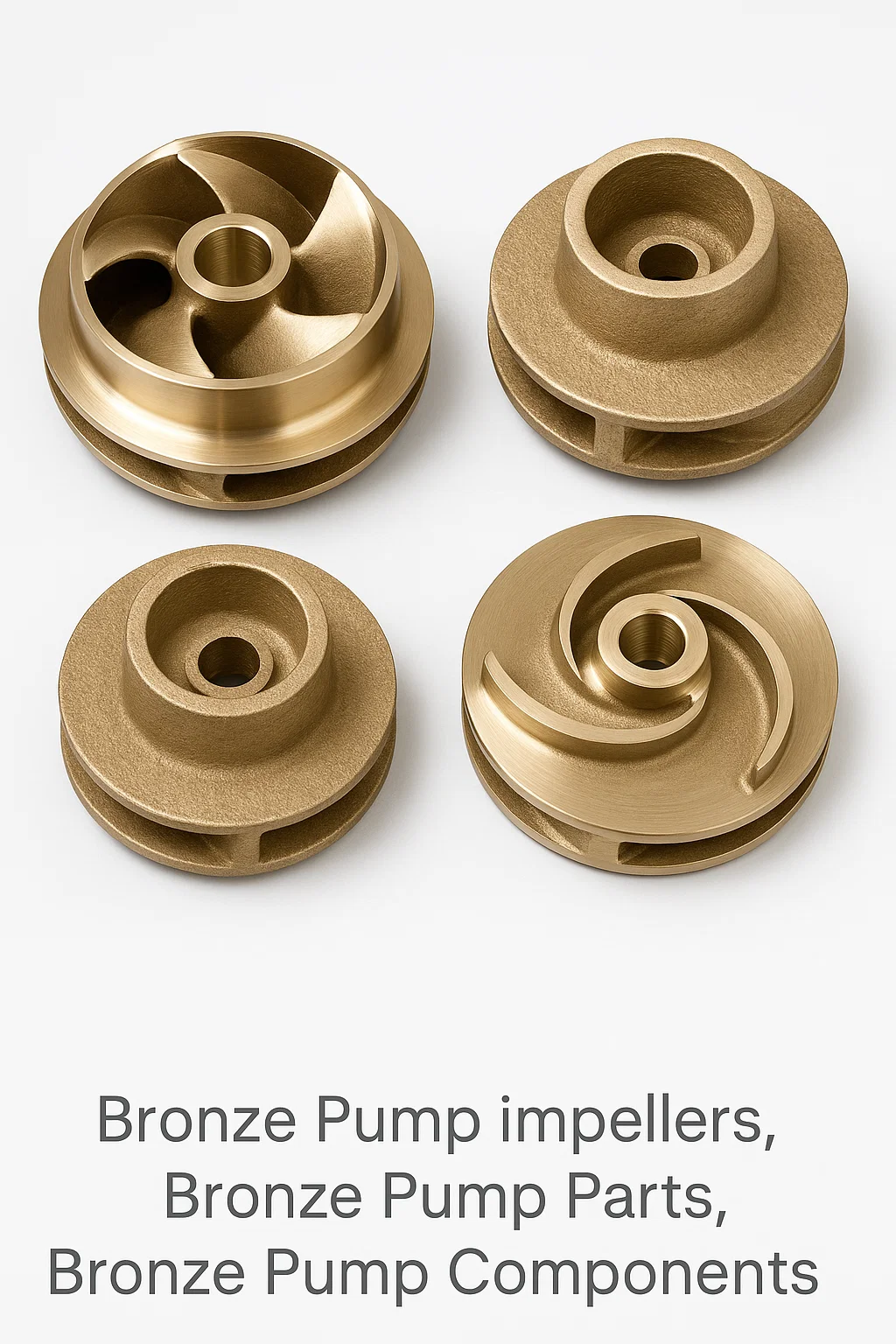
Typical Parts: Pump bodies, valve bodies, marine fittings, bearing housings, propellers, impellers, large bushings, pipe flanges, gear blanks, and architectural hardware.
2. Investment Casting (Lost Wax Casting)
Investment casting produces near-net-shape components with excellent dimensional accuracy and superior surface finish. A wax pattern is coated with a ceramic slurry, which is then fired to remove the wax and harden the ceramic shell. Molten bronze is cast into the shell, which is broken away after solidification.
Advantages: Excellent surface finish (Ra 1.6–6.3 µm), tight dimensional tolerances (±0.1–0.25 mm), suitable for intricate shapes with thin walls. Best alloys: Phosphor bronze, silicon bronze, aluminium bronze, tin bronze.
Typical Parts: Electrical connectors, switch gear components, impellers, turbine blades, decorative fittings, marine hardware, small valves, and precision mechanical components.
3. Centrifugal Casting
Centrifugal casting is ideal for producing cylindrical or tubular bronze components with excellent density and mechanical properties. Molten metal is poured into a rotating mould, and centrifugal forces distribute the metal against the mould wall, eliminating porosity and producing a fine-grained, dense structure.
Advantages: Superior density and mechanical strength, no cores required for hollow cylindrical parts, reduced porosity, excellent for continuous bar/tube manufacture. Types: True centrifugal (for pipes and tubes), semi-centrifugal (for discs and wheels), and centrifuge casting (for precision small parts).
Typical Parts: Bearing sleeves, bushings, bronze tubes, worm wheels, hydraulic cylinders, gear rings, slewing rings, large-diameter flanges, and continuous cast bar stock.
4. Continuous Casting
Continuous casting is used to produce semi-finished bronze profiles — rods, bars, tubes, and strips — with consistently high quality and minimal segregation. The process draws solidifying metal continuously through a water-cooled graphite die, producing long lengths that are subsequently cut to size.
Advantages: Consistent grain structure, minimal inclusions, excellent mechanical properties, high production efficiency, suitable for phosphor bronze and leaded bronze grades. Typical forms: Round bars (dia. 20–300 mm), hollow bars, rectangular bars, and hexagonal sections.
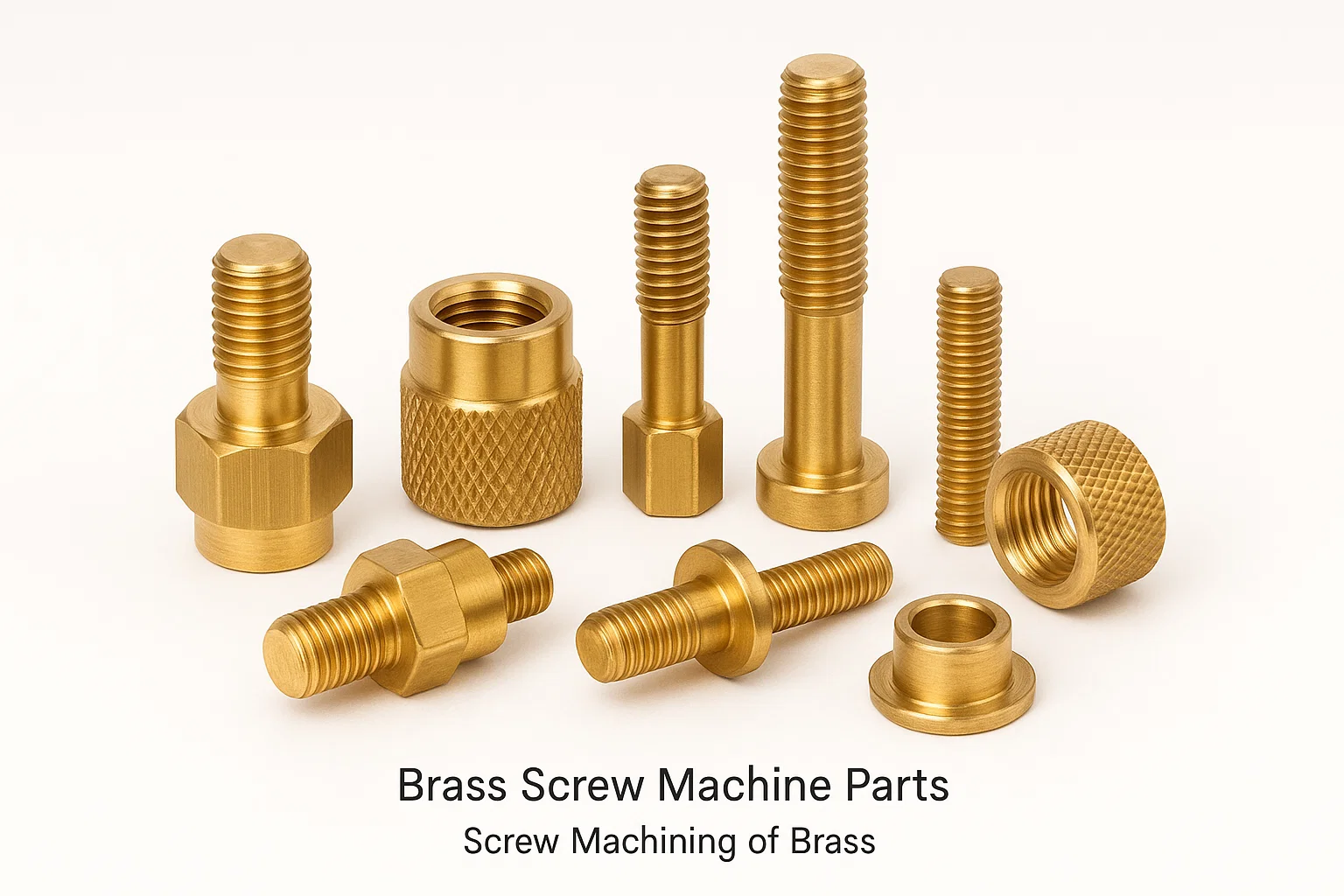
Typical Parts: Bearing stock, bush blanks, gear blanks, machined electrical contacts, and precision machined components produced from CNC turning.
5. Die Casting (Pressure Die Casting)
Though less common for high-tin bronzes (due to their relatively high melting points), die casting is used for silicon bronze, some leaded bronze grades, and lower-melting copper alloys. Molten metal is injected under high pressure into a steel die, producing components with excellent dimensional consistency and smooth surfaces.
Advantages: High production volumes, excellent repeatability, thin walls achievable, minimal machining required. Best alloys: Silicon bronze (C87300), yellow brass, some manganese bronze grades.
Typical Parts: Electrical housings, small pump parts, architectural hardware, decorative fittings, switch components, and connector bodies.
6. Shell Mould Casting
Shell mould casting uses resin-bonded sand formed into thin shells around heated metal patterns. It offers better dimensional accuracy than green sand casting while maintaining reasonable tooling costs. Ideal for medium-volume production runs requiring better surface finish than conventional sand casting.
Advantages: Better surface finish (Ra 3.2–6.3 µm), tighter tolerances than green sand, good for moderate production volumes. Typical tolerances: ±0.25 mm to ±0.5 mm.
Typical Parts: Bronze gear blanks, impellers, valve bodies, bearing brackets, and medium-sized industrial fittings.
7. Plaster Mould Casting
Plaster mould casting is used for non-ferrous metals including bronze, providing excellent surface finish and the ability to capture very fine detail. Plaster moulds have low thermal conductivity, which results in slower cooling and promotes a more uniform grain structure — particularly beneficial for aluminium and silicon bronzes.
Advantages: Excellent surface detail, smooth finish, good dimensional accuracy. Best for: Intricate industrial components, artistic castings, prototype development.
Typical Bronze Cast Parts — Industrial and Electrical Applications
Bronze castings serve virtually every major industry sector. Below is a breakdown of key applications.
Industrial Applications
| Part / Component | Alloy Used | Casting Method | Industry Sector |
|---|---|---|---|
| Pump Impellers | Aluminium Bronze AB2, LG2 | Sand Casting, Investment Casting | Oil & Gas, Water Treatment |
| Valve Bodies & Gates | LG2, LG4, Tin Bronze | Sand Casting | Process Industry, Plumbing |
| Propellers (Marine) | Manganese Bronze, AB2 | Sand Casting, Centrifugal | Marine & Shipbuilding |
| Bearings & Bushings | Phosphor Bronze PB1, PB2 | Centrifugal, Continuous Cast | General Engineering, Automotive |
| Worm Wheels & Gears | Phosphor Bronze PB2, PB4 | Centrifugal, Sand Casting | Gearboxes, Machine Tools |
| Hydraulic Manifolds | Tin Bronze, LG2 | Sand Casting | Hydraulic Systems |
| Pipe Flanges & Couplings | Naval Brass, LG2 | Sand Casting | Petrochemical, Marine |
| Steam Valve Seats | Tin Bronze, Phosphor Bronze | Investment Casting, Sand | Power Generation, Refinery |
| Thrust Washers | Leaded Tin Bronze C83800 | Centrifugal, Continuous Cast | Automotive, Machinery |
| Pump Casings | Aluminium Bronze AB1 | Sand Casting | Chemical, Desalination |
| Rudder Pintles & Gudgeons | Manganese Bronze, AB2 | Sand Casting | Marine |
| Mining Crushers — Liner Bushes | Phosphor Bronze PB2 | Centrifugal, Sand Casting | Mining & Minerals |
Electrical and Electronics Applications
| Part / Component | Alloy Used | Casting Method | Application |
|---|---|---|---|
| Electrical Switch Contacts | Phosphor Bronze C51000, C52100 | Investment Casting, Die Casting | Low/medium voltage switchgear |
| Connector Terminals | Phosphor Bronze C54400 | Investment Casting | PCB connectors, industrial connectors |
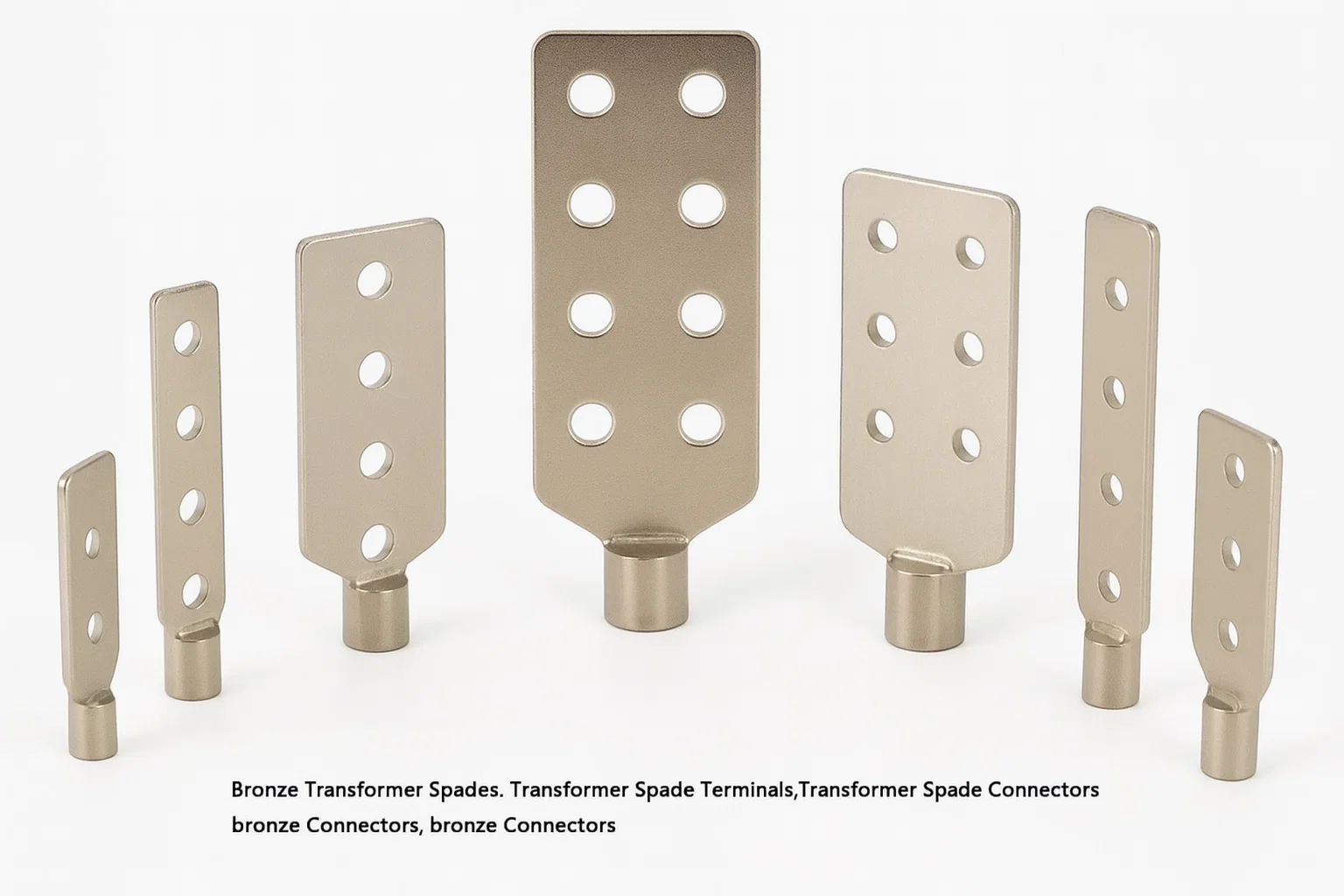
| Transformer Tap Changers | Tin Bronze, Phosphor Bronze | Investment Casting, Centrifugal | Power transformers |
| Slip Rings | Phosphor Bronze, Silicon Bronze | Centrifugal Casting | Rotating machines, wind turbines |
| Bus Bar Clamps & Lugs | Silicon Bronze C87300 | Investment Casting, Die Casting | HV/MV switchgear, substations |
| Motor Commutators | Phosphor Bronze, High-Cu Bronze | Centrifugal | DC motors, traction motors |
| Current Collector Shoes | Copper Tin Bronze | Sand Casting, Centrifugal | Railway traction, metro systems |
| Earth Clamps & Grounding Parts | Silicon Bronze, Tin Bronze | Investment Casting | Electrical earthing systems |
| Cable Gland Bodies | Leaded Tin Bronze | Die Casting, Investment Casting | Industrial cable management |
| HV Switchgear Housings | Aluminium Bronze AB1 | Sand Casting | High-voltage switchgear |
Bronze vs Other Alloys — Why Bronze Wins in Critical Applications
Engineers and designers frequently compare bronze against alternative materials including cast iron, steel, aluminium, and engineered plastics. While each material has its niche, bronze excels across several critical dimensions that make it irreplaceable in demanding industrial and electrical environments.
In terms of corrosion resistance, bronze — especially aluminium bronze and tin bronze — outperforms carbon steel, cast iron, and most stainless grades in saltwater and chemical environments. For wear and bearing properties, phosphor bronze’s self-lubricating characteristics and high fatigue strength make it superior to steel in sliding contact applications such as bushings, gears, and worm wheels. In electrical performance, phosphor and silicon bronzes offer a unique combination of spring temper, electrical conductivity, and corrosion resistance that aluminium alloys and ferrous metals cannot replicate. From a non-sparking standpoint, bronze is inherently non-sparking and non-magnetic, making it essential in hazardous area (ATEX) environments including oil refineries, chemical plants, and explosive storage facilities.
Quality Standards and Certifications for Bronze Castings
High-quality bronze castings must conform to recognised national and international standards. Key standards include ASTM B584 (standard specification for copper alloy sand castings), ASTM B505 / B505M (copper-based alloy continuous castings), ASTM B148 (aluminium-bronze sand castings), BS EN 1982 (copper and copper alloy ingots and castings), IS 318 (leaded tin-bronze ingots and castings — Bureau of Indian Standards), IS 5743 (aluminium bronze castings), IS 7811 (phosphor bronze), and ISO 1338 (copper-tin alloys — chemical composition and forms of wrought products).
Additional quality certifications that reputable manufacturers hold include ISO 9001:2015 (Quality Management System), ISO 14001 (Environmental Management), REACH and RoHS compliance for electrical applications, EN 10204 — material test certificates (Type 3.1 and 3.2), and Lloyd’s, DNV, BV, and ABS approvals for marine-grade castings.
How to Select the Right Bronze Alloy for Your Application
Selecting the correct bronze alloy requires balancing multiple engineering and commercial factors. For bearing and wear applications, phosphor bronze (PB1, PB2 / C90700, C91100) is the preferred choice, offering high load-bearing capacity, fatigue resistance, and compatibility with steel shafts. For marine and seawater-exposed parts, aluminium bronze grades (AB1, AB2 / C95400, C95800) and manganese bronze (C86300) provide the best corrosion resistance and biofouling resistance. For electrical and electronic components requiring springiness and conductivity, phosphor bronze strip grades (C51000, C52100, C54400) are industry-standard choices used globally by switchgear, connector, and relay manufacturers. For general engineering (valves, pumps, fittings), LG2 gun metal (C83600) remains the most versatile and cost-effective choice, combining good machinability, pressure tightness, and corrosion resistance. For high-strength structural applications such as propellers, hydraulic cylinders, and heavy-duty bushings, nickel aluminium bronze (C95800) provides the highest mechanical strength of any commercial bronze grade.
Why Choose Brass Parts India for Your Bronze Castings?
At Brass Parts India, we are not just manufacturers — we are your dedicated technical partner for precision bronze and copper alloy castings. With decades of experience supplying high-quality non-ferrous castings to customers across India, Europe, the Middle East, North America, and Southeast Asia, we offer a depth of expertise that is difficult to match.
Our Bronze Casting Capabilities
We manufacture bronze castings across all major processes including sand casting, investment casting (lost wax), centrifugal casting, and continuous casting, covering weights from as small as 50 grams to over 500 kilograms per piece. Our foundry handles all major bronze grades including LG2, LG4, Phosphor Bronze (PB1 & PB2), Aluminium Bronze (AB1 & AB2), Silicon Bronze, Manganese Bronze, Tin Bronze, and special alloy grades to customer specification.
Our In-House Machining and Finishing
What sets Brass Parts India apart is our ability to deliver fully machined, finished, and inspection-certified components — not just rough castings. Our CNC machining centre, turning, milling, drilling, and grinding capabilities mean we can deliver components to your exact drawing, with tolerances as tight as ±0.01 mm on critical dimensions. Surface finishing options include sand blasting, shot blasting, polishing, electroplating (tin, nickel, chrome, silver), and anodising (for aluminium-silicon bronze grades).
Quality You Can Trust
Quality is the foundation of everything we do at Brass Parts India. Every batch of bronze castings is chemically analysed using optical emission spectrometry (OES) to confirm alloy composition. Mechanical testing including tensile strength, hardness (Brinell/Rockwell), and elongation is conducted per applicable standards. Non-destructive testing (NDT) including dye penetrant inspection (DPI), radiographic testing (RT), and ultrasonic testing (UT) is available on request. We supply full material test certificates (EN 10204 — 3.1) with every order.
Flexible MOQs and Competitive Pricing
Whether you need 10 pieces of a specialised aluminium bronze impeller or 10,000 pieces of phosphor bronze bushings, Brass Parts India can accommodate your requirement. Our competitive pricing — backed by India’s cost-effective manufacturing ecosystem and our own in-house alloy preparation — ensures you receive world-class quality at a highly competitive cost. We offer transparent pricing, no hidden tooling charges, and flexible payment terms for established customers.
Export Experience and Global Compliance
Brass Parts India exports bronze castings and machined components to clients in the United Kingdom, Germany, USA, UAE, Australia, South Africa, and across Southeast Asia. We are fully conversant with ASTM, BS EN, DIN, ISO, and IS standards, and our documentation and packing meet international export requirements including MSDS, country-of-origin certificates, and third-party inspection (SGS, Bureau Veritas) where required.
Fast Tooling and Development Lead Times
New pattern and tooling development for sand castings is typically completed within 2–4 weeks, with initial samples available for customer approval within 3–5 weeks from order confirmation. Investment casting tooling lead times are 3–6 weeks. For urgent requirements, we maintain a range of standard sizes in popular bronze grades as continuous cast bar and tube stock, enabling fast turnaround on machined components without casting lead times.
Frequently Asked Questions — Bronze Casting
What is the difference between bronze and brass?
Bronze is primarily copper alloyed with tin (and sometimes other elements), whereas brass is copper alloyed primarily with zinc. Bronze generally offers superior corrosion resistance, wear resistance, and strength compared to brass, particularly in marine and chemical environments. Brass is more economical and easier to machine for general engineering parts.
Which bronze alloy is best for electrical applications?
Phosphor bronze grades — particularly C51000 (5% Sn) and C52100 (8% Sn) — are the gold standard for electrical spring contacts, connectors, and relay components due to their excellent balance of electrical conductivity, spring properties, and corrosion resistance. Silicon bronze (C87300) is preferred for cast electrical housings and fittings due to its excellent castability and conductivity.
Can bronze castings be used in seawater applications?
Yes — aluminium bronze (AB1/AB2) and manganese bronze are specifically engineered for seawater service and are used extensively in marine propellers, pump impellers, valve bodies, and sea water piping fittings. They resist both general corrosion and the localised attack (pitting, crevice corrosion, dezincification) that affects many other copper alloys in marine service.
What is the minimum order quantity at Brass Parts India?
We accommodate both prototype and production quantities. For investment castings and sand castings, there is no strict minimum order quantity for new development, though commercial pricing applies from small batch sizes. For stock machined components, we supply from single pieces. Please contact us with your drawing and quantity requirement for a tailored quotation.
Do you supply material test certificates with bronze castings?
Yes. All bronze castings supplied by Brass Parts India are accompanied by full material test certificates (MTCs) per EN 10204 — 3.1, including chemical composition analysis, mechanical test results (where applicable), and heat/cast number traceability.
Conclusion — Bronze Casting and Bronze casting Alloy Expertise You Can Rely On
Bronze casting combines millennia of metallurgical heritage with cutting-edge modern engineering to produce components that are truly irreplaceable in industrial, marine, and electrical applications. The breadth of bronze alloy grades — from humble LG2 gun metal to high-performance nickel aluminium bronze — means there is an optimum bronze alloy for virtually every application, and the versatility of casting processes available ensures that geometry, volume, and precision are never limiting factors.
At Brass Parts India, we bring together deep alloy knowledge, multi-process casting capability, in-house machining, rigorous quality control, and global export experience to deliver bronze cast components that meet the most demanding engineering specifications — on time, to specification, and at a price that makes your project competitive.
Ready to discuss your bronze casting requirement? Contact Brass Parts India today to speak with our technical team, request a quotation, or send us your drawings for a detailed proposal. We supply to customers worldwide and welcome enquiries from OEMs, EPCs, distributors, and end-users across all industry sectors.