
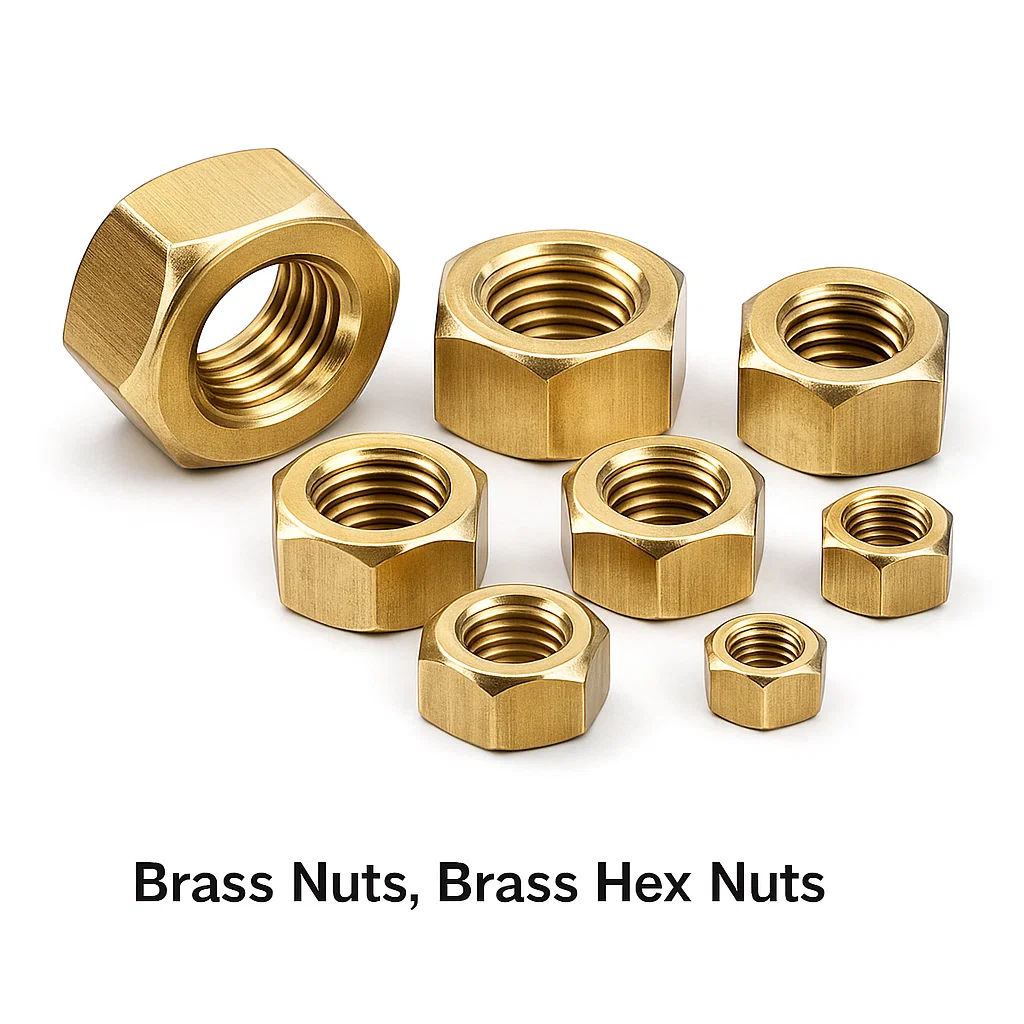
Brass Nuts, Brass Hex Nuts, Brass Threaded Nuts
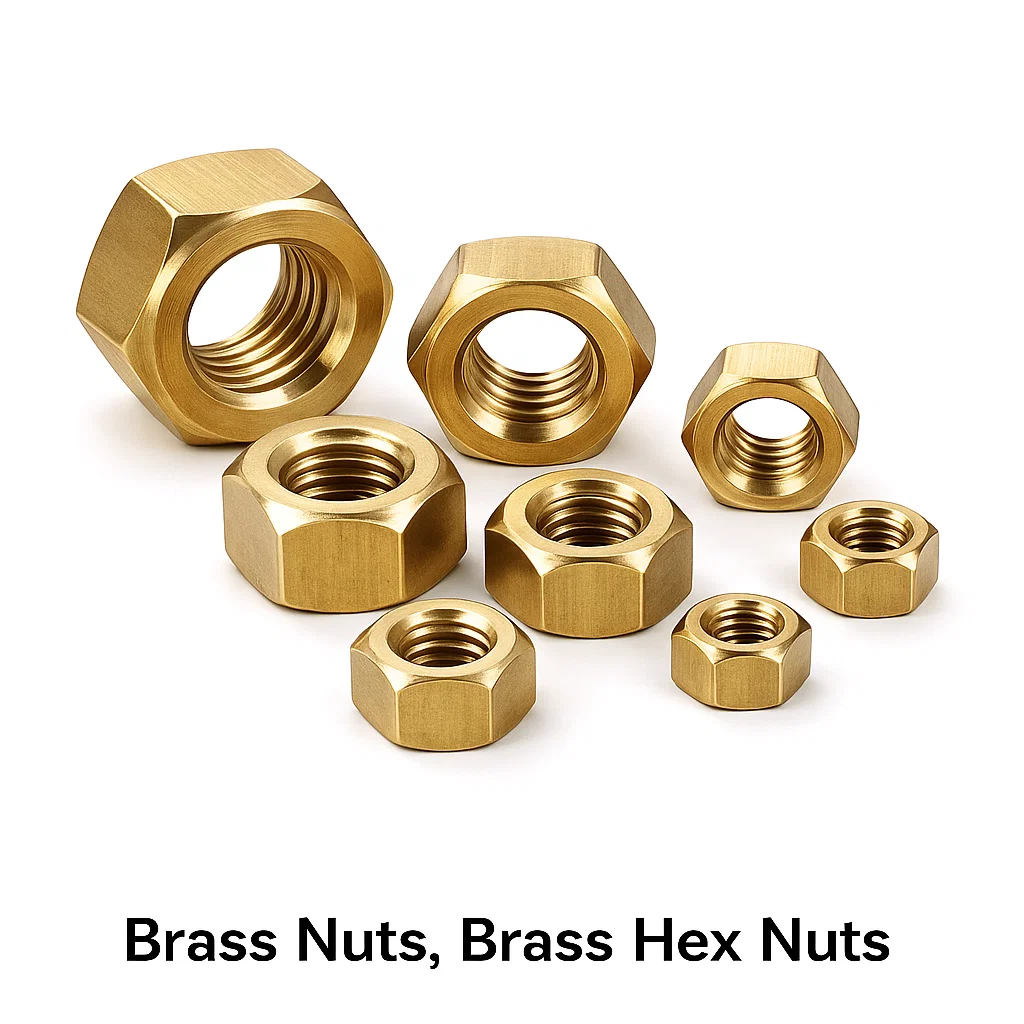
Brass Nuts & Brass Hex Nuts – Precision Manufactured Fasteners for Global Industries
Rate: US$ 10.90kilogram, CIF USA sea port
We are one of the leading manufacturers and exporters of Brass Nuts and Brass Hex Nuts from India. We have been supplying precision-engineered Brass fastening solutions to the world market for many decades. Our manufacturing facility specializes in producing high-quality Brass Nuts across various specifications including UNC, UNF, metric threading standards, and custom-machined variants for specialized industrial applications. With over three decades of experience in metalworking and fastener production, we have established ourselves as a trusted supplier to industries spanning automotive, electrical, electronics, marine, plumbing, HVAC, telecommunications, and instrumentation sectors worldwide. Our Brass Nuts are manufactured using premium-grade Copper alloys conforming to international material standards including ASTM B16, IS 319, BS 2874, DIN 17660, and JIS H3250. Every batch undergoes rigorous quality inspection to ensure dimensional accuracy, thread quality, tensile strength, and corrosion resistance meet customer specifications and international fastener standards such as ISO 4032, DIN 934, ASME B18.2.2, and BS 3692. We serve customers across the USA, UK, Canada, Australia, Europe, Middle East, and Southeast Asia with consistent quality, competitive pricing, and reliable delivery schedules.
Comprehensive Overview of Brass Nuts Manufacturing
Brass Nuts represent critical fastening components manufactured from various Copper-Zinc alloys, offering an exceptional combination of corrosion resistance, electrical conductivity, machinability, and aesthetic appeal that makes them indispensable across countless industrial applications. The manufacturing of Brass Nuts involves sophisticated processes including hot forging, cold heading, precision CNC machining, thread rolling, and thread cutting operations depending on the size, quantity, and specification requirements. Our production capabilities encompass Brass Hex Nuts ranging from M1 to M100 in metric dimensions and from #0-80 to 4 inches in imperial sizes, accommodating both standard and custom thread pitches. The versatility of Brass as a fastener material stems from its non-magnetic properties, spark-resistant characteristics, excellent thermal conductivity, and superior resistance to dezincification when properly alloyed. Modern Brass Nut manufacturing integrates computer numerical control technology with traditional metalworking expertise, enabling us to maintain tolerances as tight as ±0.02mm for critical applications while achieving production volumes ranging from prototype quantities to millions of pieces annually. The selection of appropriate Brass alloy composition becomes paramount based on the intended application environment, with free-machining grades like CDA 360 (C36000) offering optimal production efficiency for high-volume runs, while dezincification-resistant alloys like CDA 377 provide enhanced longevity in marine and potable water applications. Surface treatments including electroplating with Nickel, Chrome, Tin, or Silver, along with anti-tarnish coatings and passivation processes, further enhance the functional and aesthetic properties of Brass Nuts for specialized applications. Our manufacturing approach emphasizes material traceability, with complete mill certificates available for every production lot, ensuring compliance with RoHS, REACH, and other international material safety regulations.
Manufacturing Infrastructure and Technology: Our state-of-the-art production facility operates advanced CNC multi-spindle automatic lathes, Swiss-type turning centers, progressive die stamping presses ranging from 60-ton to 800-ton capacity, thread rolling machines for superior thread strength, and precision grinding equipment for achieving exceptional surface finishes. Quality assurance laboratories equipped with coordinate measuring machines (CMM), optical comparators, thread gauges (GO/NO-GO), hardness testers (Brinell and Rockwell), and spectroscopic analysis equipment ensure every Brass Nut meets stringent dimensional and mechanical property requirements. Our production capacity exceeds 50 million fasteners monthly across various configurations, with dedicated production lines for different size ranges and threading standards enabling efficient order fulfillment.

Brass Hex Nuts – Standard Configuration for Universal Applications: Brass Hex Nuts represent the most widely specified fastener configuration, featuring six-sided external geometry that facilitates easy installation and removal using standard wrenches, socket tools, or pneumatic impact drivers. The hexagonal profile distributes torque loading evenly across six contact surfaces, minimizing the risk of fastener rounding during assembly operations while providing positive engagement in both manual and automated assembly environments. Our Brass Hex Nuts are manufactured in accordance with international dimensional standards including DIN 934, ISO 4032, ASME B18.2.2, and BS 3692, ensuring interchangeability with globally sourced fastening systems. The manufacturing process typically involves either hot forging for larger sizes (above M24) followed by machining operations, or cold heading for smaller sizes (M24 and below) utilizing high-speed progressive die systems that deliver exceptional dimensional consistency and surface quality. Thread specifications encompass metric coarse pitch (ISO 965-1), metric fine pitch, Unified National Coarse (UNC), Unified National Fine (UNF), British Standard Whitworth (BSW), and British Standard Fine (BSF) configurations. Material selection for standard Brass Hex Nuts generally favors CDA 360 (C36000) free-cutting Brass containing approximately 61% Copper and 35.5% Zinc with 3% Lead for enhanced machinability, though lead-free alternatives using Bismuth or Silicon as machining aids are available for potable water and food processing applications complying with NSF-61 standards. Surface finishes range from natural mill finish to polished, buffed, or electroplated variants depending on aesthetic requirements and environmental exposure conditions. Applications span electrical enclosures, automotive trim assemblies, plumbing fixtures, marine hardware, telecommunications equipment, musical instruments, decorative hardware, and general mechanical assemblies where corrosion resistance and electrical conductivity are paramount.
CDA 360 Brass Hex Nuts – Premium Free-Machining Grade for High-Volume Production: CDA 360 Brass alloy, designated as C36000 under the Unified Numbering System and equivalent to CuZn36Pb3 in European nomenclature (EN 12164), represents the industry standard for high-speed machining of Brass fasteners due to its optimized composition containing 61-63% Copper, 35.5-37% Zinc, and 2.5-3.7% Lead with trace amounts of Iron. This specific alloy composition achieves the highest machinability rating (100% on the machinability index) among Copper alloys, enabling production speeds up to 300 surface feet per minute with extended tool life and superior surface finish characteristics. The presence of Lead in controlled quantities creates microscopic discontinuities in the chip formation process, resulting in short, easily managed chips rather than long, stringy waste material that can interfere with automated manufacturing operations. CDA 360 Brass Hex Nuts exhibit tensile strength ranging from 345-400 MPa (50,000-58,000 psi), yield strength of 125-170 MPa (18,000-25,000 psi), and elongation values of 18-25% in standard hardness conditions, providing adequate mechanical strength for most general-purpose fastening applications while maintaining excellent cold formability. The thermal conductivity of 115 W/m·K and electrical conductivity of 26% IACS make these nuts suitable for applications requiring heat dissipation or electrical grounding capabilities. However, CDA 360 is not recommended for prolonged exposure to temperatures above 200°C or for marine environments with extended water immersion due to potential dezincification corrosion in aggressive environments. Our CDA 360 Brass Hex Nuts are manufactured under strict process controls maintaining chemical composition within specified tolerances verified through optical emission spectroscopy, ensuring consistent mechanical properties and machining performance across production batches. These nuts find extensive application in electrical switchgear, electronic enclosures, automotive instrument panels, furniture hardware, lock assemblies, musical instruments, and decorative architectural applications.
C36000 Brass Nuts – American Standard Designation for Industrial Fasteners: C36000 Brass Nuts, identical in composition to CDA 360 but referenced by the Copper Development Association’s five-digit designation system commonly used in American industrial specifications, serve identical applications while adhering to ASTM B16 (Free-Cutting Brass Rod, Bar, and Shapes) and ASTM B124 (Copper and Copper Alloy Forging Rod, Bar, and Shapes) material standards. This designation system provides precise traceability in procurement documents, technical drawings, and quality certifications required by aerospace, defense, and critical infrastructure projects where material pedigree documentation is mandatory. C36000 Brass demonstrates excellent resistance to atmospheric corrosion, freshwater exposure, and most organic compounds, making it the preferred choice for HVAC systems, water meter assemblies, gas distribution components, and pneumatic control systems. The alloy’s antimicrobial properties, deriving from the Copper content, provide additional benefits in healthcare equipment, food processing machinery, and public infrastructure applications where bacterial growth inhibition is desirable. Manufacturing processes for C36000 Brass Nuts include both subtractive (CNC turning, milling) and formative (cold heading, hot forging) techniques, with selection determined by production volume, dimensional complexity, and cost considerations. Cold-headed C36000 Brass Nuts exhibit superior grain structure and mechanical properties compared to machined variants due to work-hardening effects induced during the heading process, resulting in higher yield strength and fatigue resistance. Our production capabilities encompass both approaches, allowing us to recommend the most cost-effective manufacturing method based on customer requirements. Heat treatment processes including stress-relief annealing at 250-300°C can be applied to minimize residual stresses in cold-worked components, preventing stress-corrosion cracking in aggressive service environments. C36000 Brass Nuts are available in all standard thread configurations with tolerance grades ranging from 6H (general purpose) to 4H (precision applications) per ISO 965-2 or Class 2B per ASME B1.1 for American thread standards.
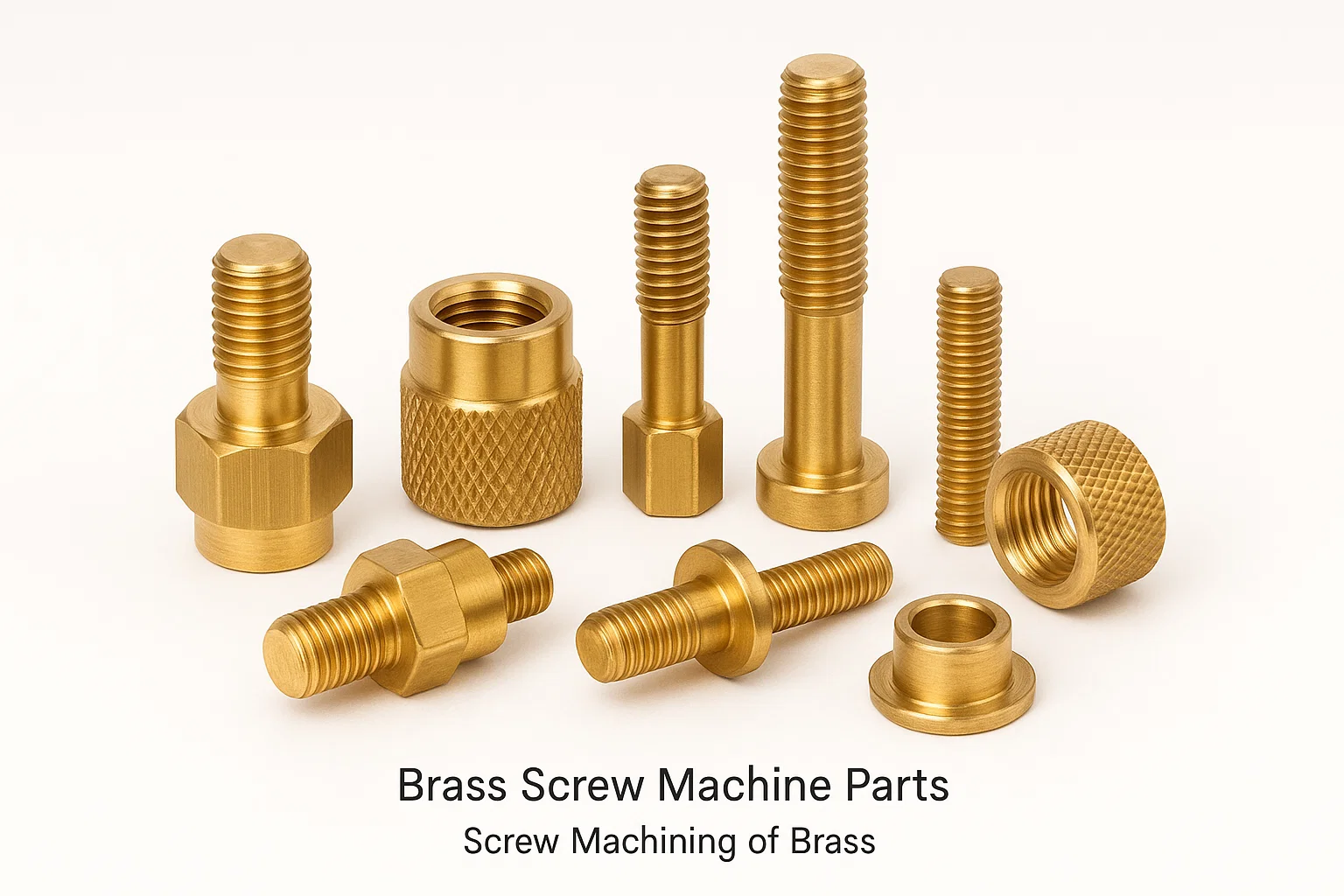
Brass Machined Nuts – Precision Components for Specialized Applications: Brass Machined Nuts represent custom-manufactured fastening solutions produced through precision CNC turning, milling, and threading operations from solid Brass bar stock or hex rod material, accommodating complex geometries, tight tolerances, and special features that cannot be economically produced through cold heading or forging processes. These components typically feature non-standard dimensions, multiple thread sizes within a single component, integrated flanges or shoulders, captive washer grooves, knurled gripping surfaces, reduced body sections for weight optimization, or specialized wrench engagement features. The machining approach enables production of both small prototype quantities (as few as 10 pieces) and medium production runs (up to 10,000 pieces) without requiring expensive tooling investment, making it ideal for custom equipment manufacturing, product development, aerospace applications, scientific instrumentation, and specialized industrial machinery. Material selection for Brass Machined Nuts encompasses the full range of wrought Brass alloys including C36000 for standard applications, C37700 (Forging Brass) for enhanced corrosion resistance in marine environments, C35300 for applications requiring higher strength, and C27400 (Yellow Brass) for applications prioritizing corrosion resistance over machinability. Our CNC machining centers equipped with live tooling, sub-spindle capabilities, and automatic bar feeders achieve cycle times competitive with formed fasteners for complex geometries, while maintaining tolerances as tight as ±0.01mm on critical dimensions. Thread specifications can accommodate any standard (metric, UNC, UNF, BSW, BSF, ACME, Whitworth) or custom thread form including multi-start threads, tapered pipe threads (NPT, BSPT), and left-hand thread orientations. Secondary operations including thread locking patches, adhesive bonding of captive washers, precision grinding of sealing surfaces, and selective plating of specific surfaces can be integrated into the manufacturing process. Surface finishes achievable through precision machining include Ra values as low as 0.4μm on turned surfaces and 0.8μm on threaded surfaces, meeting requirements for high-pressure sealing applications and aesthetic assemblies. Applications for Brass Machined Nuts include scientific instruments, medical devices, telecommunications equipment, specialty valves, custom tooling, prototype assemblies, replacement parts for obsolete equipment, and any application where standard fasteners cannot meet functional requirements.
Brass UNC Nuts – American Standard Coarse Thread Fasteners: Brass Unified National Coarse (UNC) Nuts manufactured to ASME B1.1 thread specifications represent the most common imperial thread system used throughout North America for general-purpose mechanical assemblies, offering optimal balance between strength, ease of assembly, and resistance to cross-threading damage. UNC threads feature relatively large pitch (fewer threads per inch) compared to fine thread alternatives, providing several functional advantages including faster assembly speeds, greater tolerance for plating thickness variations, reduced sensitivity to minor dirt or corrosion contamination, easier field assembly without precision alignment, and improved vibration resistance due to increased thread engagement per revolution. Standard UNC size range encompasses designations from #0-80 (0.060″ diameter) through 4″-7 TPI (4.000″ diameter), with our production capabilities covering the most commonly specified sizes from #2-56 through 1″-8 including fractional sizes (1/4″-20, 5/16″-18, 3/8″-16, 1/2″-13, 5/8″-11, 3/4″-10, 7/8″-9, 1″-8). Thread tolerance classes for Brass UNC Nuts typically conform to Class 2B (standard fit, general purpose) or Class 3B (tighter tolerance for precision applications) per ASME B1.1, with Class 2B providing adequate clearance for electroplated finishes and field assembly conditions. The hexagonal across-flats dimensions for Brass UNC Hex Nuts follow ASME B18.2.2 specifications, ensuring compatibility with standard American wrench and socket sizes commonly available in industrial maintenance facilities. Manufacturing processes include both cold heading for high-volume production of standard sizes (reducing material waste and improving mechanical properties through work hardening) and CNC machining for low-volume or special configurations. Our Brass UNC Nuts are manufactured from CDA 360 (C36000) free-machining Brass as standard material, with alternative alloys including C37700 (forging Brass with improved corrosion resistance) available for marine or outdoor applications. Thread rolling operations create superior thread strength compared to cut threads by aligning the grain structure along thread contours and work-hardening the thread surface, resulting in 20-30% higher tensile strength and significantly improved fatigue life. Applications encompass automotive assemblies, electrical equipment manufacturing, industrial machinery, agricultural equipment, consumer appliances, HVAC installations, and general maintenance applications throughout industries where imperial measurement systems predominate.
Brass Metric Nuts – International Standard Threading for Global Compatibility: Brass Metric Nuts manufactured in accordance with ISO 965 thread specifications and dimensional standards including ISO 4032 (hexagon nuts Style 1) and DIN 934 (hexagon nuts) represent the globally predominant fastening system used throughout Europe, Asia, South America, and increasingly in North America as industries adopt international standards. Metric thread designation follows the “M” prefix system indicating major diameter in millimeters followed by pitch specification (e.g., M8×1.25 indicates 8mm diameter with 1.25mm thread pitch), providing unambiguous specification across international boundaries. Standard metric coarse pitch threads (ISO 965-1) encompass sizes from M1×0.25 through M100×6, with our production capabilities covering the most industrially relevant range from M2×0.4 through M48×5 including both standard coarse pitch and fine pitch variants for applications requiring enhanced vibration resistance or thin-wall component assembly. Thread tolerance grades for Brass Metric Nuts typically specify 6H (general purpose, providing adequate clearance for plated finishes and normal assembly conditions) or 5H (closer tolerance for precision assemblies), with tolerance class selection affecting the ease of assembly and maximum assembly torque capabilities. The hexagonal across-flats dimensions specified in ISO 4032 differ slightly from ASME B18.2.2 equivalents, necessitating proper specification to ensure wrench fit compatibility in international equipment maintenance scenarios. Our Brass Metric Nuts are available in multiple height configurations including standard height (Style 1), thin nuts for space-constrained applications, and thick nuts for applications requiring increased thread engagement or wrench bearing surface. Manufacturing processes encompass hot forging for larger sizes (M24 and above) followed by thread cutting or thread rolling, and cold heading with thread rolling for smaller sizes providing superior production efficiency and mechanical properties. Material grades include C36000 (CuZn36Pb3) as standard, with C37700 (CuZn39Pb3) and lead-free Brass alloys available for specialized applications requiring enhanced corrosion resistance or compliance with environmental regulations restricting Lead content. Surface treatments include natural Brass finish, clear passivation for tarnish resistance, Nickel plating for enhanced corrosion protection, and hot-dip Tin plating for electrical applications. Applications span European automotive manufacturing, medical device assembly, renewable energy installations, telecommunications infrastructure, food processing equipment, pharmaceutical manufacturing systems, and any globally traded equipment requiring standardized metric fastening systems.
Brass UNF Nuts – Fine Thread Fasteners for Precision Applications: Brass Unified National Fine (UNF) Nuts conforming to ASME B1.1 specifications feature finer thread pitch (more threads per inch) compared to UNC equivalents, providing several performance advantages including increased tensile stress area for higher clamping force capacity, superior vibration resistance through greater thread engagement per unit length, improved sealing characteristics in fluid system applications, and enhanced precision in adjustment mechanisms requiring fine-pitch actuation. UNF thread sizes commonly manufactured include #0-80 through 1-1/2″-12, with popular sizes encompassing 1/4″-28, 5/16″-24, 3/8″-24, 7/16″-20, 1/2″-20, 9/16″-18, 5/8″-18, 3/4″-16, and 1″-14 among others specified in ASME B1.1. The finer pitch necessitates more careful assembly procedures including proper thread alignment, controlled torque application, and protection from cross-threading damage, making UNF threads less suitable for field assembly in dirty or poorly lit conditions but ideal for factory-assembled equipment and precision machinery. Thread tolerance classes mirror UNC standards with Class 2B representing standard commercial quality and Class 3B specifying precision tolerance for critical applications including aerospace components, instrumentation assemblies, and high-pressure fluid systems. Manufacturing Brass UNF Nuts requires specialized threading tools maintaining sharp cutting edges and precise lead accuracy to achieve proper thread form and fit characteristics, with thread rolling preferred over thread cutting for production quantities above 1000 pieces due to superior thread strength and fatigue resistance. The fine thread pitch makes these nuts more susceptible to galling (cold welding between mating threads) during assembly, particularly when assembling Brass nuts onto Stainless Steel bolts, necessitating proper lubrication with anti-seize compounds or Molybdenum Disulfide grease. Our Brass UNF Nuts are manufactured from premium C36000 free-machining Brass maintaining strict chemical composition control to ensure consistent thread cutting performance and dimensional accuracy across production lots. Surface finishes include natural mill finish, clear chromate passivation, Nickel plate for corrosion protection, and Silver plate for enhanced electrical conductivity in sensitive electronic applications. Applications include precision instrumentation, automotive transmission assemblies, aircraft components (using aerospace-grade specifications), hydraulic system components, scientific equipment, optical mounting systems, adjustable positioning mechanisms, and any assembly requiring fine-thread adjustment capabilities or superior vibration resistance.
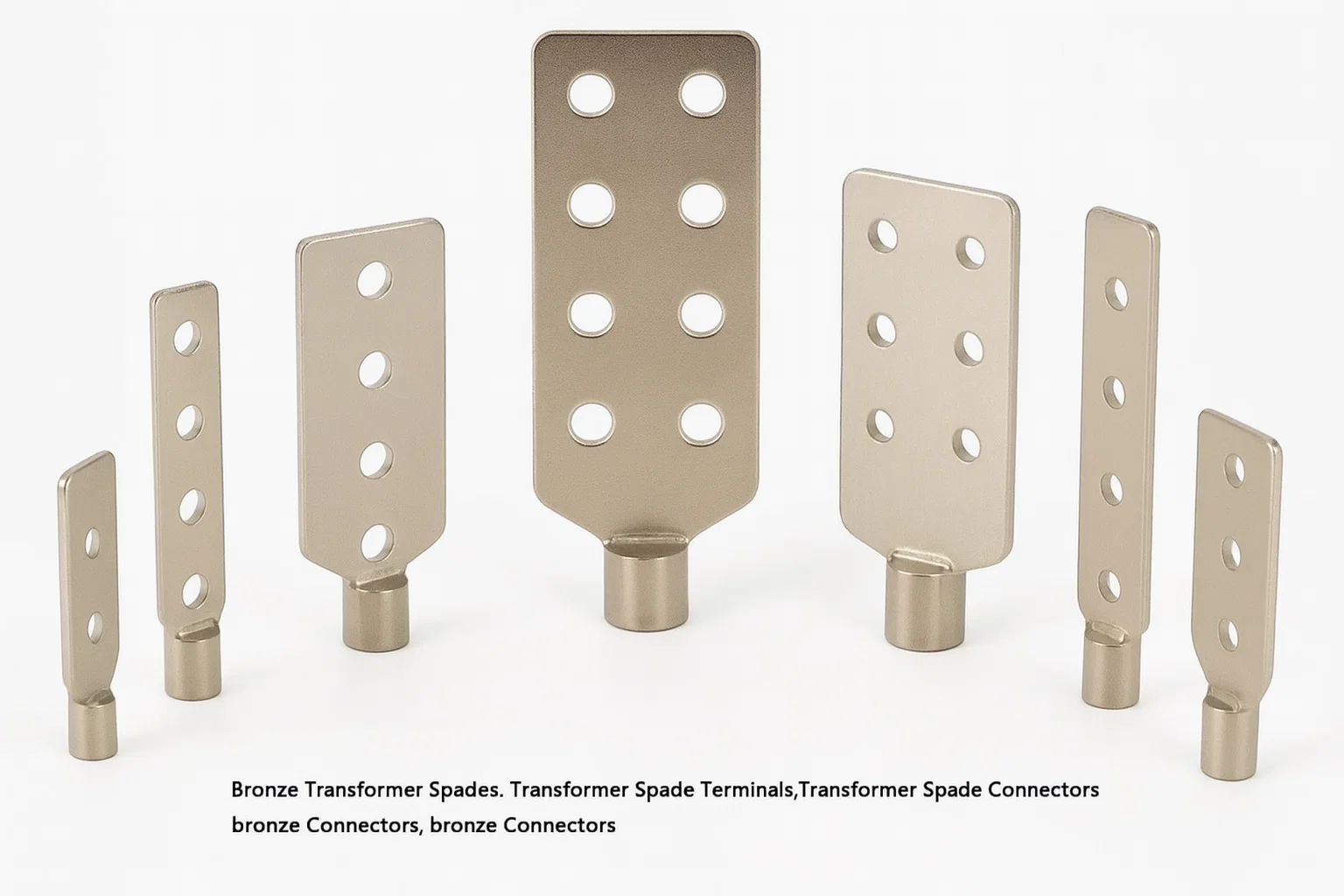
Brass Transformer Nuts – Specialized Hardware for Electrical Equipment Assembly: Brass Transformer Nuts represent purpose-designed fastening components specifically manufactured for electrical transformer, busbar, switchgear, and power distribution equipment assembly applications where exceptional electrical conductivity, corrosion resistance, and non-magnetic properties are critical performance requirements. These specialized nuts often feature modified geometries including elongated bodies for accommodating thick bus bars, integrated lock washer teeth for vibration resistance without additional components, extended wrench flats for high-torque assembly, reduced material thickness for space optimization in confined electrical enclosures, and chamfered or radiused edges preventing insulation damage during installation. Material selection favors high-conductivity Brass alloys including C36000 (26% IACS conductivity) for general applications, with C28000 (Muntz Metal, 40% Zinc) specified for larger transformer hardware requiring higher strength, and electrolytic tough pitch Copper (C11000, 100% IACS conductivity) for ultra-high current applications. Thread specifications accommodate both metric and imperial standards with typical sizes ranging from M6 through M24 in metric, and 1/4″-20 through 1″-8 in imperial configurations, designed to mate with Brass, Copper, or Tin-plated Steel studs common in electrical assemblies. The non-magnetic characteristic of Brass becomes critical in transformer applications where ferromagnetic fasteners would introduce hysteresis losses, eddy current heating, and magnetic field distortion affecting transformer efficiency and performance. Surface treatments for Brass Transformer Nuts emphasize electrical contact quality and corrosion resistance, including Tin plating (per ASTM B545) for enhanced solderability and contact resistance stability, Silver plating for premium applications requiring lowest contact resistance, and Nickel undercoat with Tin overcoat for marine switchgear installations. Manufacturing processes combine CNC machining for complex geometries and specialized features with high-volume cold heading for standard configurations, with all products undergoing 100% dimensional inspection and electrical conductivity verification. Thread locking features including nylon insert lock nuts, prevailing torque deformed threads, and chemical thread locking patches can be integrated for applications subject to vibration or thermal cycling. Our Brass Transformer Nuts comply with relevant electrical equipment standards including IEC 60137 (insulated bushings), IEEE C57 (transformer standards), and NEMA 110 (low-voltage switchboards), with material certifications traceable to specific heat lots. Applications encompass power transformers (distribution and power), electrical bus bar connections, circuit breaker assemblies, switchgear and panel boards, motor connection terminals, generator assemblies, renewable energy inverters, battery disconnect systems, and any electrical application requiring reliable, low-resistance fastening solutions capable of sustaining high amperage without overheating or corrosion-induced connection degradation.
| Thread Size | Across Flats (mm) | Across Corners Min (mm) | Thickness (mm) | Thread Pitch (mm) |
|---|---|---|---|---|
| M3 | 5.5 | 6.01 | 2.4 | 0.5 |
| M4 | 7.0 | 7.66 | 3.2 | 0.7 |
| M5 | 8.0 | 8.79 | 4.7 | 0.8 |
| M6 | 10.0 | 11.05 | 5.2 | 1.0 |
| M8 | 13.0 | 14.38 | 6.8 | 1.25 |
| M10 | 16.0 | 17.77 | 8.4 | 1.5 |
| M12 | 18.0 | 20.03 | 10.8 | 1.75 |
| M16 | 24.0 | 26.75 | 14.8 | 2.0 |
| M20 | 30.0 | 33.53 | 18.0 | 2.5 |
| M24 | 36.0 | 39.98 | 21.5 | 3.0 |
| Thread Size | Threads Per Inch | Across Flats (inches) | Thickness (inches) | Approx. Metric Equiv. |
|---|---|---|---|---|
| #10-24 | 24 | 3/8″ (0.375) | 0.134 | M5 |
| 1/4″-20 | 20 | 7/16″ (0.438) | 0.226 | M6 |
| 5/16″-18 | 18 | 1/2″ (0.500) | 0.273 | M8 |
| 3/8″-16 | 16 | 9/16″ (0.562) | 0.337 | M10 |
| 1/2″-13 | 13 | 3/4″ (0.750) | 0.448 | M12 |
| 5/8″-11 | 11 | 15/16″ (0.938) | 0.559 | M16 |
| 3/4″-10 | 10 | 1-1/8″ (1.125) | 0.665 | M20 |
| 1″-8 | 8 | 1-1/2″ (1.500) | 0.887 | M24 |
Material Grades and International Standards Compliance: Our Brass Nuts are manufactured using internationally certified Copper-Zinc alloys conforming to multiple material specification systems ensuring global compatibility and traceability. Primary material grades include CDA 360 / C36000 (UNS designation) equivalent to CuZn36Pb3 (European EN 12164), CW614N (European wrought designation), JIS H3250 C3604 (Japanese standard), IS 319 Type I (Indian standard), and GB/T 4423 HPb59-1 (Chinese standard), all representing free-machining Brass with approximately 61% Copper, 36% Zinc, and 3% Lead optimized for high-speed production. For marine and dezincification-resistant applications, we offer CDA 377 / C37700 equivalent to CuZn39Pb3 (EN 12164 CW603N), providing enhanced corrosion resistance while maintaining excellent machinability. Lead-free Brass alternatives conforming to NSF-61 and California Proposition 65 requirements include Silicon Brass (CDA 360 with Silicon replacing Lead), Bismuth Brass (C69300), and Envirobrass (proprietary lead-free compositions) suitable for potable water applications and medical devices. High-strength applications may specify Naval Brass (C46400, UNS designation) containing 60% Copper, 39.25% Zinc, and 0.75% Tin providing superior strength and exceptional seawater corrosion resistance. Material certifications include mill test certificates documenting chemical composition verified through optical emission spectroscopy, mechanical property testing results including tensile strength, yield strength, elongation values, and hardness measurements, along with compliance declarations for RoHS (Restriction of Hazardous Substances), REACH (Registration, Evaluation, Authorization of Chemicals), and Conflict Minerals reporting when required by customer specifications or destination country regulations.
| Property | CDA 360 (C36000) | CDA 377 (C37700) | Naval Brass (C46400) |
|---|---|---|---|
| Copper Content | 61-63% | 60-63% | 59-62% |
| Zinc Content | 35.5-37% | 37-40% | 39.25% |
| Lead Content | 2.5-3.7% | 1.5-2.5% | 0.5-1% |
| Tensile Strength | 345-400 MPa | 380-450 MPa | 415-585 MPa |
| Yield Strength | 125-170 MPa | 140-200 MPa | 170-380 MPa |
| Elongation | 18-25% | 15-22% | 20-35% |
| Hardness (HRB) | 60-75 | 65-80 | 70-85 |
| Machinability Rating | 100% | 90% | 60% |
| Electrical Conductivity | 26% IACS | 25% IACS | 23% IACS |
| Thermal Conductivity | 115 W/m·K | 120 W/m·K | 109 W/m·K |
Manufacturing Processes and Quality Assurance: Our comprehensive manufacturing capabilities integrate multiple metalworking processes optimized for different product configurations, production volumes, and quality requirements. Cold heading operations utilizing progressive die tooling transform Brass wire or rod stock into net-shape or near-net-shape hex nuts through sequential forming operations at room temperature, inducing work hardening that increases tensile strength by 15-25% compared to annealed material while achieving production rates exceeding 300 pieces per minute for smaller sizes. Hot forging processes for larger nuts (typically M24 and above) involve heating Brass billets to 700-750°C followed by impact forming in closed dies, producing components with excellent grain structure and mechanical properties suitable for high-stress applications. CNC precision machining from hex bar stock enables production of custom configurations, tight tolerance requirements (±0.01mm achievable), and low-volume orders without tooling investment, utilizing multi-axis turning centers equipped with live tooling and sub-spindles for complete part processing in single setup. Thread manufacturing employs both cutting (single-point turning, thread milling, tap cutting) and forming (thread rolling) technologies, with thread rolling preferred for production volumes above 1000 pieces due to 30% higher thread strength resulting from grain flow alignment and work hardening, superior fatigue resistance, and faster production cycle times. Secondary operations including deburring (vibratory finishing, barrel tumbling), surface treatment (electroplating, passivation, coating), heat treatment (stress relief annealing, hardening), and precision grinding complete the manufacturing sequence. Quality control procedures implement statistical process control monitoring critical dimensions including across-flats, thread pitch diameter, thread functional length, hexagon height, and perpendicularity of threads to bearing surface, utilizing coordinate measuring machines, optical comparators, thread plug and ring gauges conforming to ISO 1502 or ASME B1.2, hardness testing, and visual inspection under magnification. Every production lot undergoes material verification through X-ray fluorescence spectroscopy confirming alloy composition, with retention samples archived for traceability. Final inspection includes thread functionality verification using GO/NO-GO gauges, dimensional conformance to drawing specifications, surface finish evaluation, and freedom from visual defects including cracks, seams, laps, or excessive tool marks.
Surface Finishes and Plating Options: Surface treatment selection for Brass Nuts significantly impacts both functional performance and aesthetic appearance, with options ranging from natural Brass finish to sophisticated multi-layer electroplated systems. Natural mill finish, representing the as-manufactured surface condition with characteristic golden Brass coloration, provides adequate corrosion protection for indoor applications while maintaining excellent electrical conductivity and lowest cost. Clear chromate passivation or acrylic lacquer coating preserves the Brass appearance while inhibiting tarnishing and oxidation during storage and service, extending shelf life without compromising dimensional accuracy. Electroless Nickel plating (per ASTM B733) deposits a uniform 5-25 micron Nickel-Phosphorus coating providing exceptional corrosion resistance, wear resistance, and consistent appearance regardless of part geometry, popular for marine hardware and outdoor applications. Electrolytic Nickel plating followed by Chrome topcoat delivers mirror-finish decorative appearance with excellent durability, commonly specified for automotive trim and architectural hardware. Tin plating (per ASTM B545) applied in thickness range of 5-15 microns enhances solderability, reduces contact resistance in electrical assemblies, and provides good corrosion protection for electronic equipment applications. Silver plating in 5-10 micron thickness offers maximum electrical conductivity (lower contact resistance than bare Brass) and superior radio frequency shielding effectiveness for telecommunications and aerospace applications. Zinc plating with clear, yellow, or black chromate topcoat provides economical corrosion protection when Brass appearance is not required. Hot-dip Tin coating produces thick, durable Tin layer for electrical bus bar hardware and high-current applications. Environmental considerations include RoHS-compliant plating processes, hexavalent Chrome-free passivation systems, and lead-free solder compatibility for electronic assembly applications conforming to IPC J-STD-002 specifications.
Industries and Applications Utilizing Brass Nuts: The unique property combination offered by Brass Nuts—corrosion resistance superior to carbon Steel, electrical conductivity absent in Stainless Steel, non-magnetic behavior critical for instrumentation, aesthetic golden appearance, and excellent machinability—makes them indispensable across diverse industrial sectors. Electrical and electronics industries consume substantial quantities for terminal blocks, switchgear assemblies, transformer connections, bus bar hardware, lighting fixtures, circuit breaker mechanisms, and grounding systems where conductivity and corrosion resistance are paramount. Automotive applications include instrument panel fasteners, trim assemblies, electrical connectors, fuel system components, brake line fittings, and radiator connections, leveraging Brass’s corrosion resistance and spark-free properties. Marine hardware manufacturers specify Brass Nuts for deck fittings, through-hull connections, navigational equipment mounting, and interior cabinetry where seawater exposure demands excellent corrosion resistance. Plumbing and HVAC systems utilize Brass Nuts extensively for valve assemblies, pipe fittings, pump connections, heat exchanger mounting, and thermostat installations. Telecommunications infrastructure including antenna mounting systems, equipment racks, cable management hardware, and grounding arrays employ Brass fasteners for conductivity and weather resistance. Musical instrument manufacturing depends on Brass Nuts for woodwind key mechanisms, string instrument hardware, and percussion instrument assemblies where appearance and corrosion resistance are equally important. Furniture and architectural hardware applications value the aesthetic golden appearance for visible fasteners in high-end residential and commercial installations. Scientific instrumentation, laboratory equipment, and medical devices utilize Brass Nuts for non-magnetic properties essential near sensitive measurement equipment and MRI systems. Food processing and pharmaceutical equipment specify Brass or Nickel-plated Brass fasteners meeting FDA material compliance and sanitary design requirements.
Dimensional Tolerances and Quality Standards: Precision dimensional control represents a critical aspect of fastener functionality, with our manufacturing processes capable of maintaining tolerances appropriate to application requirements ranging from general commercial quality to aerospace precision. Thread tolerance classes follow international standards including ISO 965-2 for metric threads specifying tolerance grades from 4H (finest tolerance for precision assemblies) through 8H (loose fit for dirty assembly conditions), with 6H representing standard commercial quality providing adequate clearance for plated finishes and normal assembly conditions. American thread standards per ASME B1.1 designate Classes 1B (loose fit), 2B (standard commercial), and 3B (precision fit), with Class 2B specified for most applications. Hexagon across-flats dimensions conform to tolerances specified in ISO 4032 (typically ±0.1mm for sizes M6-M12, ±0.15mm for M16-M24) or ASME B18.2.2 (varying by size from ±0.003″ to ±0.015″). Perpendicularity of the threaded hole axis to bearing surface maintains tolerances of 0.05mm per mm of bearing diameter for standard nuts, critical for achieving uniform clamping force distribution and preventing premature thread stripping. Surface finish specifications typically call for Ra values not exceeding 6.3μm on bearing surfaces and 12.5μm on hex flats for standard commercial quality, with precision applications specifying Ra 1.6μm or finer achievable through grinding or precision machining. Thread form accuracy including pitch diameter, major diameter, minor diameter, and thread angle conformance is verified using thread gauges calibrated to national or international standards, with GO gauge verifying maximum material condition and NO-GO gauge verifying minimum material condition. Dimensional inspection frequency follows sampling plans per ISO 2859 (Acceptance Quality Limit sampling) or MIL-STD-105E with typical AQL levels of 1.5 for critical dimensions and 4.0 for non-critical dimensions, with 100% inspection implemented for aerospace and medical device applications.
Production Lead Time and Delivery Capabilities: Our efficient manufacturing operations and comprehensive inventory management systems enable competitive turnaround times across varying order quantities and specifications. Standard catalog items in common sizes and materials ship from stock within 3-5 business days for quantities up to 10,000 pieces, leveraging our maintained inventory of high-volume configurations. Custom specifications including non-standard dimensions, special materials, custom thread configurations, or specific plating requirements typically require 4-6 weeks production lead time for initial orders, encompassing material procurement, tooling setup or programming, production run completion, quality inspection, and surface treatment processing. Larger production quantities exceeding 100,000 pieces may extend lead times to 6-8 weeks depending on material availability and production schedule loading. Prototype orders and small quantities (under 500 pieces) utilizing CNC machining processes can often be expedited to 2-3 week delivery for urgent project requirements. Rush order surcharges enable further schedule compression when customer deadlines demand accelerated production. Repeat orders benefit from reduced lead times (typically 3-4 weeks) since tooling, programs, and process parameters are established and validated. Our production planning system accommodates scheduled deliveries, blanket purchase orders with call-off releases, and just-in-time delivery programs for high-volume customers seeking inventory optimization. International shipping via air freight (3-7 days transit time to major destination hubs), ocean freight (4-6 weeks for most international ports), or courier services (2-4 days express delivery) provides flexible logistics options balancing cost and urgency considerations. All shipments include complete documentation (commercial invoice, packing list, certificate of origin, material test certificates) facilitating customs clearance and quality verification.
Why Choose Our Brass Nuts Over Competitors: Three decades of specialized experience in precision Brass component manufacturing positions us uniquely to deliver superior value beyond mere product supply. Our engineering support team brings deep technical knowledge accumulated across thousands of customer applications, offering design optimization recommendations, material selection guidance, and manufacturing feasibility analysis that prevents costly prototype iterations and accelerates product development timelines. Unlike importers or distributors, our integrated manufacturing facility enables true customization capabilities including modified dimensions, special threading, custom plating specifications, and hybrid component designs combining multiple features—all without minimum order quantity penalties that typically constrain custom fastener procurement. Communication excellence represents a cornerstone of our customer relationships, with English-speaking technical staff providing responsive email and telephone support across global time zones, detailed quotations with complete technical specifications, proactive project status updates, and documentation support including material certifications, dimensional inspection reports, and RoHS compliance declarations. Our flexible production scheduling accommodates varying order volumes from prototype quantities (as few as 25 pieces) through production runs exceeding one million pieces, with competitive pricing structures scaled appropriately to order magnitude rather than forcing unrealistic minimum orders. Quality assurance systems certified to ISO 9001:2015 implement comprehensive process controls, statistical process monitoring, and traceability protocols ensuring consistent quality across repeat orders spanning years or decades. Customized packaging solutions including private labeling with customer logos, barcode labeling for inventory management integration, protective packaging preventing oxidation during storage, and custom kit assembly combining multiple component types streamline customer receiving and manufacturing processes. Our established logistics partnerships enable landed cost optimization through consolidated shipments, accurate customs valuation, proper HS code classification, and comprehensive shipping insurance coverage. Financial stability of our organization, evidenced by three decades of continuous operation and relationships with multinational corporations spanning multiple industries, provides confidence in sustained supply chain reliability absent in new market entrants or undercapitalized suppliers. This combination of technical capability, manufacturing flexibility, customer service excellence, quality assurance, and business stability consistently earns preference from engineering teams and procurement professionals evaluating Brass Nuts suppliers.
Packaging, Storage, and Shipping: Proper packaging methodology prevents product damage during transit and storage while facilitating efficient receiving and inventory management at customer facilities. Standard packaging for smaller Brass Nuts (M12 and below, or 1/2″ and below) utilizes polyethylene bags containing 50-1000 pieces depending on size, sealed to prevent moisture ingress and oxidation during storage, with multiple bags consolidated into sturdy corrugated cartons reinforced for international shipping. Larger nuts typically pack in moisture-barrier bags with desiccant packets, then into wooden crates or heavy-duty cardboard boxes with internal dividers preventing component shifting and surface damage. Custom packaging accommodations include private labeling with customer part numbers and logos, barcode labels compatible with warehouse management systems, small package quantities for kitting operations or kanban inventory systems, custom foam inserts for delicate plated finishes, and plastic organizer boxes for distributor inventory display. VCI (Volatile Corrosion Inhibitor) packaging incorporating vapor-phase rust inhibitors extends storage life for extended sea freight transit or long-term warehousing in humid environments. All packages include clear identification labels specifying part description, material grade, quantity, heat lot number, purchase order reference, and handling instructions. Export packaging complies with ISPM-15 phytosanitary requirements for wooden materials, with heat-treated or fumigated pallets and crates properly marked when regulations mandate. Shipment documentation includes commercial invoice detailing product description, unit value, country of origin, and HS tariff classification code; packing list enumerating carton contents, dimensions, and weights; material test certificates or mill test reports providing chemical composition and mechanical property verification; certificate of origin for preferential tariff treatment; and any customer-specified inspection certificates or compliance declarations. Shipping insurance coverage protects against loss or damage during transit, with claims support provided for any rare shipping incidents. Our logistics coordination team schedules pickups, tracks shipments, provides proactive delivery status updates, and coordinates with customer receiving departments for large or time-sensitive deliveries.


Customer Testimonials:
“We’ve been sourcing Brass Hex Nuts from BPI for over eight years now, and their consistency in quality has been absolutely remarkable. The CDA 360 material they supply machines beautifully in our automated assembly lines, and we’ve experienced virtually zero fastener-related field failures across millions of electrical enclosure assemblies. Their engineering team helped us optimize thread specifications that reduced our assembly torque requirements by 15% while maintaining full load capacity. The 4-5 week lead times are reliably met, which is critical for our just-in-time manufacturing model. Most importantly, their communication is outstanding—I always get detailed responses within hours, not days. This level of technical support and reliability is increasingly rare in today’s fastener supply market.” – Mike Patterson, Senior Procurement Manager, Electrical Equipment Manufacturer, Ohio, USA
“As a product development manager for medical diagnostic equipment, I demand exacting standards for components, and these Brass Machined Nuts consistently exceed expectations. The dimensional accuracy we receive—holding tolerances within 0.015mm—is essential for our precision instrumentation housings. What truly distinguishes them is their willingness to accommodate small prototype quantities, typically 50-100 pieces, without the punitive pricing most suppliers impose. Their technical drawings and material certifications integrate seamlessly into our regulatory submission documentation for CE marking and FDA approvals. The RoHS compliance and complete material traceability they provide eliminates significant regulatory risk for our organization. After working with four different Brass fastener suppliers over the years, I finally found a partner who understands that medical devices demand more than just good parts—they require exceptional documentation, communication, and accountability.” – Dr. Sarah Morrison, Product Development Director, Cambridge, UK
Frequently Asked Questions About Brass Nuts
What material grades of Brass Nuts do you manufacture and what are their specific applications? We primarily manufacture Brass Nuts using CDA 360 (C36000) free-machining Brass containing 61% Copper and 35.5% Zinc with 3% Lead, ideal for general industrial, electrical, and automotive applications requiring excellent machinability and adequate corrosion resistance. For marine environments and outdoor installations, we offer CDA 377 (C37700) forging Brass with enhanced dezincification resistance. High-strength applications can specify Naval Brass (C46400) containing small amounts of Tin for superior mechanical properties. Lead-free Brass alternatives conforming to NSF-61 standards are available for potable water applications and medical devices, using Silicon or Bismuth as machining enhancers instead of Lead.
Can you explain the difference between hot-forged and cold-headed Brass Hex Nuts in terms of performance? Hot forging involves heating Brass billets to approximately 700-750°C before forming, producing nuts with excellent grain structure, uniform mechanical properties, and the ability to form larger sizes economically, typically used for M24 and larger dimensions. Cold heading performs forming operations at room temperature using progressive dies, inducing work hardening that increases tensile strength by 15-25% compared to annealed material while achieving faster production rates and tighter dimensional tolerances, preferred for M24 and smaller sizes. Cold-headed Brass Nuts generally exhibit superior thread strength and fatigue resistance due to grain flow alignment during forming, while hot-forged components provide better ductility and are less prone to stress-corrosion cracking in severe environments.
What thread tolerance classes do you offer and how do I specify the correct one for my application? For metric threads conforming to ISO 965-2, we manufacture tolerance grades including 6H (standard commercial quality with adequate clearance for plated finishes), 5H (tighter tolerance for precision assemblies), and 4H (precision grade for critical applications requiring minimal backlash). American threads per ASME B1.1 are available in Class 2B (standard commercial fit suitable for most applications) and Class 3B (precision tolerance for aerospace and instrumentation). Selection depends on assembly requirements: Class 2B or 6H suffice for general mechanical assemblies, while Class 3B or 5H/4H are necessary for precision equipment, adjustment mechanisms, or applications requiring maximum thread engagement for load capacity.
How does the Lead content in CDA 360 Brass affect performance and are there environmental concerns? Lead content of approximately 3% in CDA 360 Brass dramatically improves machinability by creating chip-breaking discontinuities, enabling production speeds three times faster than Lead-free alloys with extended tool life and superior surface finish. However, Lead content raises concerns for potable water contact (California Proposition 65, NSF-61 regulations) and recycling considerations. The Lead is metallurgically bound within the Brass matrix and does not leach under normal dry assembly conditions, but prolonged water immersion can release trace Lead requiring specification of Lead-free alternatives for plumbing applications. RoHS regulations exempt Brass alloys containing up to 4% Lead for most industrial applications, though electronics assembly increasingly prefers Lead-free materials for solder compatibility and end-of-life recycling.
What are typical dimensional tolerances you can achieve on Brass Hex Nuts and what affects tolerance capability? Standard commercial Brass Hex Nuts manufactured through cold heading maintain across-flats tolerances of ±0.10mm for sizes M6-M12 and ±0.15mm for M16-M24, with thread tolerance class 6H providing pitch diameter tolerance of approximately ±0.03mm for M10 threads. Precision CNC machining achieves tighter tolerances including ±0.02mm on critical dimensions and 5H or 4H thread classes with pitch diameter tolerances of ±0.015mm or tighter. Factors affecting achievable tolerance include manufacturing process (machining provides tighter control than forming), part size (smaller parts hold tighter percentages), material consistency (composition variations affect forming behavior), and production volume (dedicated tooling for high volume enables tighter statistical control).
Can Brass Nuts be used in high-temperature applications and what are the limitations? Brass Nuts manufactured from standard CDA 360 alloy maintain adequate mechanical properties for continuous service temperatures up to approximately 200°C (392°F), with short-term excursions to 250°C acceptable. Above 200°C, Brass experiences annealing effects reducing yield strength and creep resistance, with Zinc volatilization potentially occurring above 300°C causing dezincification and mechanical degradation. High-temperature applications exceeding 200°C continuous service should specify alternative materials including Silicon Bronze (C65500), Aluminum Bronze (C95400), or Copper-Nickel alloys providing superior elevated-temperature strength retention. For applications involving thermal cycling, coefficient of thermal expansion mismatch between Brass nuts (20 × 10⁻⁶/°C) and mating materials like Steel or Aluminum must be considered in design to prevent loosening.
What plating options are available and how do they affect dimensional accuracy? Available plating finishes include Nickel (5-25 microns per ASTM B733), Tin (5-15 microns per ASTM B545), Chrome over Nickel (decorative finish), Silver (5-10 microns for electrical applications), and Zinc with chromate topcoat. Plating thickness directly affects thread fit, with typical Nickel or Tin plating of 8-12 microns adding approximately 0.016-0.024mm to pitch diameter and across-flats dimensions. Thread tolerance class 6H provides adequate clearance for standard plating thickness, while tighter 5H or 4H classes may require specification of thread tolerance before plating to ensure proper assembly clearance after coating. Heavy plating deposits (above 15 microns) necessitate larger tolerance class selection or post-plate thread chasing to maintain functionality.
How do I determine the correct nut height (thickness) for my application? Standard height Brass Hex Nuts conforming to ISO 4032 or ASME B18.2.2 provide thread engagement length approximately equal to the nominal diameter (e.g., M10 nut provides approximately 10mm thread engagement), adequate for most applications where the mating threaded component has similar or greater strength than the Brass nut. Applications requiring maximum thread strength may specify thick nuts providing 1.5× diameter thread engagement, while space-constrained assemblies may use thin nuts providing 0.5× diameter engagement with reduced stripping strength. Rule of thumb: thread engagement length should equal or exceed the nominal diameter when nut material strength is similar to bolt material; shorter engagement acceptable when nut material is stronger than bolt, longer engagement necessary when nut is weaker.
What is your minimum order quantity and can you accommodate prototype orders? Minimum order quantities vary by manufacturing process and specification complexity. Standard catalog items produced through cold heading or hot forging typically require 1000-5000 piece minimums to justify tooling setup and production run economics, with pricing scaled according to volume. Custom machined Brass Nuts manufactured on CNC equipment accommodate prototype quantities as small as 25-50 pieces without excessive cost penalties, ideal for product development, obsolete part replacement, or specialized equipment applications. Blanket purchase orders with scheduled releases enable customers to commit to larger annual volumes while receiving smaller delivery quantities matching production requirements, combining volume pricing advantages with inventory optimization.
How does thread rolling compare to thread cutting for Brass Nuts and which should I specify? Thread rolling forms threads by displacing metal through hardened dies rather than removing material like cutting operations, producing threads with 20-30% higher tensile strength due to grain flow alignment along thread contours and work-hardening of thread surfaces. Rolled threads exhibit superior fatigue resistance, better surface finish (Ra typically 1.6-3.2μm versus 6.3-12.5μm for cut threads), and complete elimination of interrupted grain structure that creates stress concentration points. Thread cutting using single-point tools, taps, or thread mills removes material, producing threads adequate for most applications with greater geometric flexibility for special thread forms or interrupted threads. Specify thread rolling for production quantities above 1000 pieces where maximum thread strength and fatigue life justify slightly higher tooling cost; specify thread cutting for prototype orders, special thread forms, or when production quantities don’t economically justify rolling die investment.
Can Brass Nuts be used with Stainless Steel bolts and what precautions are necessary? Brass Nuts can be successfully assembled onto Stainless Steel bolts, though galling (cold welding between dissimilar metal threads during assembly) represents a significant risk requiring preventive measures. Austenitic Stainless Steel grades like 304 and 316 are particularly prone to galling with Brass due to high friction coefficients and surface adhesion tendencies. Recommended practices include application of anti-seize lubricant containing Molybdenum Disulfide, Copper particles, or Nickel-based compounds; controlled assembly torque avoiding excessive loading; slower installation speed preventing frictional heating; and specification of Silver or Nickel plating on Brass nuts providing a dissimilar contact surface reducing galling propensity. Thread tolerance class 6H provides adequate clearance helping minimize galling compared to tighter 5H class. Proper lubrication typically reduces assembly torque by 15-25% while dramatically improving galling resistance.
What certifications and documentation do you provide with Brass Nut shipments? Standard documentation accompanying every shipment includes commercial packing list detailing quantities, part descriptions, and carton identification; material test certificate or mill test report documenting chemical composition verified through optical emission spectroscopy including percentages of Copper, Zinc, Lead, and trace elements; mechanical property test results when specified including tensile strength, yield strength, elongation, and hardness values; dimensional inspection report for first article or when specified, documenting key dimensions measured and conformance to drawing specifications; RoHS compliance declaration certifying absence of restricted hazardous substances; REACH SVHC declaration for European customers; certificate of origin for customs clearance and preferential tariff treatment; and plating thickness certification when surface treatment is applied. Additional documentation available upon request includes ISO 9001 quality system certificate, material traceability to specific heat lots, third-party inspection reports, and customer-specific certifications required for aerospace, medical device, or defense applications.
How long can Brass Nuts be stored before installation and what storage conditions are necessary? Properly packaged Brass Nuts maintain dimensional and functional integrity for 12-18 months under appropriate storage conditions, with natural Brass finish components exhibiting some surface tarnishing (non-detrimental oxidation) over time while plated components maintain appearance longer. Optimal storage conditions include temperature-controlled environment between 15-25°C, relative humidity below 60%, protection from direct sunlight and precipitation, elevation off floor surfaces preventing moisture contact, and original sealed packaging until use. VCI (Volatile Corrosion Inhibitor) packaging extends storage life in humid environments by emitting vapor-phase rust inhibitors creating protective molecular layer on metal surfaces. Excessive storage time may require surface cleaning before assembly in sensitive applications; simple acetone or isopropyl alcohol wipe removes surface tarnish restoring original appearance and ensuring proper thread engagement.
What industries and applications most commonly use Brass Hex Nuts? Electrical and electronics manufacturing represents our largest customer segment, utilizing Brass Nuts for terminal blocks, switchgear assemblies, transformer connections, lighting fixtures, and grounding systems where electrical conductivity (26% IACS) and corrosion resistance are essential. Automotive applications include instrument panels, trim assemblies, electrical connectors, and fuel system components. Marine hardware manufacturers specify Brass Nuts for deck fittings, through-hull connections, and navigational equipment requiring seawater corrosion resistance. Plumbing and HVAC systems use Brass Nuts extensively for valve assemblies, pipe fittings, and heat exchanger installations. Telecommunications infrastructure including antenna mounting and equipment racks employs Brass for conductivity and weather resistance. Additional applications span musical instrument hardware, scientific instrumentation, architectural hardware, furniture assembly, and medical devices where non-magnetic properties near MRI equipment are critical.
Can you manufacture Brass Nuts with special features like nylon inserts, deformed threads, or flanged configurations? Yes, our manufacturing capabilities encompass various specialized Brass Nut configurations beyond standard hex nuts. Nylon insert lock nuts incorporate ring-shaped Nylon patches in threaded portion providing prevailing torque resistance to vibration loosening, available in both metric and imperial sizes meeting IFI-100 or DIN 985 standards. All-metal prevailing torque designs use deformed thread sections or oval-shaped nuts providing reusable locking action without temperature limitations of Nylon inserts, suitable for elevated temperature applications. Flanged Brass Nuts integrate washer-like flange providing enlarged bearing surface, eliminating separate washer requirement while distributing clamping load, particularly useful in thin-sheet metal assemblies or soft materials prone to embedment. Slotted Brass Nuts accommodate cotter pin installation for positive locking in aerospace or critical mechanical drive applications. Captive washer designs incorporate retained washer for one-handed installation. Custom features including knurled gripping surfaces, reduced hex sections, multiple thread pitches, or precision-ground sealing faces can be accommodated through CNC machining processes.
| Standard System | Designation | Description | Primary Use |
|---|---|---|---|
| CDA (USA) | C36000 | Free-cutting Brass, 61%Cu-36%Zn-3%Pb | General industrial fasteners |
| UNS (USA) | C36000 | Unified Numbering System designation | Procurement specifications |
| ASTM (USA) | B16 | Free-Cutting Brass Rod, Bar, Shapes | Material certification |
| EN (Europe) | CW614N | CuZn39Pb3 wrought Copper alloy | European standards compliance |
| DIN (Germany) | CuZn36Pb3 | German standard designation | European manufacturing |
| BS (UK) | CZ121 | British Standard Brass designation | UK specifications |
| JIS (Japan) | C3604 | Japanese Industrial Standard | Asian market specifications |
| GB (China) | HPb59-1 | Chinese National Standard | Chinese procurement |
| IS (India) | IS 319 Type I | Indian Standard Brass alloy | Domestic manufacturing |
Performance Metrics and Testing Standards: Our Brass Nuts undergo comprehensive performance testing ensuring they meet or exceed application requirements across multiple performance parameters. Mechanical testing includes tensile strength verification (345-400 MPa for CDA 360), yield strength measurement (125-170 MPa), elongation determination (18-25%), and Rockwell hardness testing (HRB 60-75) conforming to ASTM E8 for tensile testing and ASTM E18 for hardness. Thread functionality verification employs GO/NO-GO thread plug gauges conforming to ISO 1502 or ASME B1.2, ensuring proper fit with mating threads across tolerance range. Proof load testing applies axial tension equal to specified proof stress (typically 70% of minimum tensile strength) without permanent thread deformation, validating load capacity. Corrosion resistance evaluation includes neutral salt spray testing per ASTM B117 (96-hour minimum for standard Brass, 500+ hours for Nickel-plated variants), demonstrating comparative corrosion performance across material grades and plating systems. Electrical conductivity verification uses eddy current or four-point probe methods confirming minimum 26% IACS for standard CDA 360 material. Dimensional inspection utilizes coordinate measuring machines with measurement uncertainty ±0.002mm, optical comparators for thread profile verification, and calibrated micrometers for critical dimensions. Thread torque testing determines assembly and prevailing torque characteristics for lock nut designs, ensuring functionality across temperature ranges.
Glossary of Technical Terms Related to Brass Nuts
Across Flats: The distance measured between two parallel flat surfaces of a hexagonal nut, also called wrench size or hex size, determining the socket or wrench required for installation, specified in millimeters for metric nuts and inches for imperial nuts, with tolerances defined by ISO 4032 or ASME B18.2.2 standards ensuring compatibility with standard tools.
ASME B18.2.2: American Society of Mechanical Engineers standard specification defining dimensional requirements, tolerances, and marking requirements for square and hexagon nuts in imperial sizes, including both regular and heavy hex nut configurations, governing across-flats dimensions, nut height, corner dimensions, and thread specifications for commercial fastener manufacturing in North America.
CDA 360 / C36000: Copper Development Association designation for free-cutting Brass alloy containing approximately 61% Copper, 35.5% Zinc, and 3% Lead, rated at 100% machinability index providing optimal combination of production efficiency, mechanical properties, and cost-effectiveness for high-volume Brass fastener manufacturing, equivalent to CuZn36Pb3 in European nomenclature.
Cold Heading: Metal forming process performing sequential upsetting and shaping operations on wire or rod stock at room temperature using progressive dies, producing net-shape or near-net-shape fasteners including hex nuts with superior mechanical properties through work hardening, achieving production rates exceeding 300 pieces per minute for small sizes while maintaining tight dimensional tolerances and excellent material utilization.
Dezincification: Selective corrosion phenomenon affecting certain Brass alloys exposed to aggressive aqueous environments, wherein Zinc preferentially dissolves from the alloy structure leaving porous, weakened Copper matrix with red or pink surface appearance and dramatically reduced mechanical strength, prevented through specification of dezincification-resistant alloys like CDA 377 containing controlled levels of Arsenic, Antimony, or Phosphorus.
DIN 934: German Industrial Standard (Deutsches Institut für Normung) specifying dimensional and material requirements for metric hexagon nuts Style 1, widely adopted throughout Europe and globally for metric fastener systems, defining across-flats dimensions, nut height, thread specifications, and material grades ensuring interchangeability with ISO 4032 equivalent specifications.
Galling: Form of adhesive wear and cold welding occurring between threaded fastener surfaces during assembly or disassembly, particularly problematic when assembling Brass nuts onto Stainless Steel bolts due to similar hardness values and tendency for surface adhesion, causing thread damage, increased installation torque, and potential fastener seizure, mitigated through proper lubrication, controlled assembly speed, and appropriate plating selection.
GO/NO-GO Gauge: Thread inspection tool consisting of two precision ground thread forms – GO gauge verifying minimum material condition (maximum clearance) and NO-GO gauge verifying maximum material condition (minimum clearance), ensuring manufactured threads fall within acceptable tolerance range per ISO 1502 or ASME B1.2 standards without requiring measurement of individual pitch diameter dimensions.
ISO 4032: International Organization for Standardization specification for hexagon nuts Style 1 with metric threads, defining across-flats dimensions, nut height, corner dimensions, thread tolerance classes, and marking requirements, providing global standard for metric fastener systems ensuring interchangeability across international borders and compatibility with metric bolts manufactured to ISO 898 specifications.
Lead-Free Brass: Copper-Zinc alloys manufactured without Lead addition or containing less than 0.25% Lead, designed to comply with environmental regulations including California Proposition 65, NSF-61 for potable water contact, and European REACH requirements, utilizing alternative machining enhancers including Silicon, Bismuth, or proprietary additions while maintaining machinability and mechanical properties approaching traditional Lead-bearing Brass alloys.
Pitch Diameter: Theoretical diameter of threaded fastener measured at the point where thread width equals groove width, critical dimension determining thread fit between mating components, specified with tolerance classes (6H, 5H for metric or 2B, 3B for imperial) controlling clearance between internal and external threads, measured using thread micrometers, optical comparators, or three-wire method for precision verification.
Thread Rolling: Cold forming process creating threads by displacing metal through hardened cylindrical or flat dies rather than cutting or removing material, producing threads with superior strength (20-30% increase), improved fatigue resistance, better surface finish, and complete grain structure integrity, preferred for production volumes above 1000 pieces despite higher tooling investment compared to thread cutting operations.
UNC (Unified National Coarse): American standard coarse thread series specified in ASME B1.1, featuring relatively large pitch (fewer threads per inch) providing rapid assembly, tolerance for plating thickness, resistance to cross-threading, and adequate vibration resistance for general mechanical assemblies, designated by nominal diameter and threads per inch (e.g., 1/4″-20 indicating 0.250″ diameter with 20 threads per inch).
UNF (Unified National Fine): American standard fine thread series specified in ASME B1.1, featuring finer pitch (more threads per inch) than equivalent UNC size providing increased tensile stress area, superior vibration resistance, better sealing characteristics in hydraulic applications, and precision adjustment capability, though requiring more careful assembly alignment and protection from dirt contamination during installation.
Related Parts/Terms: Brass fasteners manufacturer India, custom Brass hex nuts supplier, CDA 360 Brass nuts exporter, metric Brass nuts wholesale, UNC Brass nuts for electrical applications, Brass machine nuts precision manufacturer, corrosion resistant Brass hardware, Nickel plated Brass hex nuts, high-quality Brass fastening solutions, Brass transformer hardware supplier, marine grade Brass nuts, dezincification resistant Brass fasteners, lead-free Brass nuts NSF-61 compliant, Brass lock nuts with nylon insert, flanged Brass hex nuts manufacturer, automotive Brass fasteners India, electrical enclosure Brass hardware, machined Brass component exporter, Brass plumbing nuts supplier, HVAC Brass fasteners manufacturer, telecommunications Brass mounting hardware, precision threaded Brass nuts, ISO certified Brass nuts manufacturer, ASTM B16 compliant Brass fasteners, custom thread Brass nuts production, small quantity Brass nuts prototype, bulk Brass hex nuts wholesale pricing, international standard Brass nuts, Brass fastener material certificates, RoHS compliant Brass hardware exporter.
Our Unique Capabilities and Competitive Advantages: Beyond manufacturing excellence, several distinctive capabilities differentiate our Brass Nuts supply from commodity fastener suppliers. Engineering Consultation Services: Our technical team with metallurgical expertise and fastener design knowledge provides value-added consultation including stress analysis for critical joints, material selection optimization balancing cost and performance, thread specification recommendations preventing assembly issues, and design for manufacturability guidance eliminating costly design iterations. Rapid Prototyping: CNC machining capabilities enable prototype production in quantities as low as 25 pieces with 2-3 week turnaround, facilitating product development timelines without committing to minimum order quantities or tooling investments required for formed fasteners. Hybrid Manufacturing Approach: Integration of both forming (cold heading, hot forging) and machining (CNC turning, milling) processes under one roof enables optimal process selection for each order, combining cost efficiency of forming for high-volume standard items with flexibility of machining for custom specifications. Material Flexibility: Access to complete range of Brass alloys including standard CDA 360, dezincification-resistant C37700, high-strength Naval Brass, and lead-free NSF-61 compliant grades eliminates material sourcing constraints allowing proper alloy selection for each application environment. Customization Without Penalties: Unlike large-volume fastener manufacturers penalizing modifications with excessive tooling charges or minimum quantities, our production philosophy embraces customization as standard business practice with reasonable setup fees and practical minimum quantities enabling economically viable special configurations. Supply Chain Integration: Blanket purchase order programs with scheduled releases, vendor-managed inventory options, kanban supply systems, and electronic data interchange capabilities integrate seamlessly with customer procurement and production systems reducing administrative burden and optimizing working capital. Sustainability Commitment: Environmental management systems certified to ISO 14001 implement waste minimization, energy conservation, and responsible material sourcing including recycled Copper content and conflict-free minerals verification providing assurance of ethical supply chain practices increasingly important to corporate sustainability reporting.
Request Your Custom Quote Today: Whether you require standard catalog Brass Hex Nuts in production quantities or custom-machined Brass Nuts for specialized applications, our experienced team stands ready to provide detailed quotations with complete technical specifications, competitive pricing, and realistic delivery schedules. We invite you to email us at sales@brass-parts-india.com with your specific requirements including thread size, material grade, quantity, surface finish, and any special features. Our application engineering team responds within 24 hours with preliminary recommendations and budget pricing for your evaluation.