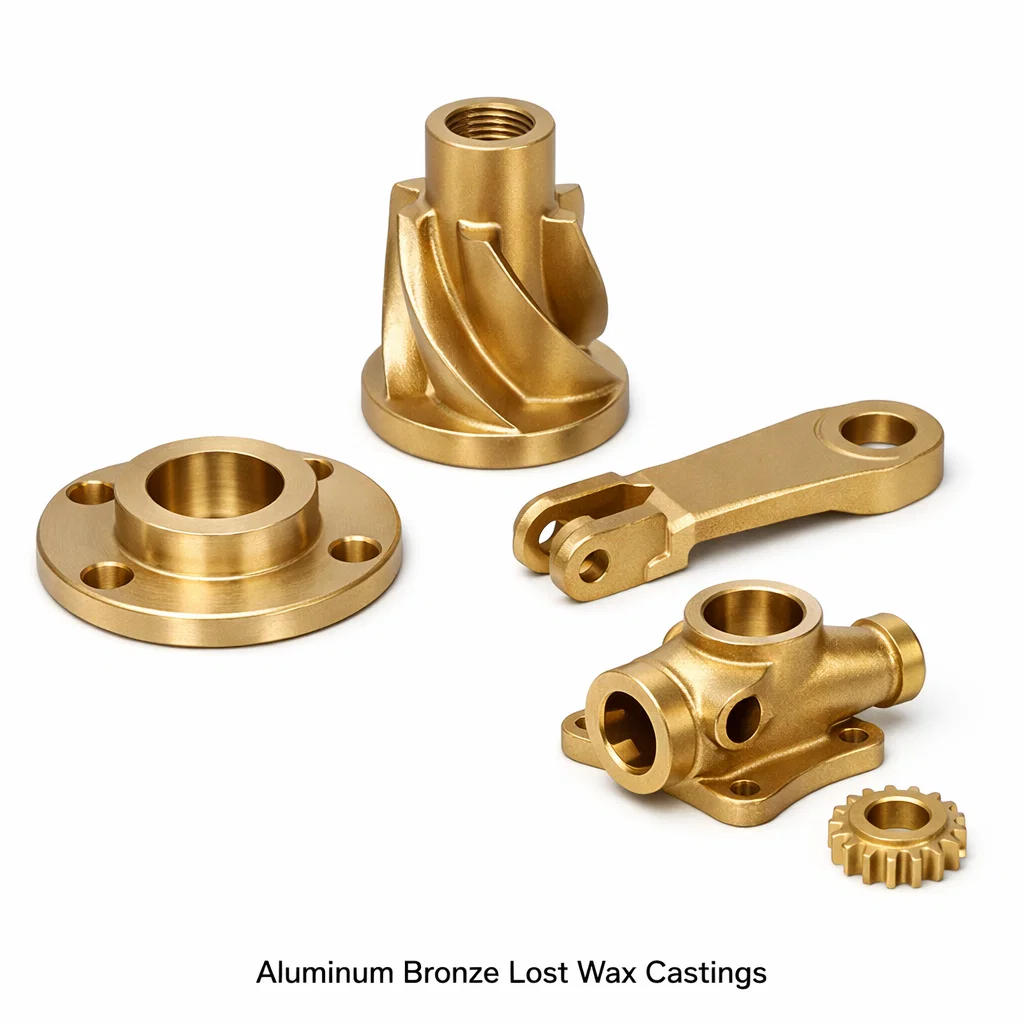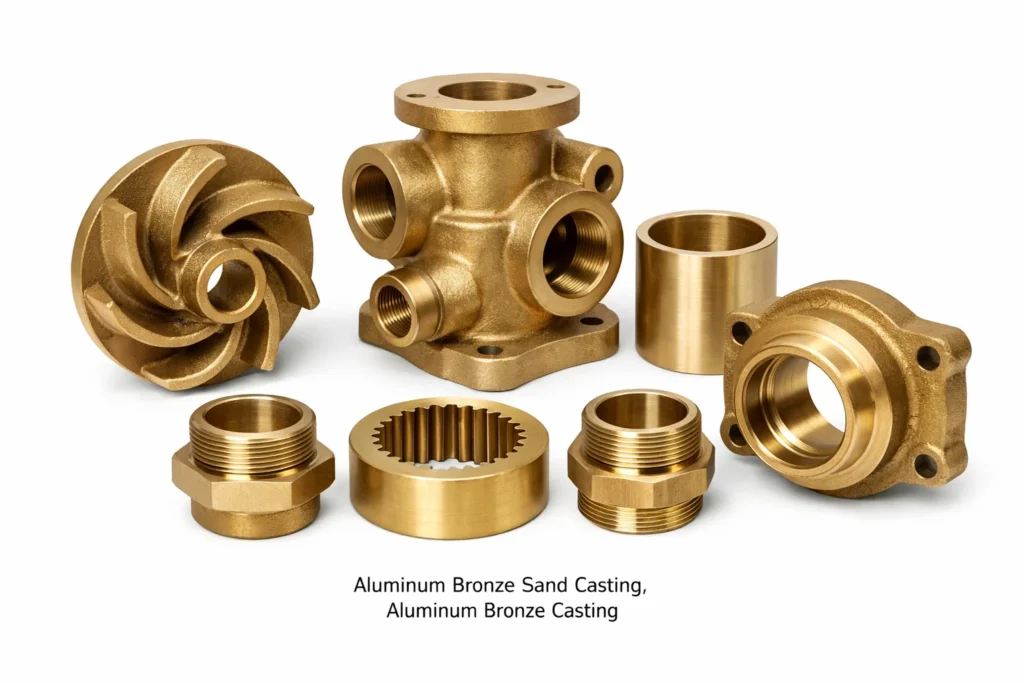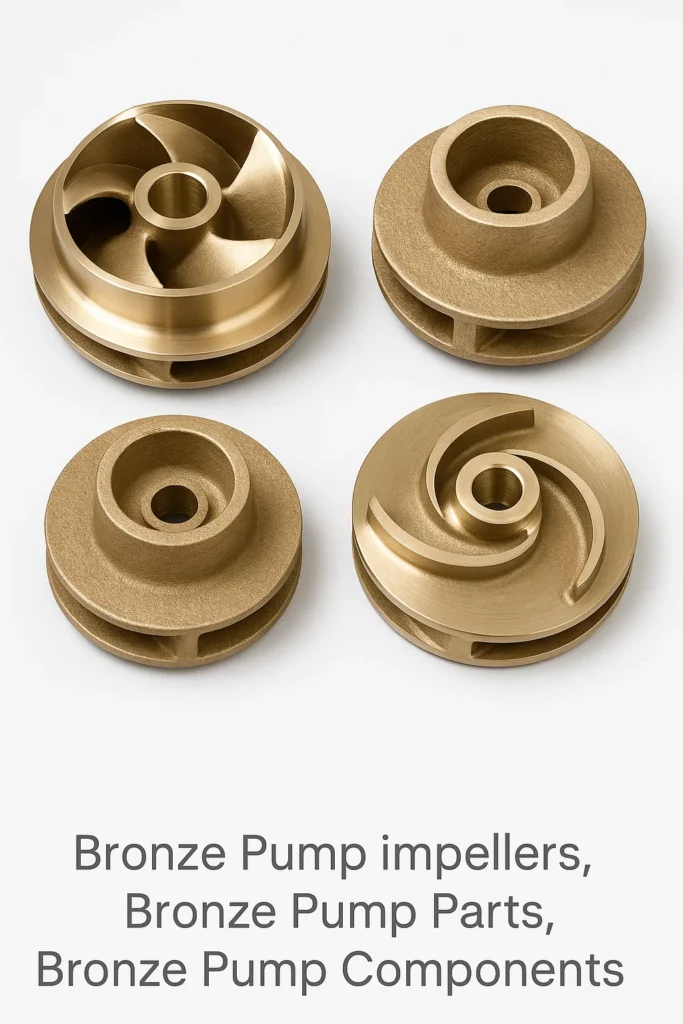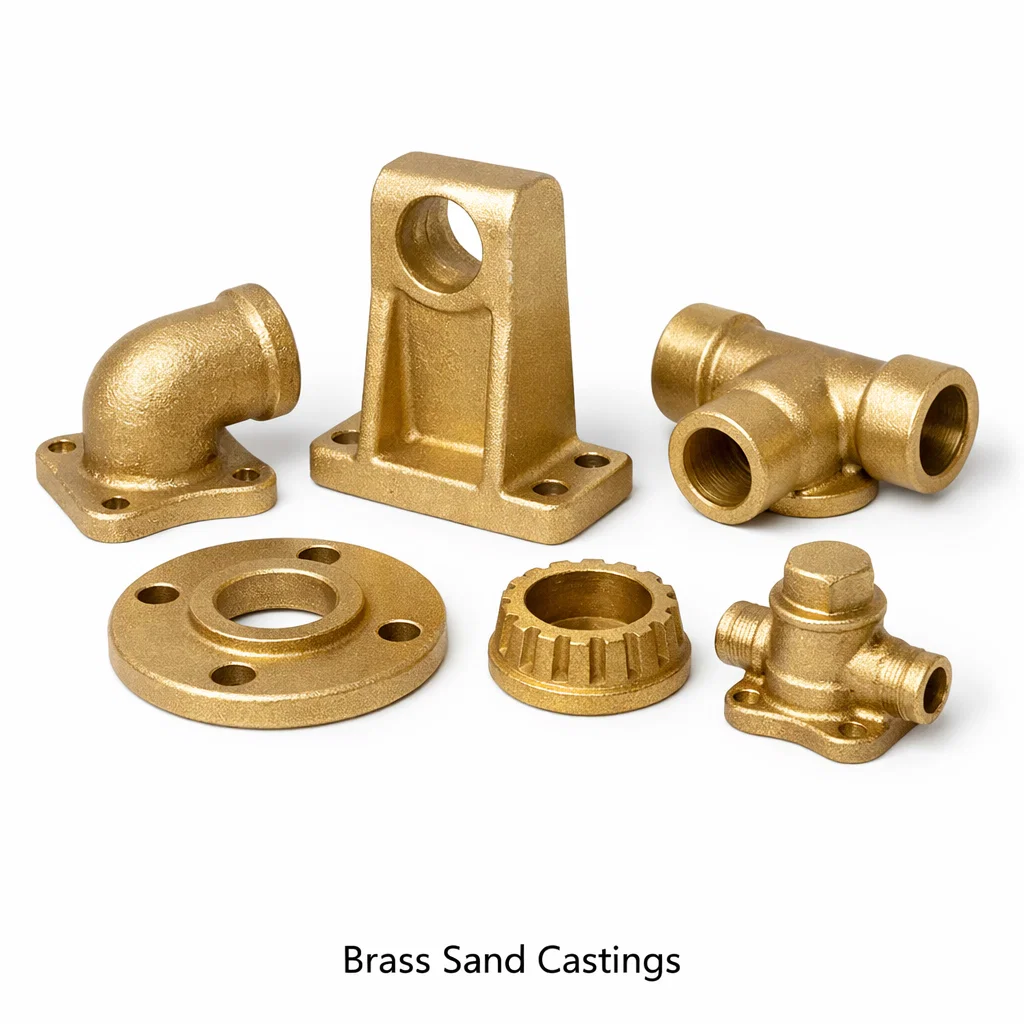
Stainless Steel Investment Casting — also called Stainless Steel Lost Wax Casting — is the most precise, versatile, and cost-effective manufacturing process for producing complex, high-integrity stainless steel components with tight dimensional tolerances, superior surface finish, and near-net-shape accuracy. Brass Parts India operates a dedicated stainless steel investment casting foundry in India, supplying precision stainless steel castings to customers across the UK, USA, Europe, Australia, and the Middle East.
Our stainless steel lost wax casting facility handles the full production cycle — from wax pattern injection and ceramic shell building through to casting, finishing, heat treatment, CNC machining, and quality inspection — all under one roof. Every casting is produced to relevant international standards including ASTM A351, ASTM A743, ASTM A744, DIN EN 10213, BS EN 10283, and IS 6603.
What is Stainless Steel Investment Casting?
The stainless steel investment casting process — universally known as the lost wax casting process — begins with the creation of a precise wax replica of the final component. This wax pattern is assembled onto a central sprue tree, repeatedly dip-coated in a ceramic slurry, and stuccoed with refractory sand to build a strong, heat-resistant ceramic shell mould. The wax is then melted (lost) from the shell in a dewax autoclave, leaving a hollow cavity of exact part geometry.
The ceramic shell is preheated and molten stainless steel is poured under precise temperature control. After solidification and cooling, the ceramic shell is broken away, individual castings are cut from the tree, and the components undergo fettling, heat treatment, and surface finishing. The result: a near-net-shape stainless steel casting with exceptional dimensional accuracy, smooth as-cast surface finish, and excellent mechanical properties across the entire cross-section.
Stainless Steel Grades Available for Investment Casting
Brass Parts India casts a comprehensive range of stainless steel alloy grades to meet diverse performance requirements. We work with austenitic, ferritic, martensitic, duplex, and super-duplex stainless steels, as well as precipitation-hardening grades:
| Cast Grade (ASTM) | Wrought Equivalent | UNS No. | EN / DIN Grade | Key Properties & Typical Applications |
|---|---|---|---|---|
| CF-8 (304) | AISI 304 / 1.4308 | J92600 | GX5CrNi19-10 | General-purpose austenitic; food, dairy, water, chemical equipment |
| CF-8M (316) | AISI 316 / 1.4408 | J92900 | GX5CrNiMo19-11-2 | Molybdenum-bearing; superior chloride and acid corrosion resistance; marine, pharmaceutical, chemical |
| CF-3 (304L) | AISI 304L / 1.4306 | J92500 | GX2CrNi19-11 | Low carbon; reduced sensitisation risk; welded assemblies, cryogenic |
| CF-3M (316L) | AISI 316L / 1.4404 | J92800 | GX2CrNiMo19-11-2 | Low carbon + Mo; maximum weld corrosion resistance; pharmaceutical, offshore |
| CF-8C (347) | AISI 347 / 1.4552 | J92710 | GX5CrNiNb19-11 | Niobium-stabilised; high-temperature service up to 870°C; boiler and pressure vessel parts |
| CF-3MN (317LN) | AISI 317LN / 1.4438 | J92801 | GX2CrNiMoN18-14-3 | Enhanced Mo + N; very high pitting resistance; aggressive chemical and seawater service |
| CA-15 (410) | AISI 410 / 1.4006 | J91150 | GX12Cr13 | Martensitic; moderate corrosion resistance + high strength; pump shafts, valve trim, steam turbine blading |
| CA-40 (420) | AISI 420 / 1.4021 | J91153 | GX20Cr14 | Higher carbon martensitic; excellent hardness and wear resistance; cutting instruments, engineering wear parts |
| CB-7Cu-1 (17-4 PH) | 17-4 PH / 1.4542 | J92110 | GX5CrNiCuNb16-4 | Precipitation-hardening; exceptional strength + corrosion resistance; aerospace, defence, downhole tools |
| CB-7Cu-2 (15-5 PH) | 15-5 PH / 1.4545 | J92110 | GX5CrNiCu14-5 | 15-5 PH; better transverse toughness; aircraft structural parts, medical instruments |
| CD-4MCu (Duplex) | S31803 / 1.4517 | J93370 | GX2CrNiMoCuN25-6-3-3 | Duplex; very high strength + excellent pitting/crevice corrosion resistance; pumps, desalination, offshore |
| CD-3MN (2205 Duplex) | S31803 / 1.4462 | J92205 | GX2CrNiMoN22-5-3 | Standard duplex (2205); excellent stress corrosion cracking resistance; chemical processing, oil & gas |
| CE-8MN (Super Duplex) | S32750 / 1.4410 | J93345 | GX2CrNiMoN25-6-3 | Super duplex (SAF 2507); maximum pitting resistance (PREN >40); subsea, seawater, aggressive acids |
| CK-20 (310) | AISI 310 / 1.4845 | J94202 | GX40CrNi25-20 | High Cr+Ni; exceptional oxidation and heat resistance to 1100°C; furnace parts, kiln hardware, radiant tubes |
| CN-7M (Alloy 20) | Alloy 20 / 2.4660 | N08007 | — | High Ni + Mo; outstanding sulphuric acid resistance; chemical process equipment, pickling, acid handling |
The Stainless Steel Lost Wax Casting Process — Step by Step
- Wax Pattern Injection: Precision wax patterns are injected into aluminium or steel dies machined to exact part dimensions, producing accurate wax replicas of the final stainless steel component.
- Pattern Assembly (Tree Building): Individual wax patterns are assembled onto a wax sprue to form a “casting tree”, maximising mould yield and ensuring efficient metal flow.
- Ceramic Shell Building: The wax tree is repeatedly dipped into colloidal silica ceramic slurry and coated with refractory zircon and alumina stucco sands, building a shell of 6–10 layers with controlled thickness and permeability.
- Dewaxing (Autoclave): The ceramic shell is placed in a steam autoclave at 150–180°C to flash-melt the wax in seconds, preventing shell cracking from differential thermal expansion.
- Shell Firing (Burnout): Shells are fired in a kiln at 900–1100°C to sinter the ceramic, burn out residual wax, and condition the mould cavity surface.
- Stainless Steel Melting & Pouring: The correct stainless steel grade is melted in an induction furnace under precise chemistry control. The preheated ceramic shell is filled with molten stainless steel at the correct pouring temperature for the specific alloy.
- Knockout & Fettling: After controlled cooling, the ceramic shell is mechanically broken away (knockout). Individual castings are cut from the sprue tree, and risers/gates are ground flush.
- Heat Treatment: As required by the alloy and specification — solution annealing (austenitic grades), quench and temper (martensitic grades), or precipitation hardening (PH grades).
- Surface Finishing: Shot blasting, vibratory finishing, acid pickling and passivation, electropolishing, or glass-bead blasting as required.
- CNC Machining: Critical dimensions, bores, threads, and sealing faces are finish-machined on CNC turning centres and machining centres.
- Quality Inspection & Testing: Dimensional inspection (CMM), material certification (OES chemistry + mechanical properties), NDT (dye penetrant, radiography, ultrasonic) as specified.
Key Advantages of Stainless Steel Investment Casting
- Exceptional Dimensional Accuracy: Tolerances to ±0.1 mm achievable as-cast (CT4–CT6 per ISO 8062), reducing or eliminating machining on many features
- Superior Surface Finish: As-cast surface finish Ra 1.6–6.3 μm — far superior to sand casting (Ra 12–25 μm) or fabrication
- Complex Geometry: Undercuts, internal cavities, thin walls (minimum 1.5 mm), fine external detail — all achievable in a single casting operation
- Material Versatility: Any investment-castable stainless steel grade from 304/316 through duplex, super-duplex, martensitic, and precipitation-hardening alloys
- Reduced Assembly: Multiple components can be consolidated into a single near-net-shape casting, eliminating welds, fasteners, and joints
- Excellent Mechanical Properties: Dense, homogeneous castings with properties meeting or exceeding ASTM/DIN specification minimums
- Scalable Production: From single prototype pieces through to high-volume production of 100,000+ pieces/year
- Cost-Effective vs. Fabrication: Significant total cost savings versus machined-from-solid or welded fabrications for complex shapes
Applications of Stainless Steel Investment Castings
- Valves & Flow Control: Ball valve bodies and balls, gate valve bodies, globe valves, butterfly valves, check valves, control valve trim — grades CF-8M (316), CF-3M (316L), CD-3MN (2205 duplex)
- Pumps & Impellers: Centrifugal pump casings, impellers, wear rings, diffusers, shaft sleeves — grades CF-8M, CF-3MN, CE-8MN (super duplex)
- Oil & Gas / Offshore: Subsea connector bodies, choke valve components, manifold blocks, wellhead components — grades CE-8MN, CD-3MN, CB-7Cu-1 (17-4 PH)
- Food, Dairy & Beverage: Hygienic pump bodies, valve bodies, sanitary fittings, homogeniser components — grades CF-8 (304), CF-3M (316L), electropolished
- Pharmaceutical & Biotech: Bioreactor components, fluid handling, sterile fill equipment — grades CF-3M (316L) per USP Class VI / FDA 21 CFR
- Marine & Naval: Propeller shaft components, sea-water pump internals, deck fittings, rudder pintles — grades CE-8MN (super duplex), CF-8M
- Aerospace & Defence: Structural brackets, actuator bodies, arresting gear components, turbine support hardware — grades CB-7Cu-1 (17-4 PH), CB-7Cu-2 (15-5 PH)
- Power Generation: Steam valve trim, turbine blade supports, boiler fittings, heat exchanger headers — grades CF-8C (347), CK-20 (310)
- Chemical Process Industry: Reactor internals, agitator components, heat exchanger tube sheets, pump casings — grades CN-7M (Alloy 20), CF-3MN, CD-4MCu
- Architectural & Decorative: Ironmongery, balustrade fittings, marine hardware, art sculptures — grades CF-8 (304), CF-8M (316)
Technical Capabilities — Stainless Steel Investment Casting
| Parameter | Capability |
|---|---|
| Weight Range | 5 grams to 50 kg per piece |
| Dimensional Tolerance (as-cast) | ±0.1 mm (CT4–CT6 per ISO 8062-3) |
| Surface Finish (as-cast) | Ra 1.6 to 6.3 μm (N4–N7) |
| Minimum Wall Thickness | 1.5 mm |
| Maximum Envelope | 600 mm × 400 mm × 300 mm (larger on enquiry) |
| Annual Capacity | 300+ MT per annum |
| Heat Treatment | Solution Anneal, Q&T, Precipitation Hardening — all in-house |
| NDT Capability | Dye Penetrant (ASTM E165), Radiography (ASTM E94/E446), Ultrasonic (ASTM A609), Hydrostatic Pressure Test |
| Quality Standards | ISO 9001:2015 | ASTM A351 | ASTM A743/A744 | DIN EN 10213 | BS EN 10283 | NACE MR0175 |
| Machining | CNC turning, milling, drilling, boring, threading — all in-house to ±0.01 mm |
| Post-Cast Surface Treatment | Shot blast, acid pickle & passivation, electropolish, glass-bead blast, powder coat |
Stainless Steel Investment Casting vs. Other Manufacturing Methods
| Factor | Investment Casting | Sand Casting | Machined from Bar | Fabrication (Welding) |
|---|---|---|---|---|
| Dimensional Accuracy | ★★★★★ (CT4–CT6) | ★★★ (CT10–CT13) | ★★★★★ | ★★★ |
| Surface Finish | ★★★★★ (Ra 1.6–6.3) | ★★★ (Ra 12–25) | ★★★★★ | ★★★ |
| Complex Geometry | ★★★★★ | ★★★ | ★★ | ★★★ |
| Material Utilisation | ★★★★ (near-net-shape) | ★★★★ | ★ (high swarf) | ★★★★ |
| Structural Integrity | ★★★★★ (no welds) | ★★★★ | ★★★★★ | ★★★ (weld HAZ) |
| Tooling Cost | Low–Medium | Low | Nil | Nil |
| Unit Cost (high volume) | ★★★★★ | ★★★ | ★★ | ★★ |
Frequently Asked Questions — Stainless Steel Investment Casting
Q1. Which stainless steel grades are most commonly investment cast?
The most widely investment cast stainless steel grades are CF-8M (cast equivalent of 316 stainless) and CF-8 (cast 304) for general industrial and food-grade applications, and CF-3M (cast 316L) for pharmaceutical, offshore, and welded assemblies. For high-strength applications, CB-7Cu-1 (17-4 PH) is widely used in aerospace and oil & gas. For aggressive corrosive environments, CD-3MN (2205 duplex) and CE-8MN (super duplex 2507) are specified.
Q2. What is the difference between CF-8M and 316 stainless steel?
CF-8M is the ASTM designation for cast stainless steel that is the cast equivalent of wrought AISI 316. CF-8M has slightly higher silicon content (to improve castability and fluidity) and slightly different carbon limits versus wrought 316. The corrosion resistance, mechanical properties, and service performance of CF-8M and 316 are essentially equivalent for the vast majority of applications. CF-8M castings are directly interchangeable with wrought 316 components in most piping, valve, and pressure vessel applications.
Q3. Can stainless steel investment castings be supplied with full NDT and material certification?
Yes. We supply full material test certificates (MTCs) per EN 10204 3.1 or 3.2 as required, including chemical composition by OES spectrometry and mechanical properties (tensile, yield, elongation, hardness). NDT services include dye penetrant testing (ASTM E165), radiographic inspection (ASTM E94/E446), ultrasonic testing (ASTM A609), and hydrostatic pressure testing. Third-party inspection by Lloyd’s Register, Bureau Veritas, SGS, TÜV, DNV-GL, or customer-nominated inspectors can be arranged.
Q4. What heat treatment do stainless steel investment castings require?
Heat treatment requirements depend on the alloy grade: Austenitic grades (CF-8, CF-8M, CF-3, CF-3M) require solution annealing at 1040–1120°C followed by rapid water quenching to dissolve carbides and restore maximum corrosion resistance. Martensitic grades (CA-15, CA-40) require quench and temper to develop the required hardness and strength. Precipitation-hardening grades (CB-7Cu-1, 17-4 PH) require solution treatment followed by age hardening at specific temperatures (H900, H1025, H1100 etc.) to achieve specified strength levels. Duplex grades receive solution anneal + quench to balance the ferrite-austenite microstructure.
Q5. What is the minimum order quantity for stainless steel investment castings?
We accept orders from 1–10 prototype pieces (for design validation and first article inspection) through to production volumes of 100,000+ pieces per year. Tooling (wax injection die) costs are amortised over the production run. First article samples are typically delivered within 5–7 weeks of tooling approval. Production lead time is typically 4–8 weeks depending on grade, complexity, and quantity.
Q6. Can you supply electropolished stainless steel investment castings for pharmaceutical use?
Yes. We supply electropolished CF-3M (316L) investment castings for pharmaceutical, biotech, and food processing applications. Electropolishing produces a bright, hygienic surface finish (Ra ≤ 0.4 μm achievable), removes surface contamination and embedded particles, improves passivation, and significantly enhances corrosion resistance. We can supply with electropolish and full material traceability certificates per USP Class VI / FDA 21 CFR requirements on request.
Q7. How does stainless steel investment casting compare to MIM (Metal Injection Moulding) for small parts?
For small stainless steel parts (under 50 grams), Metal Injection Moulding (MIM) can be more cost-effective in very high volumes (100,000+ pieces). However, investment casting offers superior mechanical properties (density approaching wrought material), larger maximum part size, no size limitations, lower tooling cost, and significantly faster development/sampling lead time. Investment casting is preferred for medium-to-large parts, for parts requiring pressure tightness, and for alloys that are difficult to process by MIM (duplex, super-duplex, high-alloy grades).
Related Terms — Stainless Steel Investment Casting
Process & Technology Terms
Stainless steel lost wax casting | SS investment casting | Precision stainless casting | Ceramic shell casting | Near-net-shape stainless | Stainless steel foundry India | SS casting manufacturer | Investment cast 316 | Investment cast 304 | Stainless lost wax process | Dewax casting | Refractory shell casting | Colloidal silica investment casting | Vacuum investment casting stainless
Material Grade Terms
CF-8M casting | CF-8 casting | CF-3M casting | CF-3 casting | 316 stainless casting | 304 stainless casting | 316L stainless casting | 17-4 PH investment casting | 15-5 PH casting | Duplex stainless casting | 2205 duplex casting | Super duplex casting | SAF 2507 casting | CD-3MN casting | CE-8MN casting | Alloy 20 casting | 310 stainless casting | CA-15 casting | Martensitic stainless casting | Precipitation hardening stainless casting
Application Terms
Stainless steel valve casting | SS pump casting | Stainless impeller casting | SS marine casting | Offshore stainless casting | Pharmaceutical stainless casting | 316L pharmaceutical casting | Food grade stainless casting | Chemical process casting | Subsea stainless casting | Stainless aerospace casting | Hygienic pump casting | Electropolished stainless casting | ATEX stainless casting
Trade & Commercial Terms
Stainless steel investment casting India | SS casting exporter India | Investment casting supplier India | ASTM A743 casting | ASTM A744 casting | BS EN 10283 casting | EN 10204 3.1 certification | SS casting with NDT | Radiographed stainless casting | NACE MR0175 stainless casting | ISO 9001 stainless casting foundry