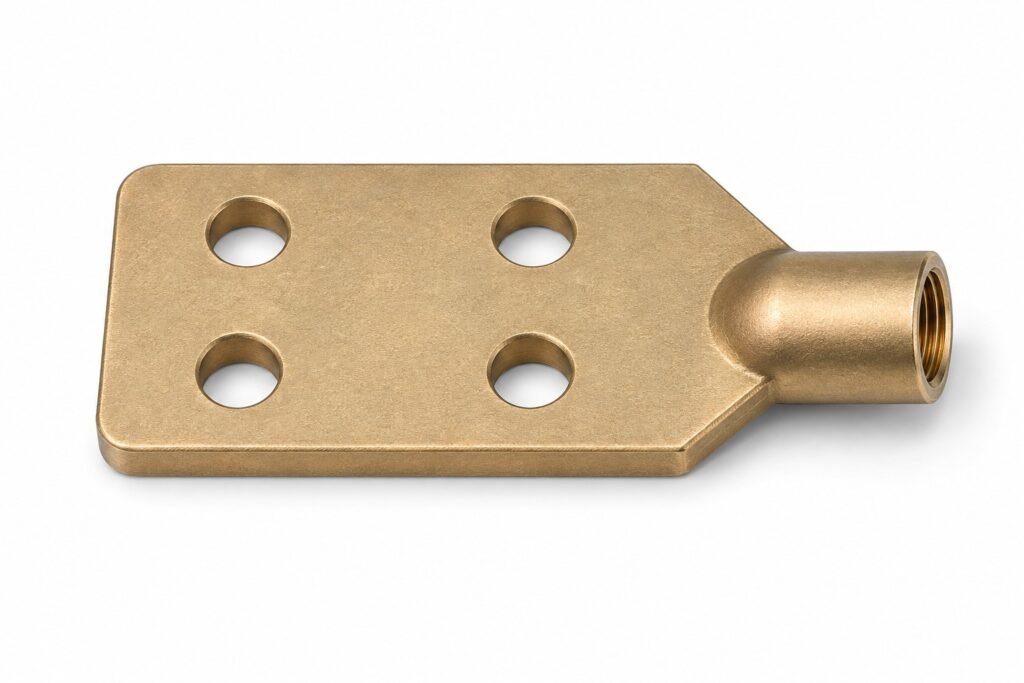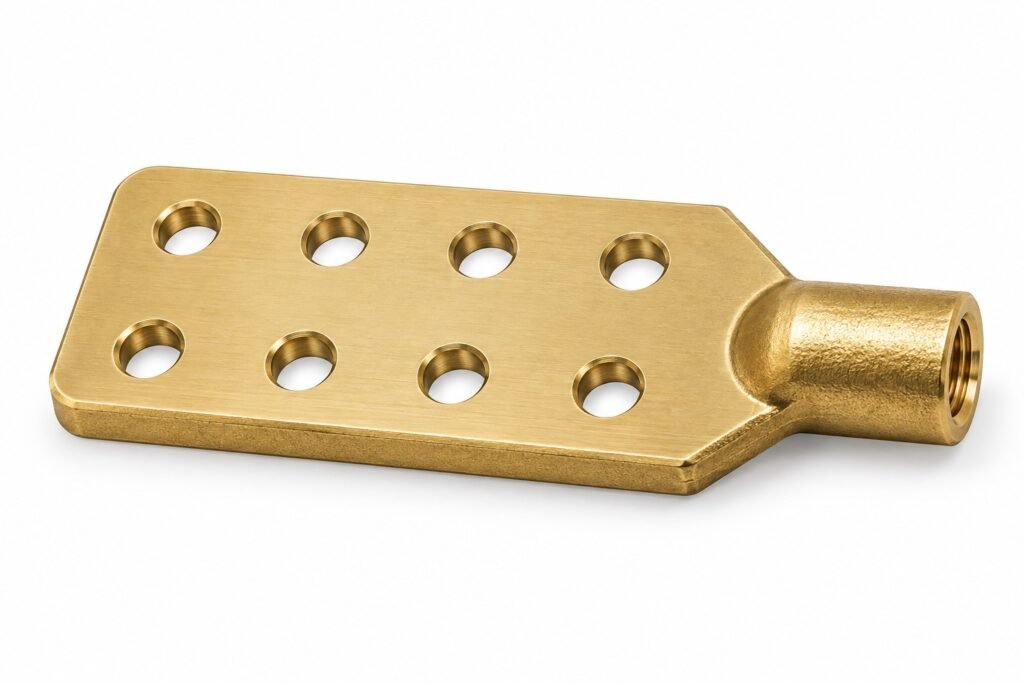
Transformer Spade Terminals, Transformer Spade Connectors / Material and connection variants
Copper ETP Transformer Spade Connectors
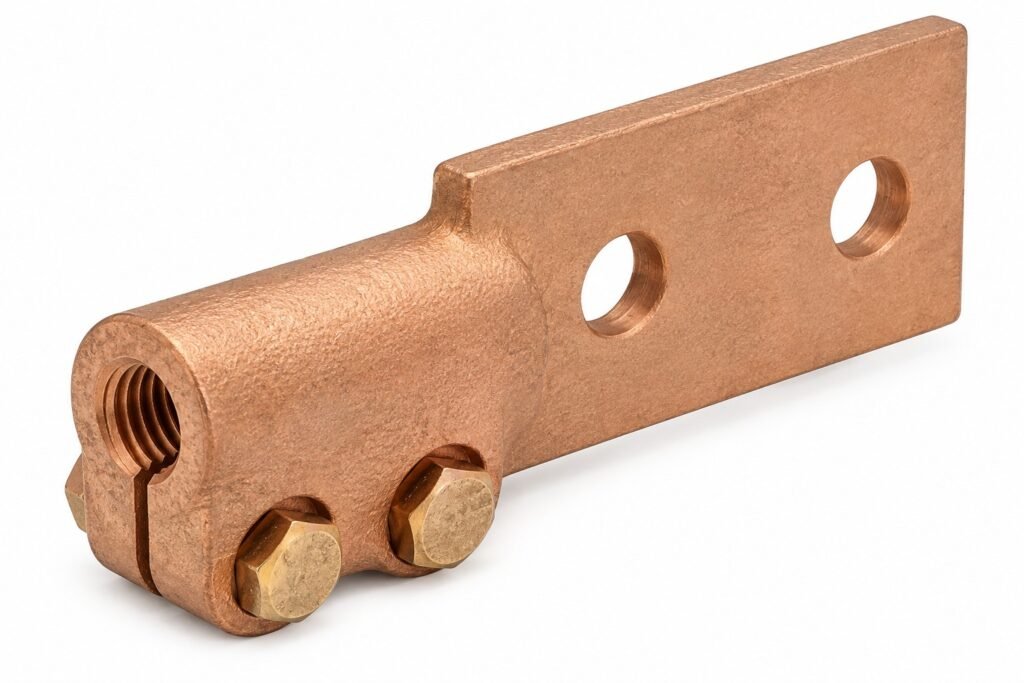
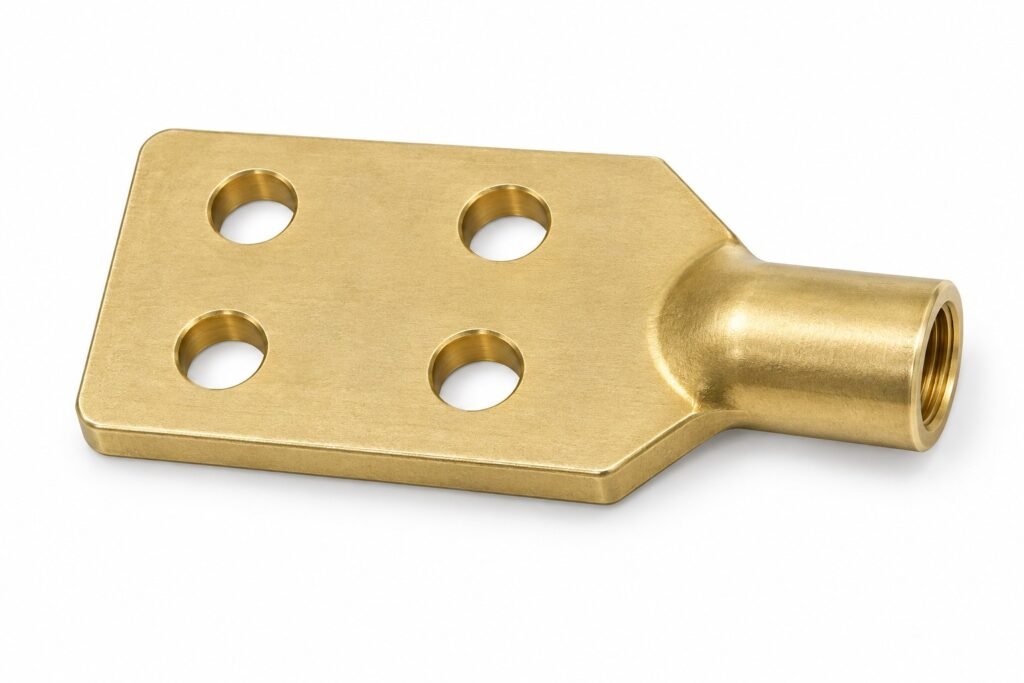
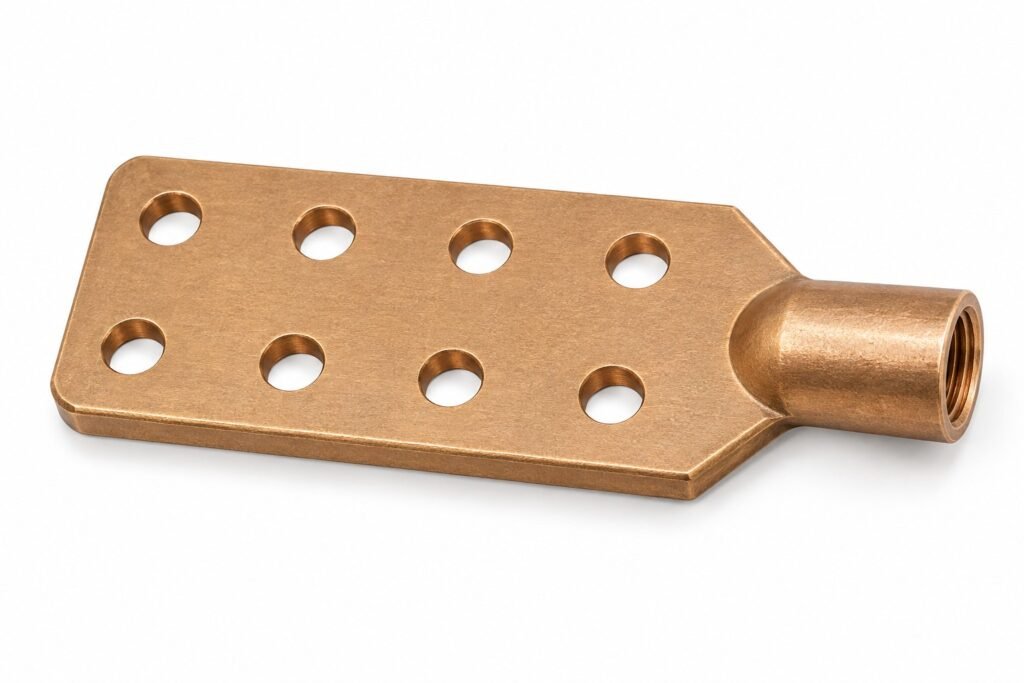
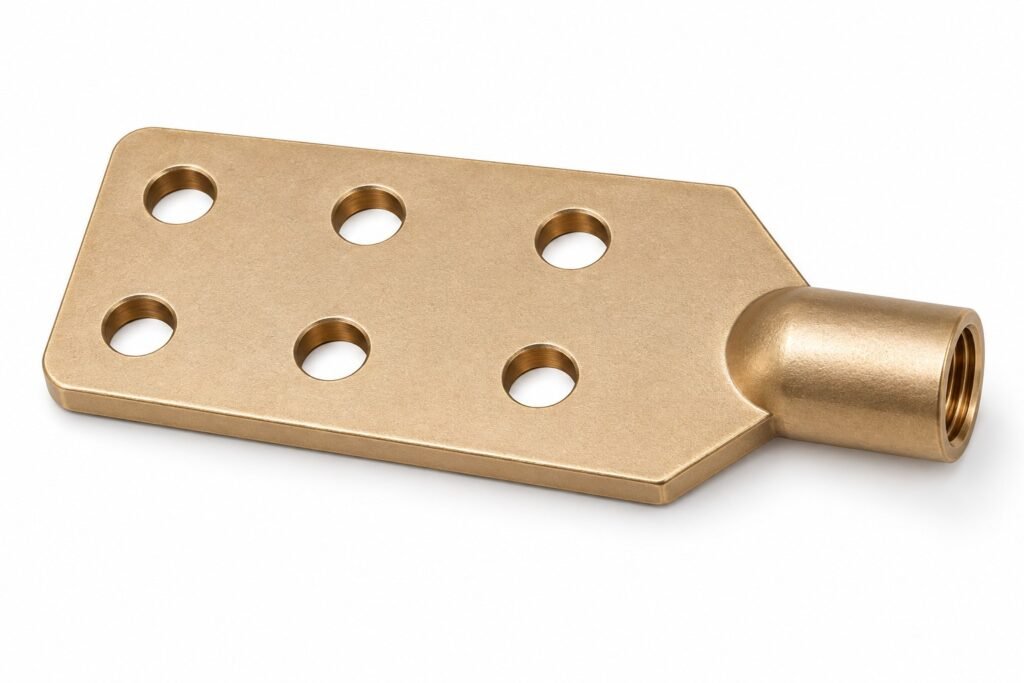
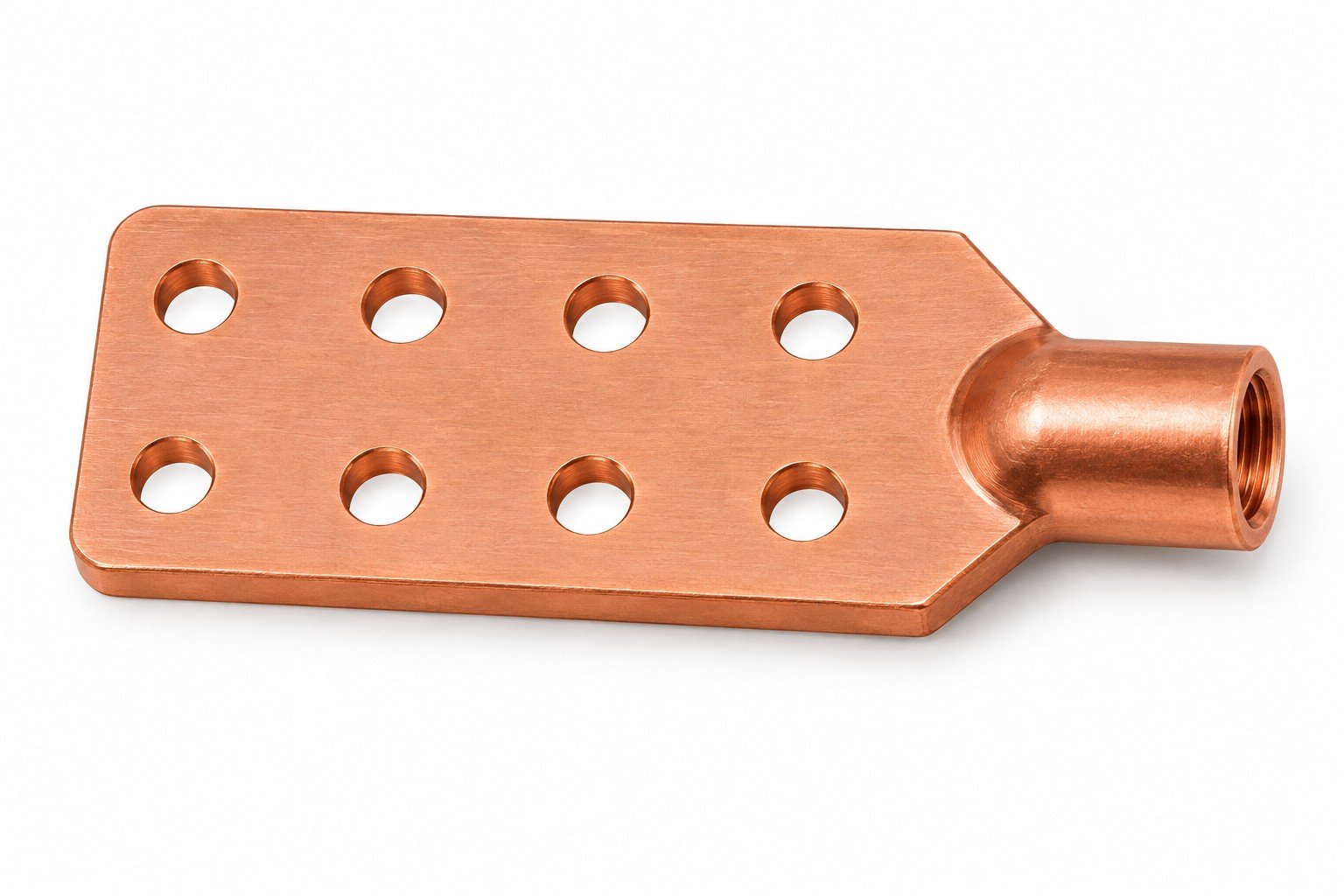
Copper ETP transformer spade connectors provide a straight conductive interface between a transformer stud and a NEMA-spaced connection palm. Cable Glands India offers C11000 / Cu-ETP copper configurations for pad-mounted transformer assemblies, with natural and tin-plated finishes.
Price on request. Quotation depends on the approved alloy, geometry, finish and order quantity.
Product overview
C11000 Electrolytic Tough-Pitch Copper
ETP means electrolytic tough-pitch copper. C11000 is commonly cross-referenced to EN CW004A / Cu-ETP. This material is wrought copper, not one of the cast leaded-bronze grades in the same product family. Its material condition and stock form matter when defining mechanical properties and manufacturing operations. Specify the complete material reference on the drawing and purchase order. Conductivity data for the raw material must not be treated as the current rating of the finished connector.
Copper Palm and Thread Design
A copper terminal needs a section and thread arrangement suitable for the intended joint loading. The drawing should define palm thickness, thread engagement and contact-face geometry. The correct material alone cannot compensate for inadequate joint pressure, insufficient support or a damaged stud. Machining should avoid burrs and distortion at bolt holes and contact surfaces. Specify any forming operations and their effect on the material condition rather than assuming that all copper parts have the same temper.
Thermal Performance and Assembly Validation
Copper ETP is selected where the equipment specification calls for a copper current path. The complete connection still requires evaluation of joint resistance, heat dissipation and permitted temperature rise. The interface to the bushing, the lug or busbar and the fastening arrangement all contribute to performance. Tin plating can define the required contact finish, but it does not independently qualify an aluminium connection. Confirm service conditions and conductor compatibility with the equipment designer.
Key features
- UNS C11000 / Cu-ETP / EN CW004A material specification for traceable procurement.
- NEMA-spaced palm for compatible bolted terminal layouts.
- Natural and tin-plated finish options.
- Straight connection geometry for the specified transformer arrangement.
- Machined contact surfaces, bores and threads to an approved drawing.
- Configuration review for electrical OEMs, EPC contractors, power utilities and distributors.
NEMA palm and bolted contact interface
The palm provides the contact area between the transformer connector and the mating lug or busbar. Hole spacing supports interchangeability only when hole diameter, edge distance, palm thickness and terminal orientation also agree. Confirm access for sockets and spanners in the enclosure. A greater number of holes does not automatically permit a higher current or a larger number of independent outgoing circuits. The assembled connection and conductor arrangement govern the operating duty.
Natural metal and tin-plated contact surfaces
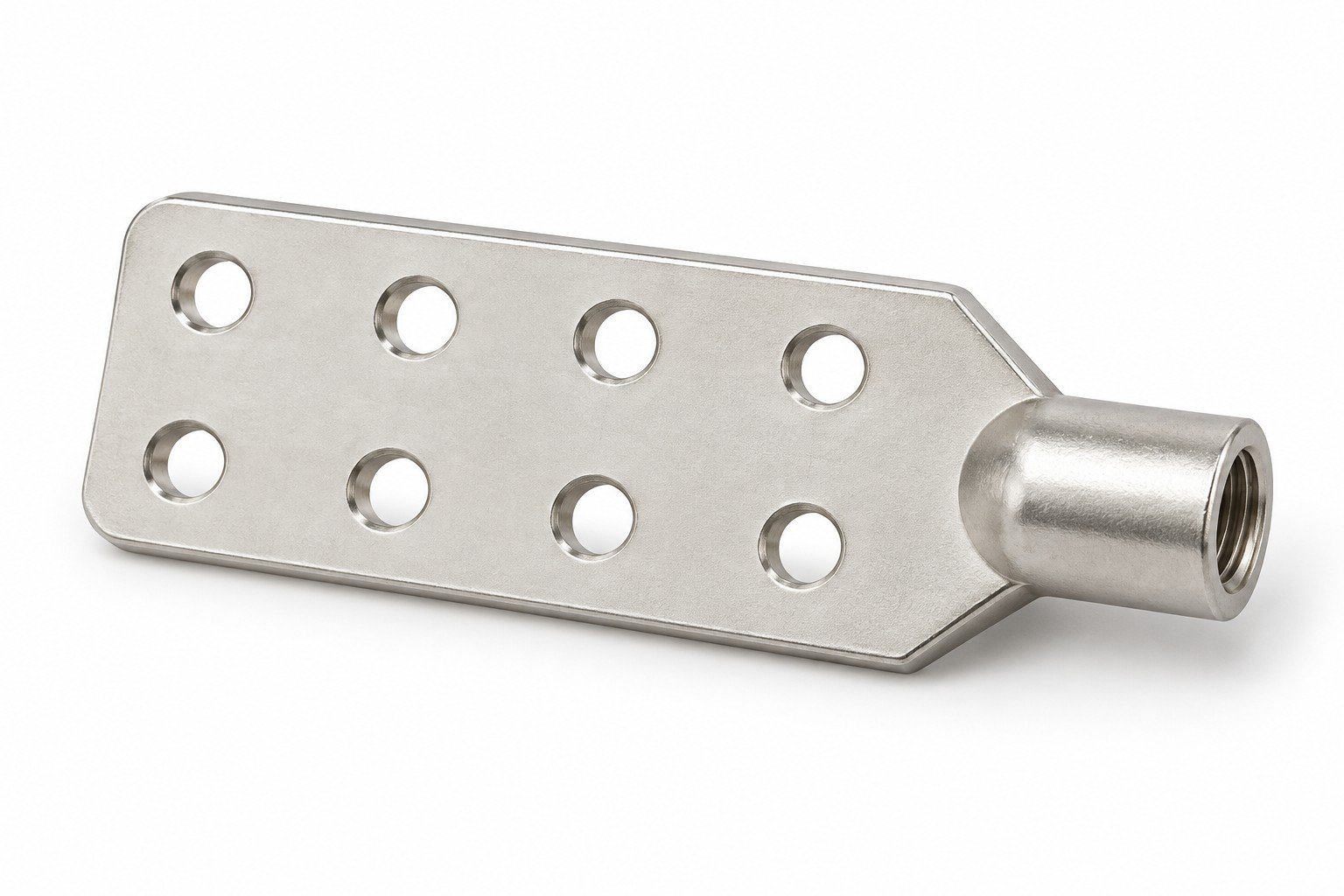
Natural finish retains the appearance of the selected base material. Tin plating provides a different surface condition for the specified joint design and handling environment. Specify preparation, coating thickness and coverage before manufacture. Threads may require allowance or masking to preserve fit after plating. Evaluate the complete joint when connecting dissimilar metals, including the conductor, lug, fasteners and environmental exposure. Do not assume that tin plating alone establishes aluminum-conductor compatibility.
Stud fit and dimensional control
The stud connection must match both the nominal size and the detailed thread designation. Pitch, class of fit, usable thread depth and entry chamfer affect assembly. Check shoulder contact and available engagement against the bushing drawing. Incorrect thread combinations can appear to start and still damage the mating terminal. Use the OEM installation procedure and specified tightening torque; neither the alloy name nor a catalog illustration defines a safe torque setting.
Technical specifications
| Parameter | Specification / ordering requirement |
|---|---|
| Brand | Cable Glands India |
| Product category | Transformer Spade Terminals, Transformer Spade Connectors |
| Material | UNS C11000 / Cu-ETP / EN CW004A |
| Manufacturing form | Wrought electrolytic tough-pitch copper |
| Finish | Natural or tin plated, as specified |
| Application | Pad-mounted transformer terminal connections |
| Mounting pattern | NEMA spaced; exact dimensions to approved drawing |
| Hole configurations | 2–16-hole configurations by approved design and feasibility |
| Stud interface | 3/8, 1/2, 3/4 or 1 inch nominal options; confirm pitch and engagement |
| Thread series | UNC, UNF, UNEF or UNS as specified; ASME B1.1 drawing requirements |
| Dimensions and tolerances | Palm length, width, thickness, bore and hole position to drawing |
| Electrical rating | Design-specific; requires assembly validation |
| Supply documentation | Material and dimensional records as agreed at quotation |
Material composition and international designations
| Constituent / requirement | Grade information |
|---|---|
| Copper including silver | 99.90% minimum |
| Material family | Electrolytic tough-pitch copper |
| Product condition | Temper and stock form to drawing |
Composition values are weight percentages where shown. The governing purchase specification and material certificate determine acceptance, including any residual-element limits not reproduced here.
| Reference | Procurement interpretation |
|---|---|
| Specified material | UNS C11000 / Cu-ETP / EN CW004A |
| International designation / equivalent | UNS C11000, EN CW004A and Cu-ETP are common corresponding designations. Confirm the applicable product standard, temper, dimensions and material certificate before accepting substitution. |
| Substitution rule | Compare the full material specification and product form; obtain approval before substituting. |
Product variants
| Variant | Configuration |
|---|---|
| Natural finish | UNS C11000 / Cu-ETP / EN CW004A with specified machined contact surfaces |
| Tin-plated finish | Same base material with ordered tin coating and thread treatment |
| Palm configuration | NEMA-spaced 2–16-hole layouts within the approved design range |
| Threaded connection | Diameter, thread series, pitch and engagement length selected from the drawing |
| OEM version | Customer drawing, revision control, marking and inspection requirements |
Industrial applications
Copper ETP Transformer Spade Connectors are intended for the terminal connection zone of pad-mounted transformers. They can form part of an OEM bushing-to-lug or stud-to-palm assembly, subject to the transformer design. Utilities use approved connector configurations for equipment replacement and maintenance programs. EPC contractors specify the terminal interface alongside cables, lugs, busbars and installation hardware. Distributors should identify the actual material and thread arrangement so that a visually similar part is not supplied as an unapproved replacement.
For retrofit work, check the existing terminal drawing, enclosure clearance and conductor approach before ordering. Confirm corrosion exposure, operating temperature and fault duty with the equipment owner. Installation and maintenance should follow the applicable equipment instructions with the system isolated and made safe.
Manufacturing process
- Approve C11000 / Cu-ETP stock form, temper and drawing requirements.
- Prepare the wrought copper blank and any approved forming operation.
- Machine the straight palm, hub and NEMA hole pattern.
- Produce and gauge the specified threaded connection.
- Deburr and clean without damaging the copper contact surfaces.
- Supply natural copper or apply the specified tin finish and inspect the finished part.
Production release should connect the drawing revision to the material lot, machining setup and inspection plan. Changes to palm thickness, bore geometry or hole layout can affect both mechanical fit and the thermal performance of the assembled joint. Agree first-article checks for a new design before repeat quantities are released. Pack contact surfaces to limit damage during transport and keep natural and plated batches clearly identified.
Quality standards and documentation
| Control area | Requirement to agree |
|---|---|
| Material verification | Specified alloy, product form and lot documentation |
| Dimensional inspection | Palm dimensions, thickness, hole location, bore and stud engagement |
| Unified threads | ASME B1.1 designation and suitable gauging as required by drawing |
| Tin coating | ASTM B545 when specified and applicable, with agreed thickness and acceptance criteria |
| Electrical verification | Temperature-rise, resistance and fault-duty requirements for the complete assembly |
| Certification documents | Request current certificates and their scope for the quoted supply |
NEMA spacing describes the mounting interface; it is not a standalone certification of the finished connector. Standards listed here are specification references to be agreed for the order. No universal UL listing, IEC approval, ISO certification or blanket environmental-compliance claim is implied for every custom variant. If regulated-substance requirements apply, identify the destination market and required declaration before selecting a lead-containing alloy.
Why choose Cable Glands India
This product range brings material selection, connection geometry and finish into one drawing-based inquiry. Buyers can compare bronze, copper, forged brass and cast brass versions within the same transformer terminal family. A clear specification helps procurement teams obtain comparable quotations and helps engineering teams separate material identity from assembly performance. State the required inspection records, marking and packaging at the quotation stage so the supply scope is reviewable before manufacture.
Questions and answers
Is ETP copper the same as cast bronze?
No. C11000 / Cu-ETP is wrought electrolytic tough-pitch copper. Cast bronze and brass grades have different compositions, processing routes and properties. They are not automatic substitutes.
Are these connectors suitable for pad-mounted transformers?
They are intended for pad-mounted transformer terminal connections where the approved bushing, stud, palm, conductor and enclosure arrangement matches the connector drawing. Confirm electrical duty, clearances and mechanical loading with the transformer OEM before release.
Are the mounting holes NEMA spaced?
Yes. The palm uses a NEMA-spaced mounting arrangement. Specify the exact hole count, center-to-center dimensions, hole diameter and orientation on the order drawing; the phrase NEMA spaced alone is not a complete interface specification.
Can I order natural and tin-plated finishes?
Yes. Both natural metal and tin-plated finishes can be specified. State coating thickness, coverage, masking, contact-surface requirements and inspection criteria. Tin plating does not change the underlying alloy designation.
Which stud threads can be supplied?
The family includes nominal 3/8, 1/2, 3/4 and 1 inch stud interfaces, with UNC, UNF, UNEF or UNS forms where the drawing requires them. Confirm diameter, pitch, class, engagement length and thread direction; not every diameter uses every series as a standard combination.
What is the current rating?
There is no single current rating for all geometries. The assembled connection must be assessed for conductor size, contact area, temperature rise, installation torque and fault duty. Request the test requirements for your approved design instead of selecting by alloy or hole count alone.
Are installation bolts and washers included?
Specify the complete hardware bill of materials in the inquiry. Inclusion, bolt material, coating, washer arrangement and approved tightening torque must be confirmed for the supplied assembly.
Can a similar international alloy be substituted?
Use the specified grade and product form as the procurement baseline. A proposed substitute needs a comparison of chemistry, mechanical properties, conductivity, casting or wrought condition and the governing standard, followed by customer approval.
What information is needed for a quotation?
Send the drawing and revision, alloy, quantity, stud thread, palm dimensions, NEMA hole pattern, finish, inspection documents and delivery destination. Identify prototype quantities separately from repeat production requirements.
Request a technical quotation
Send your drawing and revision for Copper ETP Transformer Spade Connectors, together with quantity, finish, stud thread, NEMA palm layout, inspection requirements and delivery destination. Cable Glands India can review the requested configuration for quotation.
Contact us for a quotation or compare transformer spade terminals and connectors.