Copper Casting
Price: US$ 19.00/kg
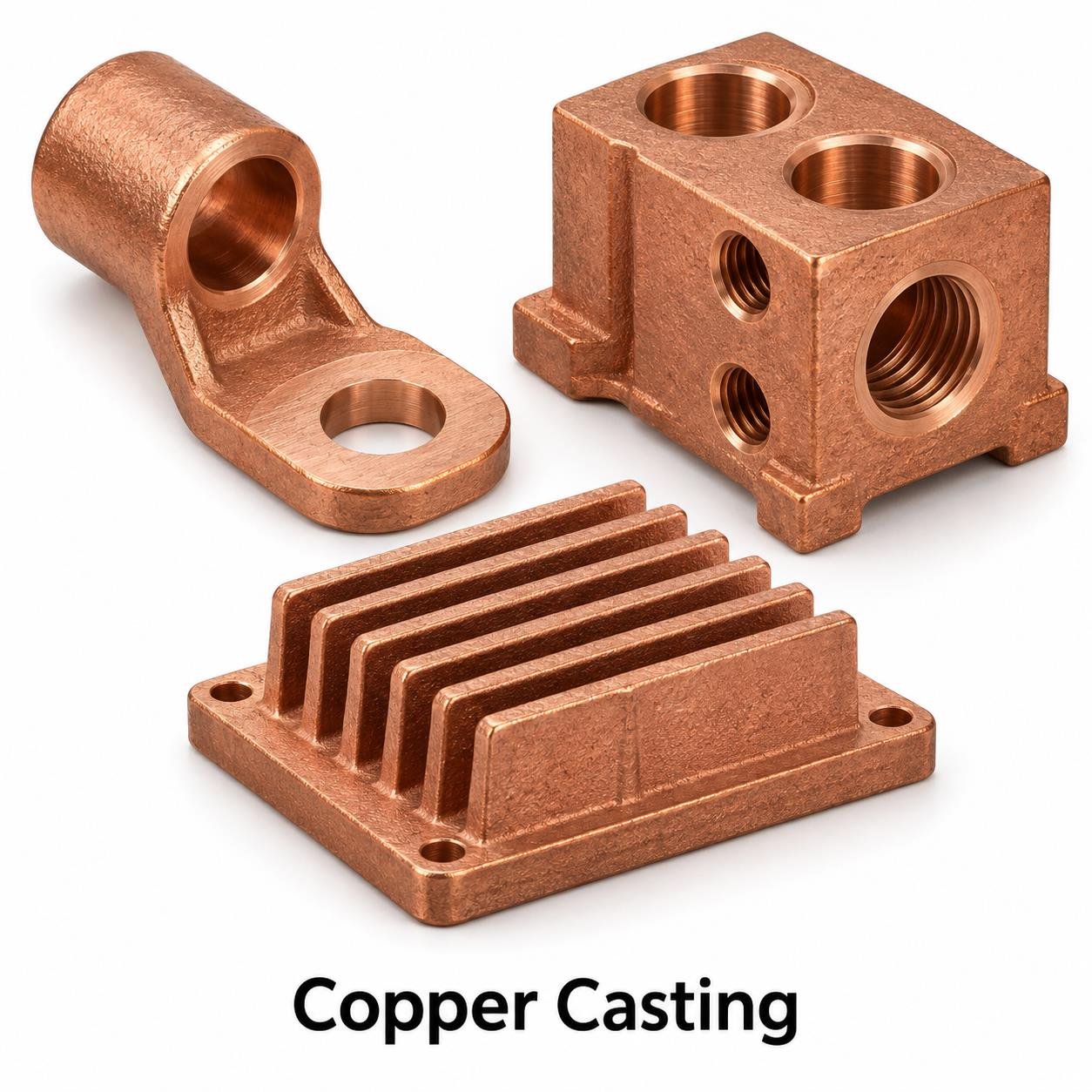
Copper Casting from Brass Parts India covers drawing-based cast copper components for electrical OEMs, EPC contractors, power utilities and industrial distributors. Typical enquiries include electrical connection blocks, terminal bodies, contact supports, cooling components, flanged conductors and shaped heat-transfer parts. Selection connects electrical conductivity, heat transfer and internal soundness with the approved alloy, casting route and finished-part specification. Send the drawing, quantity and service requirements for a component-specific quotation.
The listed kilogram rate is the product reference price. Confirm chargeable weight, tooling, machining, finishing, testing, packing and delivery terms in the quotation.
Detailed product overview
Material identity and purchasing designation
Copper casting creates shaped copper components for electrical conduction, heat transfer and complex near-net geometry. Cast copper grades require specific chemistry and process controls. Wrought ETP or oxygen-free copper designations do not automatically describe the properties of a finished casting. State the standard designation and required supply condition on both the enquiry and the purchase order. The description should remain consistent across the drawing, quotation, material certificate and inspection record. This avoids a technically different alloy being accepted because its commercial name sounds similar.
Electrical conductivity acceptance
Copper percentage alone does not determine finished-part conductivity. Residual elements, alloy additions, oxygen and casting quality affect performance. Specify any minimum percentage IACS, method, measurement location and reference temperature. Do not apply a wrought copper data-sheet value automatically to a casting. Color is not evidence of electrical performance.
Connection interfaces and current paths
The design must address contact area, bolt loading, current path and heat dissipation. Machining establishes joint flatness and hole position. Current rating depends on the complete assembly and environment, not simply component weight. Specify contact preparation and plating where needed. Connections to aluminium require a defined joint system and appropriate corrosion controls.
Cooling components and internal soundness
Porosity, inclusions and cavities can interfere with machining, leakage performance and heat flow. Identify critical zones and the inspection method appropriate to their geometry. Cored passages require cleaning and verification. Define pressure tests for water channels separately from electrical or thermal performance tests.
Drawing control and critical interfaces
A casting drawing should distinguish the as-cast envelope from the surfaces that will be machined. Mark datum pads, bore axes, bolt circles, sealing faces and minimum wall sections. Include draft and fillet expectations where they affect assembly clearance. The model explains shape, while the controlled drawing defines tolerances and acceptance. For electrical connection blocks, locating surfaces and access for cutting tools should be reviewed before tooling is released. Unspecified cosmetic features should not become hidden acceptance requirements after manufacture.
Production quantity and supply condition
Prototype quantities, maintenance spares and repeat production have different tooling economics. State the initial order quantity and expected annual usage so the proposed process can be assessed over the intended program. A cleaned casting, an oversize machining blank and a fully finished component are different deliverables. Define which operations are included and which remain with the purchaser. Where a legacy sample is supplied, agree how worn surfaces and missing drawing information will be interpreted before a replacement geometry is approved.
Key features and engineering requirements
- Drawing-defined cast copper castings with an identified alloy specification.
- Process selection matched to geometry, cores, section thickness and order quantity.
- Defined machining stock for bores, threads, mounting faces and sealing interfaces.
- Inspection requirements linked to component function and critical zones.
- Material identification and documentation specified with the purchase order.
- Supply condition, surface finish and packing agreed before production.
Machining allowance and datum strategy
Machining stock must cover casting variation without adding unnecessary weight or cutting time. Define allowances by surface rather than applying one blanket value to the whole component. A bore and an external flange may need different allowances. Establish how the first machining operation locates the casting, then how subsequent operations preserve the datum relationship. For cored components, check minimum wall thickness after machining. Stock allowance is a process-design decision and should be agreed before the pattern or permanent tool is finalized.
Surface condition and defect acceptance
As-cast texture, gate-removal marks and parting lines differ from machined surface roughness. Identify visible areas, functional areas and surfaces that will be covered during assembly. Specify acceptable dressing and whether weld repair, impregnation or other corrective work is allowed. Inspection should distinguish harmless surface texture from defects affecting strength, leakage or fit. A reference sample can support an appearance requirement, but it should supplement measurable criteria and a documented agreement about critical surfaces and permissible repair.
Threads, fits and mating components
The finished component must fit the mating assembly, not merely match its own isolated dimensions. Specify thread standard, pitch, tolerance class and usable engagement length. State fit requirements for shafts, bushes and locating pins. Where a coating is applied, clarify whether dimensions are measured before or after finishing. Chamfers and edge breaks should support safe assembly without reducing sealing land or contact area. Provide the mating-part information needed to review tool access, assembly sequence and inspection-gauge selection.
Heat treatment and property verification
Heat treatment is grade-dependent and should be specified only where it is required by the alloy standard or component design. Define the delivery condition and associated testing rather than requesting a generic treatment for all copper alloys. A separately cast test coupon may not represent every local section of a complex component. Agree the sampling arrangement and any supplementary verification. Hardness, tensile properties, conductivity and metallography answer different questions and should be selected according to the function of the supplied casting.
Identification, traceability and packing
Specify part number, drawing revision and lot or heat identification where traceability is required. Marking location and method should avoid sealing faces, thin walls and electrical contact areas. Keep documentation linked to the shipment and to the relevant inspection records. Packing must prevent impact damage to edges, threads and machined surfaces during handling. Separate finished faces where components could rub against each other. For distributors, agree unit labels and batch segregation so repacking does not break the connection between material identity and supplied parts.
Technical specifications
| Parameter | Purchasing requirement |
|---|---|
| Product category | Metal casting |
| Material family | cast copper |
| Listed price | US$ 19.00/kg |
| Typical components | electrical connection blocks, terminal bodies, contact supports, cooling components, flanged conductors and shaped heat-transfer parts |
| Production route | Drawing and alloy dependent; confirmed in quotation |
| Supply condition | Cleaned casting, rough-machined blank or finished component as ordered |
| Dimensions and weight | According to approved drawing; capability reviewed before acceptance |
| Casting tolerances | Agree relevant ISO 8062 tolerance and machining-allowance requirements |
| Machined tolerances | Feature-specific; no universal tolerance claimed |
| Surface finish | As-cast texture and machined roughness specified separately |
| Testing | Material, dimensional and functional checks according to the agreed inspection plan |
| Documentation | Specify certificate type, traceability and reports before order release |
Raw material grades
| Grade | Material description | Selection note |
|---|---|---|
| UNS C81100 | Cast copper | Minimum copper including silver 99.70%; specified limits govern |
| UNS C81500 | Cast copper grade | Agree conductivity and chemistry |
| Drawing-specified high-copper casting alloy | Application-specific grade | Alloy additions can affect conductivity |
International equivalents and related designations
These references support alloy comparison. They are not blanket approvals to substitute material. Check the current standard edition, chemical limits, casting method, delivery condition and test requirements before accepting an alternative.
| Specified designation | International or related reference | Engineering qualification |
|---|---|---|
| C81100 / C81500 | Cast copper designations | Specify certified cast grade; no universal EN substitute claimed |
| C11000 ETP copper | Wrought copper reference | Not a direct casting equivalent |
| C10100 OFE copper | Wrought oxygen-free electronic copper | Not a casting equivalent or automatic purity claim |
Product types and variants
| Variant | Typical procurement purpose | Drawing detail to define |
|---|---|---|
| As-cast component | Near-net blank for subsequent operations | Draft, fillets, gate dressing and casting tolerances |
| Rough-machined blank | Stock prepared for customer finishing | Reference datums and remaining allowance |
| Finish-machined component | Ready for inspection against finished drawing | Fits, threads, sealing faces and edge condition |
| Cored housing or body | Internal passage or hollow geometry | Core position and minimum final wall thickness |
| Ring, sleeve or bush | Rotational component considered for centrifugal casting | Bore stock, length, concentricity and material condition |
Applications in industry
Application selection for cast copper should begin with electrical conductivity, heat transfer and internal soundness. The component examples describe enquiry categories rather than a guaranteed rating or blanket suitability. The equipment designer remains responsible for the complete assembly, including loads, temperature, fluid compatibility and installation conditions.
| Customer group | Component or project context | Information needed |
|---|---|---|
| Electrical OEMs | Drawing-specific equipment bodies, supports or connection components | Electrical function, joint requirements and any conductivity requirement |
| EPC contractors | Plant equipment, pump and valve packages, maintenance spares | Project specification, service medium and inspection hold points |
| Power utilities | Auxiliary equipment, cooling systems and specified connection hardware | Duty conditions, traceability and equipment approval requirements |
| Industrial distributors | Repeat supply of identified casting components | Part number, drawing revision, alloy and stocking quantity |
Manufacturing process and casting methods
The production route is chosen after reviewing the material, geometry and order. The methods below are alternatives to assess; their inclusion does not mean every method is appropriate or available for every grade and part.
| Method | Suitable geometry or purpose | Important limitation |
|---|---|---|
| Sand casting | Complex housings, larger sections and flexible tooling | Surface texture, cores and allowances require review |
| Green sand casting | Repeat mold production using a moisture-containing sand system | Mold properties and gas control affect casting quality |
| Shell molding (resin sand) | Detailed smaller components using resin-coated sand shells | Tooling cost, core design and thermal behaviour must be assessed |
| Resin-bonded sand casting | Complex molds or cores with a chemically bonded sand system | Binder selection, gas evolution and reclamation differ from shell molding |
| Centrifugal casting | Rings, sleeves and rotationally symmetric blanks | Bore cleanup and machining allowance are required; not for arbitrary housings |
| Permanent mold casting | Repeat components where alloy and geometry suit reusable molds | Tooling, thermal control and core limitations require confirmation |
From drawing review to casting
The planned sequence begins with drawing review, alloy confirmation and process selection. Pattern or tool design establishes the parting arrangement, cores, draft and machining stock. Melt preparation and handling must preserve the required composition. Gating and feeding are planned around section changes and solidification behaviour. After pouring and cooling, the casting is removed from its mold, gates and risers are cut away, and the surface is cleaned. Each stage should support the agreed final acceptance criteria.
Secondary operations and release
Following cleaning, any specified treatment is completed in the agreed sequence. Rough machining can establish reference surfaces before critical features are finished. Inspection then checks dimensions, material identity and the functional tests required by the order. The supplier and purchaser should agree first-article approval before repeat production where the program requires it. Final release connects the accepted part to its documentation, marking and packaging. Changes to material, tooling, process or drawing revision should be reviewed before subsequent deliveries.
Quality standards and certification requirements
Specify the applicable standard and its edition in the purchase order. ASTM B584 addresses copper-alloy sand castings for general applications; ASTM B148 addresses aluminum-bronze sand castings; ASTM B271/B271M concerns copper-base centrifugal castings. EN 1982 provides a European framework for copper and copper-alloy ingots and castings. The selected standard must cover the actual alloy and product form.
Where requested, define the material inspection document, including any EN 10204 requirement, together with sampling and traceability. Dimensional inspection, chemical analysis, pressure testing and nondestructive examination are separate requirements. Request applicable current quality-system certificates and their scope during supplier qualification. This page does not claim that every casting is certified to every named standard, nor does a quality-system certificate replace product-specific acceptance evidence.
Why choose Brass Parts India
Use Brass Parts India as the enquiry point for a defined casting component rather than an unspecified metal shape. A useful technical quotation connects the alloy, drawing revision, production route, supply condition and inspection requirements. This makes it easier for purchasing and engineering teams to compare proposals on the same basis and identify exclusions before an order is placed.
For repeat supply, retain the approved first article, material specification and inspection plan as the purchasing reference. Discuss proposed substitutions or process changes before release. Request evidence for any capability, certification or special test that is essential to your project. Clear requirements and documented acceptance provide a more reliable basis for supplier selection than an unsupported general performance claim.
Frequently asked questions
What information is needed to quote copper casting?
Send a controlled drawing or model with material grade, quantity, finished dimensions, casting allowances, service conditions and inspection requirements. Identify tooling ownership, finish, marking and packing needs. A sample helps explain the component, but a drawing and acceptance specification are needed to define the order.
What is the listed price?
The listed price is US$ 19.00/kg. The quotation confirms chargeable weight, tooling, machining, finishing, testing, packaging and delivery terms for the actual drawing and quantity. A kilogram rate alone does not determine the total cost of a finished component.
Which casting process should be selected?
Sand casting, green sand casting, shell molding, permanent mold casting and centrifugal casting serve different geometries and production requirements. Alloy suitability, section changes, cores, volume and machining allowance must be reviewed together. Process availability and the selected production route are confirmed with the quotation.
Are international grades interchangeable?
No. Cross-references are starting points for a technical comparison. Chemical limits, mechanical properties, product form, casting method, heat treatment and inspection clauses can differ. Approve any substitute against the current purchase specification before production. A common trade name does not establish equivalence.
Can the casting be supplied finish machined?
Specify the required supply condition: cleaned casting, rough-machined blank or finished component. Identify datums, critical fits, threads, surface roughness and minimum wall thickness. The quotation should separate casting and machining requirements so the inspection plan covers the final deliverable rather than only the initial casting.
Does every casting receive pressure testing?
Pressure testing is required only when it is specified and appropriate to the part. Agree the medium, test pressure, hold time, fixture arrangement and acceptance criteria. A chemical analysis or dimensional report does not demonstrate pressure integrity. Non-pressure components may need different verification.
What certificates should be requested?
Define the required material certificate, heat identification, dimensional report and any mechanical, conductivity or nondestructive test reports at enquiry stage. Request copies of applicable current supplier certifications when required by procurement. Standards named on this page describe specification options; they do not certify every product automatically.
Are the images photographs of supplied parts?
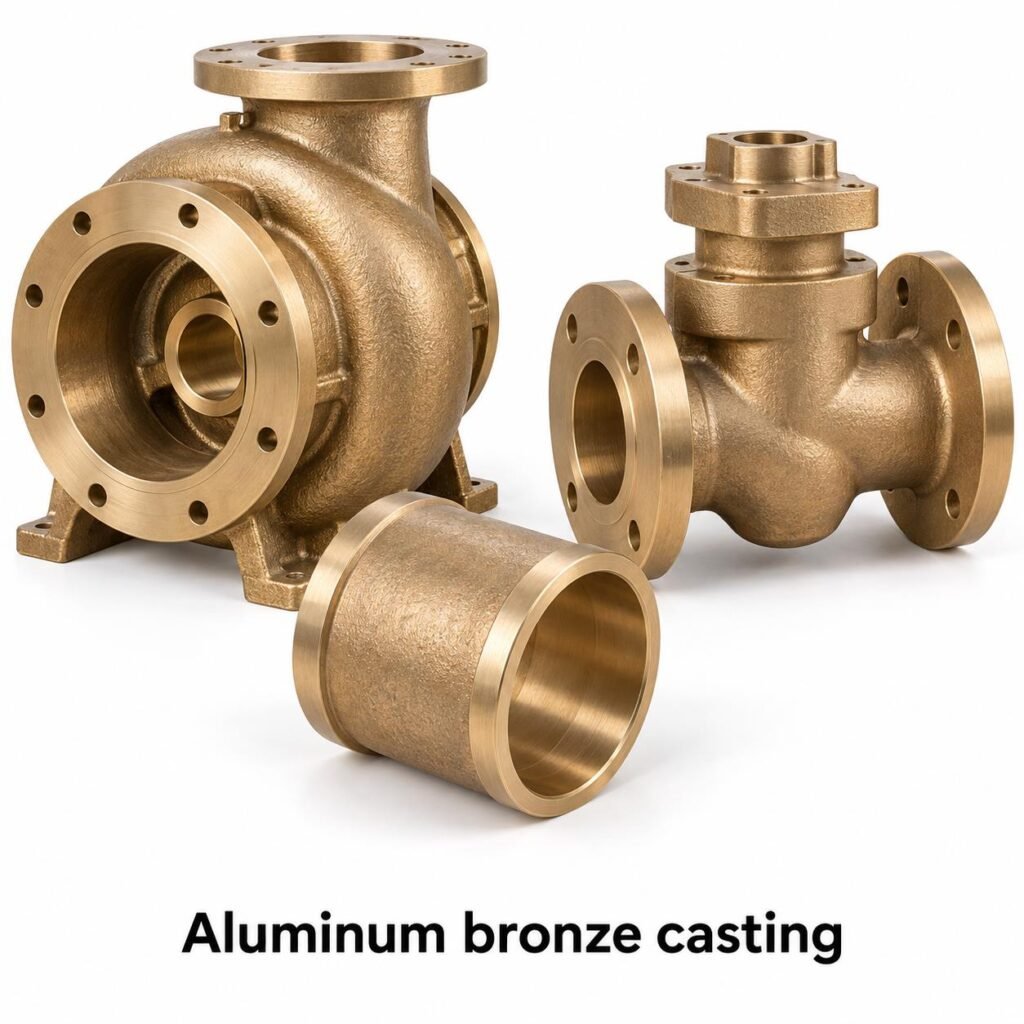
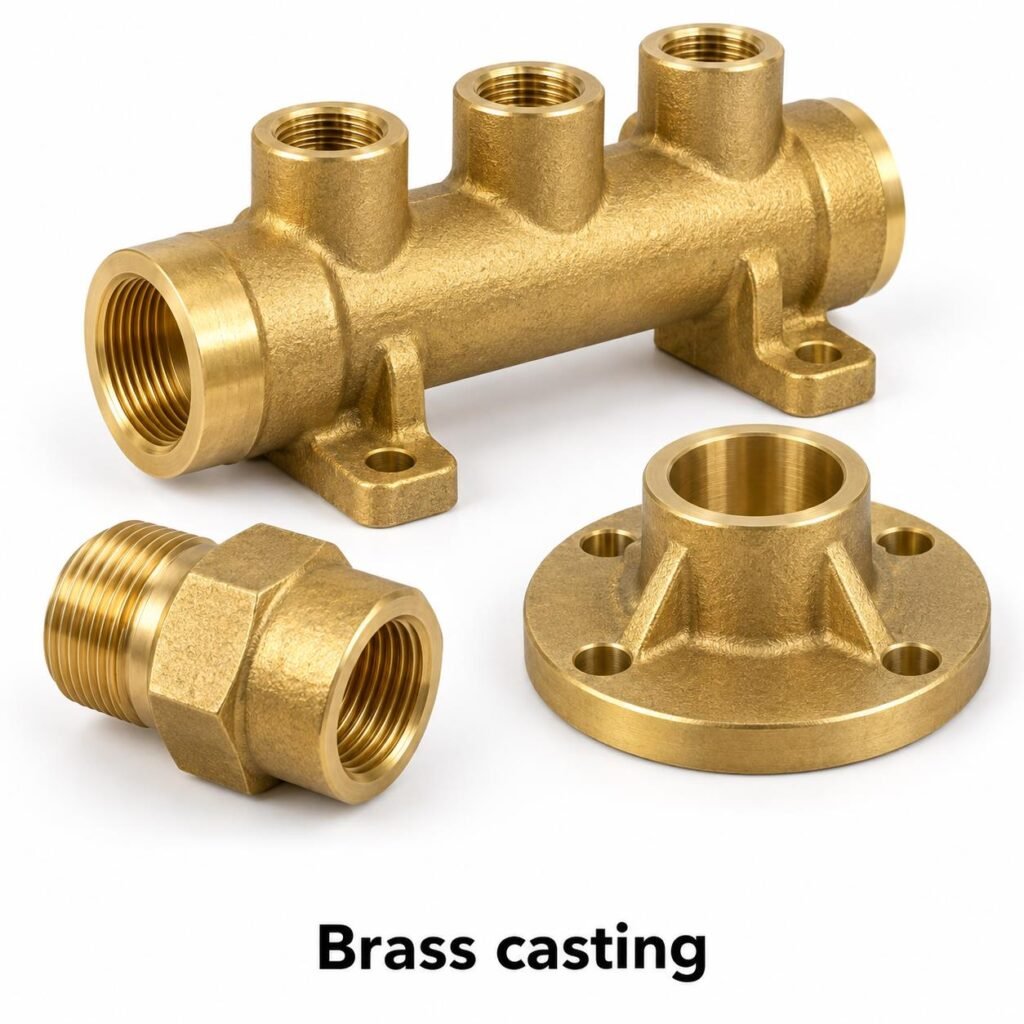
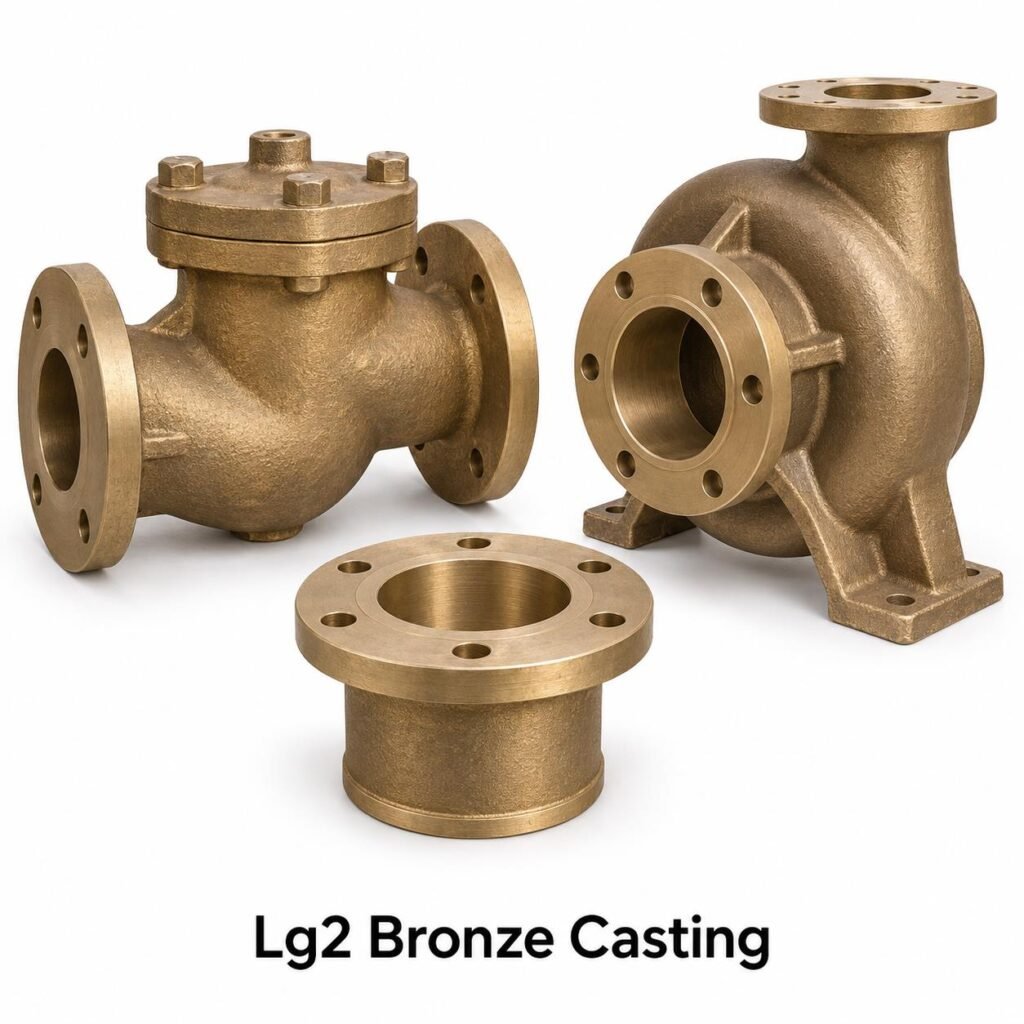
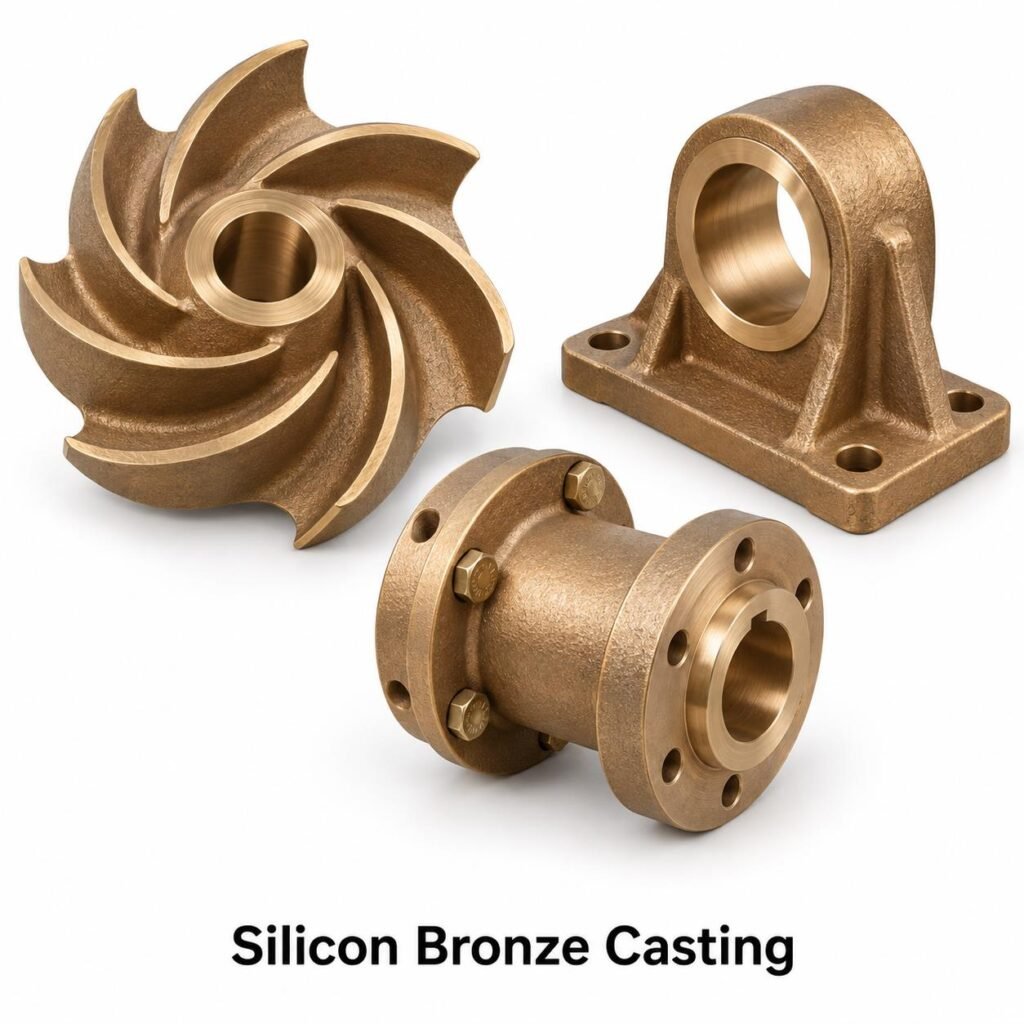
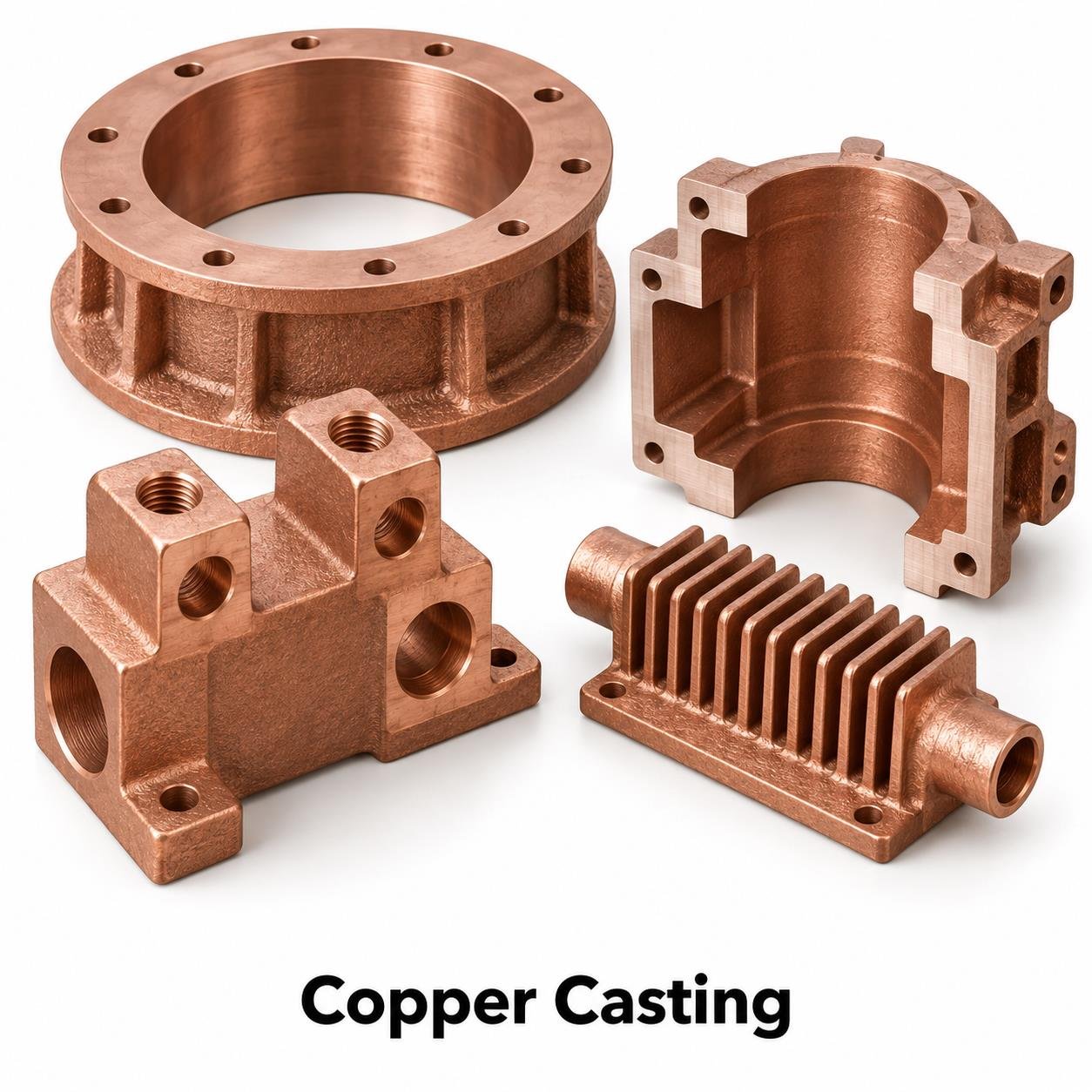
The images are representative product illustrations. Actual geometry, surface appearance, marking and finish follow the approved drawing and order. Use the images to discuss a component type, then supply dimensional information rather than ordering by visual similarity alone.
How should a repeat order be controlled?
Reference the approved drawing revision, material specification, tooling identification and earlier inspection requirements. Confirm whether any service condition, finishing process or quantity has changed. Retain first-article approval and lot identification so repeat supply can be compared against the same acceptance criteria.
Equivalent search terms in international markets
The following terms help multilingual purchasing teams describe the product family. Translated search terms do not establish alloy equivalence or replace the grade designation on the drawing.
| Language | Related purchasing terms |
|---|---|
| Spanish | fundición de cobre; piezas de cobre fundido; terminales de cobre |
| Russian | литьё меди; медные отливки; медные клеммы |
| French | fonderie de cuivre; pièces en cuivre moulé; bornes en cuivre |
| Portuguese | fundição de cobre; peças de cobre fundido; terminais de cobre |
| Italian | fusione di rame; getti di rame; terminali in rame |
Linked parts and related casting products
Compare the specified alloy and component function across the Metal casting category. Review individual product requirements before selecting another material.
Related component terms include electrical connection blocks, terminal bodies, contact supports, cooling components, flanged conductors and shaped heat-transfer parts. Include the exact part name and drawing number in the enquiry so the quotation can be tied to the correct engineering requirement.
Request a drawing-based casting quotation
Send your drawing or model, cast copper grade, quantity, required supply condition and delivery destination. Identify critical dimensions, service exposure, inspection reports and any approval hold points. Confirm tooling and final-piece weight assumptions when comparing the listed kilogram rate with a finished-component quotation.
Request a quotation from Brass Parts India for copper casting.