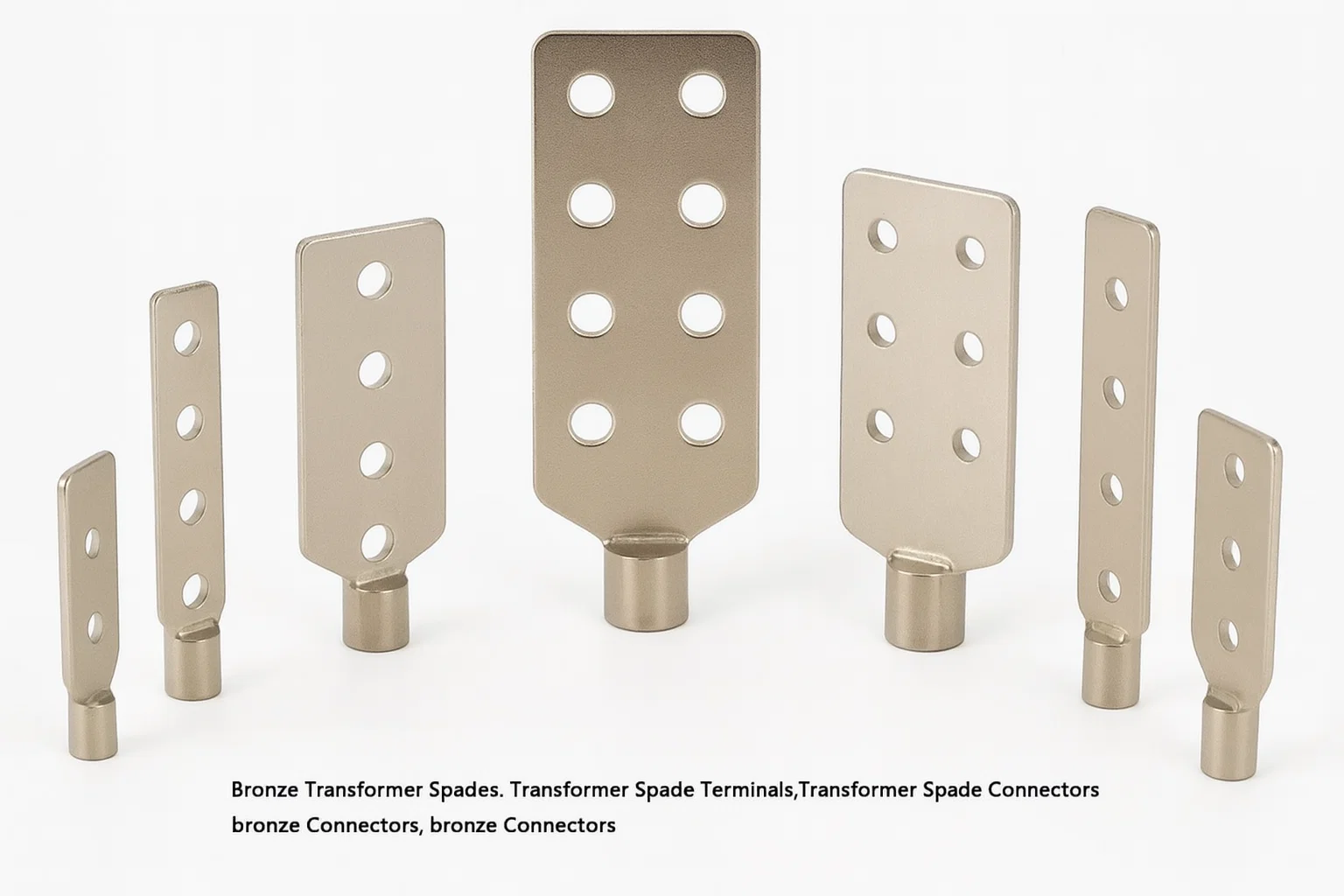

Transformer spades in copper and bronze provide a bolted connection between a transformer bushing terminal and the outgoing cable lug or busbar. Their reliability depends on the complete connection: alloy, cross-section, palm geometry, thread fit, surface condition and tightening procedure.
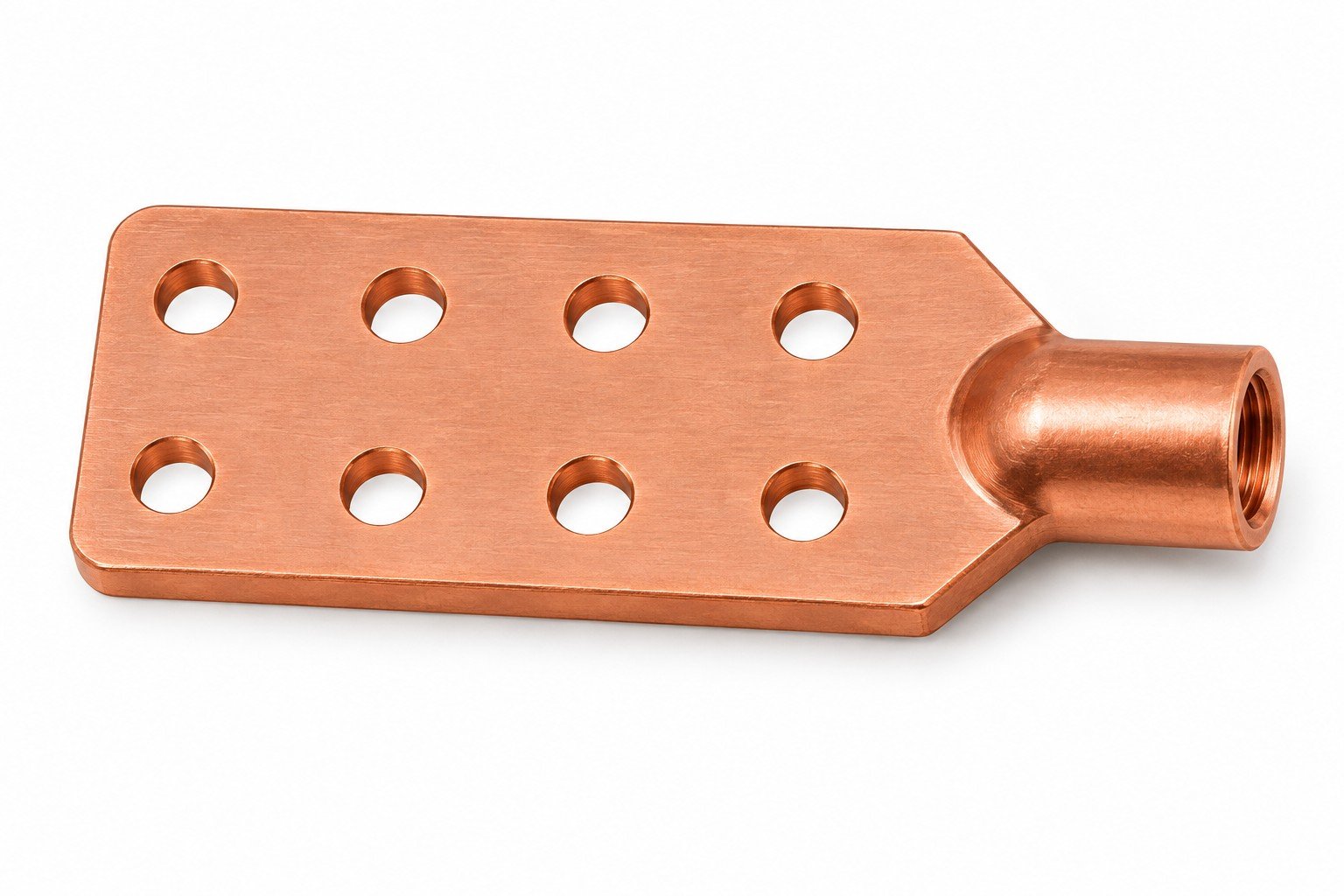
What does a transformer spade do?
A spade terminal converts a bushing connection into a flat contact palm that accepts a bolted termination. Depending on the transformer design, the bushing interface may be internally threaded, externally threaded or another specified arrangement. Two-hole and four-hole palms, straight configurations and offset designs serve different installation layouts.
The palm needs enough contact area and stiffness to carry the specified electrical and mechanical duty. Hole alignment alone does not establish compatibility: the contact width, thickness, clearances and thread engagement also matter.
Copper versus bronze: choosing the material
Copper is often selected when electrical conductivity is a priority. The exact grade and temper must also provide adequate mechanical strength for machining, assembly and service. Buyers should specify the copper designation rather than simply writing “pure copper.”
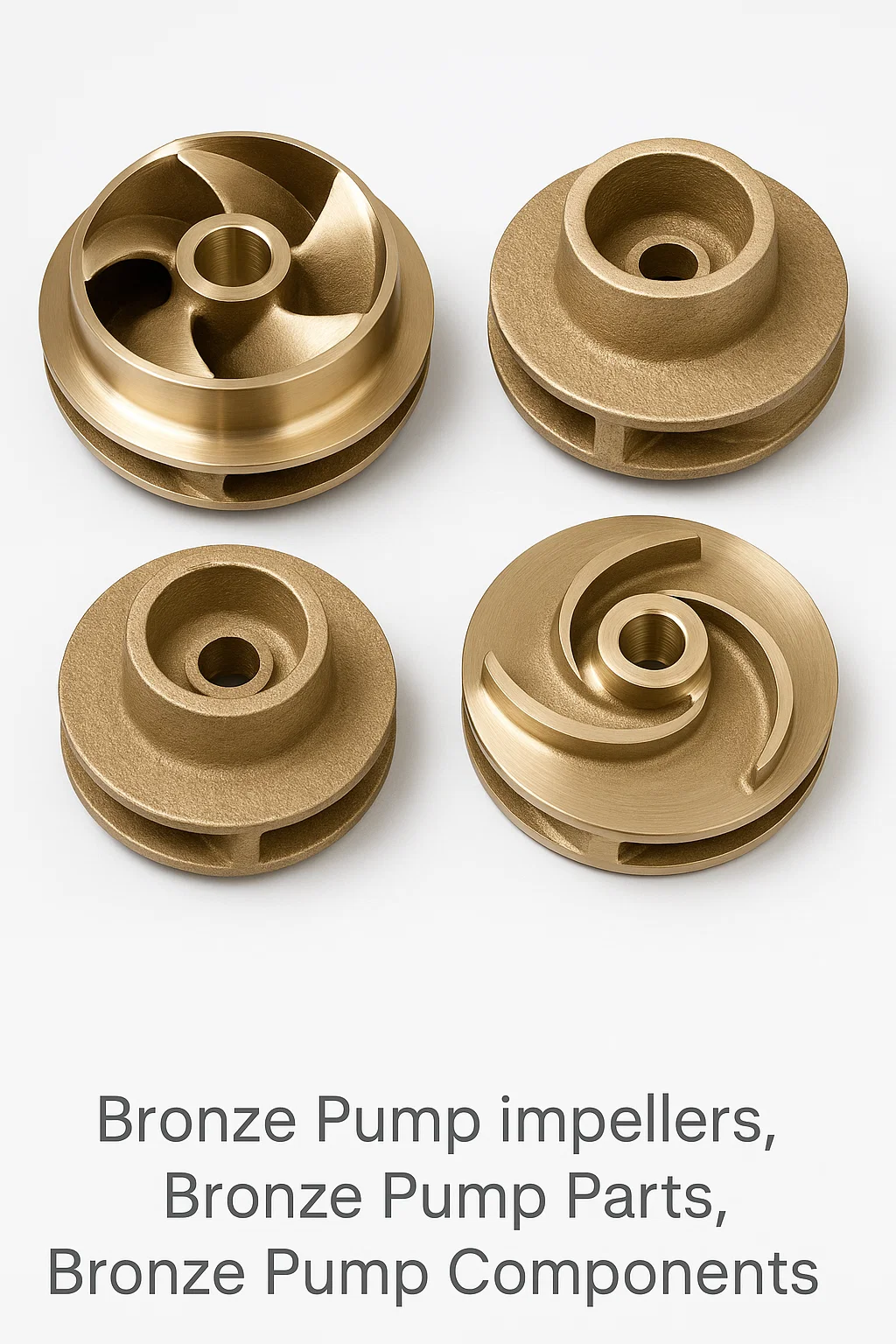
Bronze offers a range of casting, machining and mechanical characteristics, depending on its composition. It can be useful for robust cast terminal shapes, but bronze grades differ substantially in conductivity and strength. A bronze spade should therefore be evaluated against the actual current duty and allowable temperature rise.
Copper and bronze are not interchangeable on appearance or dimensions alone. Any substitution requires the transformer designer’s approval, with electrical and mechanical validation appropriate to the application.
Design details that deserve attention
- Bushing interface: specify thread standard, diameter, pitch, engagement length and tolerance.
- Contact palm: define width, thickness, flatness, hole diameter and hole spacing.
- Connection layout: check cable approach, tool access, phase clearances and mechanical support.
- Finish: state whether bare metal or a specified plating system is required, including coverage and thickness.
- Hardware: define the bolt, nut and washer arrangement and the approved tightening procedure.
Manufacturing and inspection
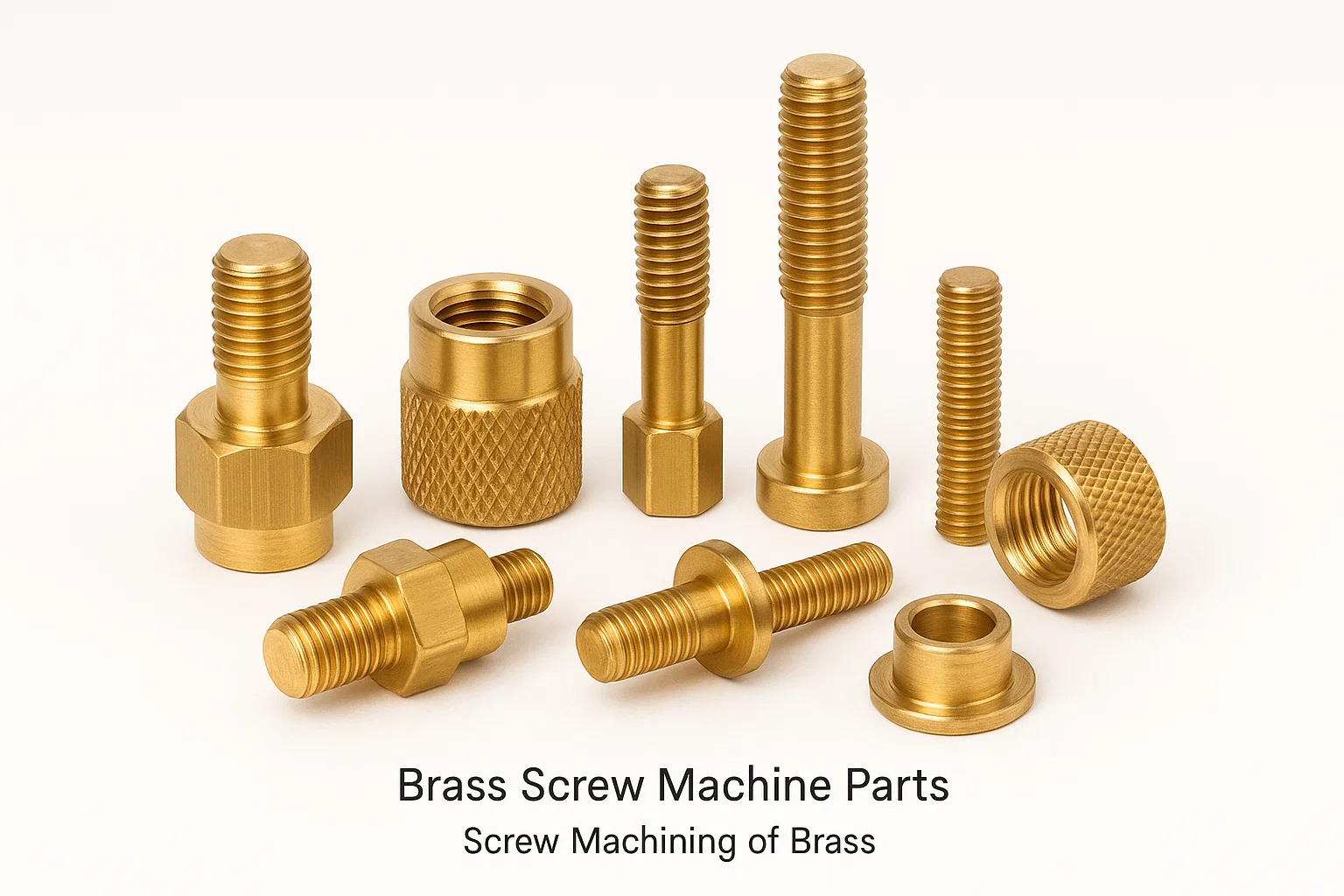
The manufacturing route may involve machining from wrought stock, forging followed by machining, or casting followed by machining, according to the alloy and drawing. Critical checks include material identification, thread gauging, hole position, contact-face quality and dimensional conformity.
For cast bronze parts, the acceptance plan should address casting soundness in the current path and mechanically stressed areas. For plated parts, inspection should cover coating requirements as well as the underlying dimensions. A material certificate does not replace performance testing of the assembled connection.
Information to include in an enquiry
Send the approved drawing or sample reference, alloy and temper, transformer terminal details, current duty, palm pattern, finish, hardware requirements, annual quantity and inspection documentation. Identify any required qualification tests and certification separately; they should not be assumed from the material description.
Frequently asked questions
Is a bronze spade a direct replacement for copper?
Only when the complete design has been approved for that substitution. Equal dimensions do not guarantee equal electrical performance.
Does tin plating determine the current rating?
No. Plating is one element of the interface specification. Rating depends on the complete terminal and connection under the specified conditions.
Can a standard hole pattern be assumed?
No. Confirm the drawing, mating lug or busbar and applicable interface requirements before ordering.
Discuss your transformer terminal requirement
For a drawing-based enquiry, email sales@brass-parts-india.com with your material, dimensions, quantities and validation requirements. Explore our copper and bronze bolted lugs for related connection components.